
Review · RAPA NUI
Rapa Nui: 3 Excursions with Hotel Transfers
Rapa Nui hits hard, in a good way. This 3-excursion setup strings together the island’s most important ceremonial stops, from Orongo Ceremonial Village at the edge of Rano Kau Crater to the white-sand break at Anakena Beach. I love the way the route pairs the moai viewpoints with the rock sources behind them, so you get more than photo stops. I also like the clear, guided focus, with English and Spanish handled by the guide team, including Uca, noted for keeping interest high while managing both languages. One possible drawback: the first half-day can feel a bit lighter compared with the bigger moai moments later in the program.
You’ll start with hotel pickup in Hanga Roa, then do 2 half-day tours plus 1 full-day excursion. Expect a lot of time outdoors, some bumpy walking, and the sun doing its job, so come ready with water and proper shoes.
In This Review
- Key Highlights That Make This 3-Excursion Plan Worth It
- Getting Oriented Fast in Hanga Roa
- First Half-Day: Rano Kau and Orongo Ceremonial Village Views
- Second Half-Day Afternoon: Puna Pau Quarry and the Moai Source Story
- Full-Day Tour: The Southeast and Northeast Moai Circuit
- Ahu Tongariki, Te Pito Kura, and the 10m Moai Moment
- Anakena Beach: The Hour You’ll Actually Remember
- Price and Value: What $177 Includes (and What You Still Need)
- What to Bring so You’re Comfortable (Not Cranky)
- Who This Tour Fits Best (and Who Should Think Twice)
- Should You Book This 3-Excursion Moai Package?
- FAQ
- Where does the tour pickup and drop-off happen?
- Is an airport welcome included?
- What languages are the guides?
- Are meals included during the tours?
- Is the national park ticket included?
- What should I bring for the sites and the beach stop?
- Is this tour suitable for wheelchair users?
Key Highlights That Make This 3-Excursion Plan Worth It
- Orongo Ceremonial Village at the rim of Rano Kau Crater, one of the island’s most striking settings
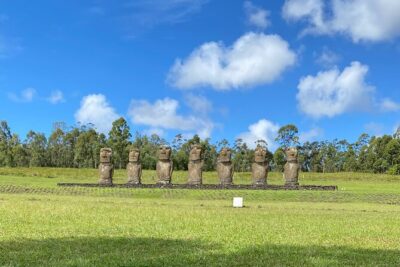
- Ahu Akivi’s 7 moai, an easy win for classic moai viewing
- Puna Pau Quarry for headdress stone, tying what you see to where it came from
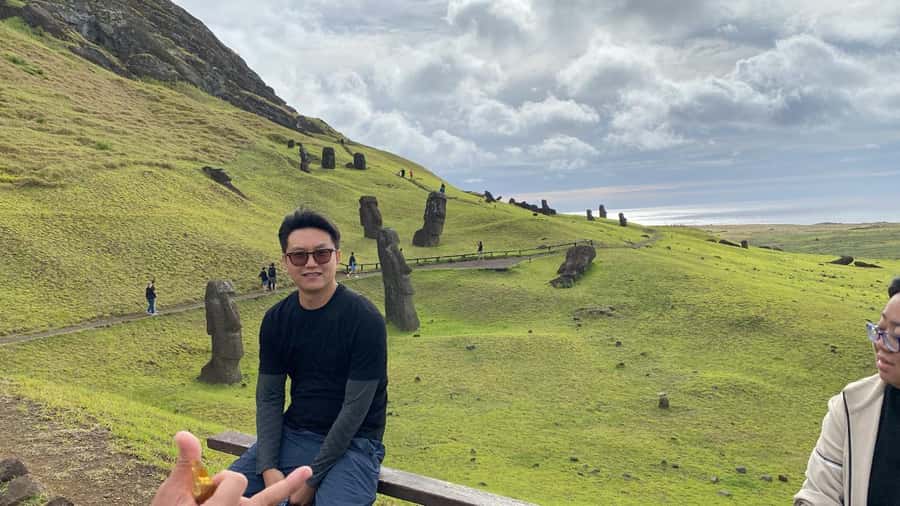
- Rano Raraku Quarry with lunch nearby, when the scale of stonework really hits
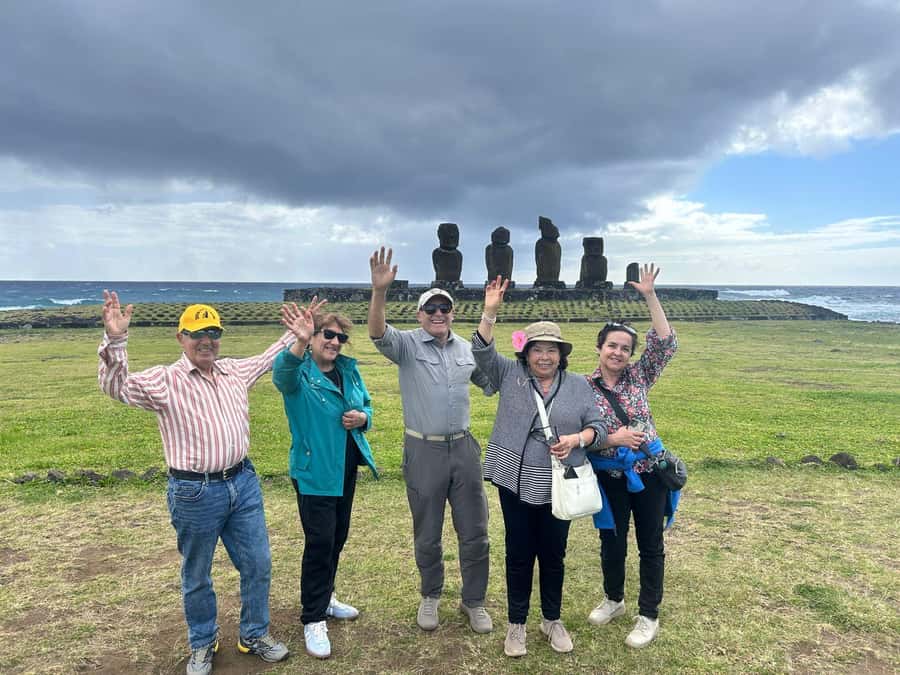
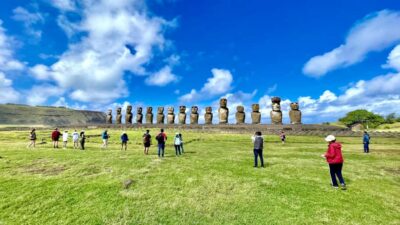
- Ahu Tongariki’s 15 moai, including the heaviest moai ever erected on Rapa Nui
- Te Pito Kura plus a full hour at Anakena Beach, so the day doesn’t stay all stone
Deeper into Rapa Nui: the other island tours
- From Hanga Roa: Rapa Nui Culture Sightseeing Tour
★ 4.6 · 307 reviews - From Hanga Roa: Easter Island Highlights 2-Day Tour
★ 4.3 · 205 reviews - From Hanga Roa: Journey from Orongo to Ana Te Pahu
★ 4.3 · 75 reviews - Two days of Full Day Tour of Rapa Nui + Sunrise in Tongariki
★ 4.8 · 55 reviews
Getting Oriented Fast in Hanga Roa
Hotel pickup is the backbone here. You board the bus outside your hotel in Hanga Roa, and you return back there at the end of each outing. That matters on Rapa Nui, where distances can feel bigger than they look on a map, and where wasted time in the sun is not fun.
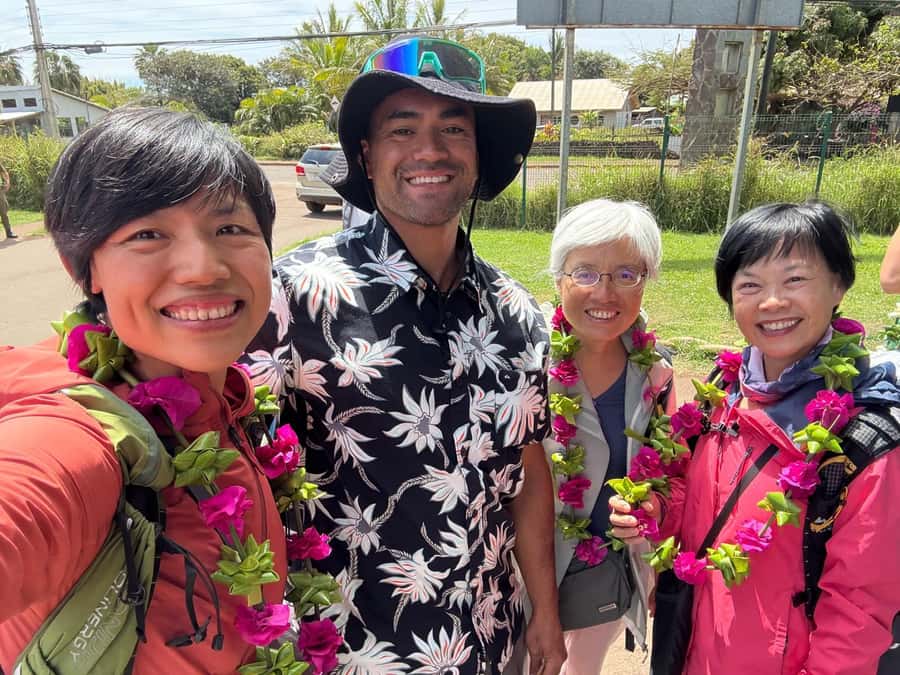
Before the touring days even start, the package includes airport reception with a flower necklace. It’s a small touch, but it also helps you settle in. On an island with a compact base, those first moments can shape how smoothly your first day feels.
One thing I’d plan around: this is a 3-excursion rhythm. You’ll move from site to site, taking in moai and ceremonial spaces, then transitioning into beach time. If you like a slow, no-rush pace, build in recovery time on your off hours.
First Half-Day: Rano Kau and Orongo Ceremonial Village Views
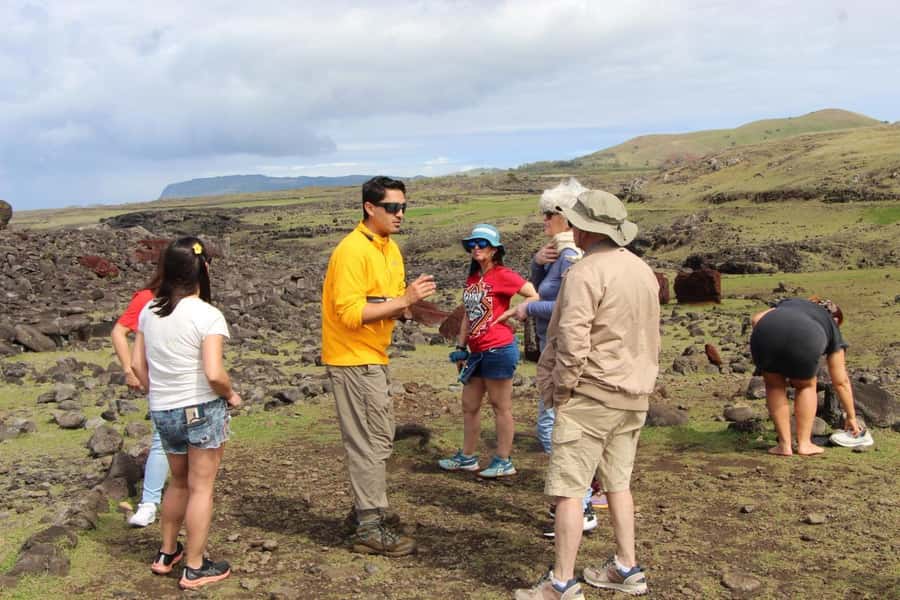
Your first morning begins with pickup, then heads to the south peninsula. The centerpiece is Orongo Ceremonial Village, described as an ancient sacred site sitting at the edge of Rano Kau Crater. Even if you’re not a history super-geek, the location itself does half the work. Standing at the crater rim gives you a strong sense of place, and the setting makes the ruins feel less random.
After Orongo, you visit Ahu Vinapu, another ceremonial site stop on this same south-side block. It’s a good pairing. Orongo gives you the dramatic “wow” geography. Ahu Vinapu then keeps you moving through the island’s sacred-site pattern without forcing you into long detours.
What I like about this morning block is that it sets your visual vocabulary early. By the time you reach the later quarry stops and larger moai platforms, you’re already seeing the island the way the tour wants you to see it: sacred spaces, then the resources and craft behind the moai.
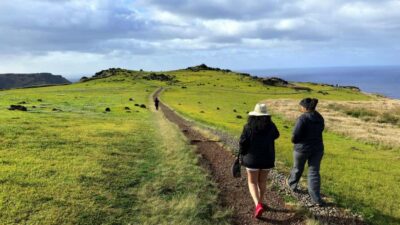
A practical note: bring a hat and breathable layers. You’ll be exposed. Comfortable shoes matter too, because crater-edge areas and site paths can be uneven.
Second Half-Day Afternoon: Puna Pau Quarry and the Moai Source Story
In the afternoon, the route shifts to the northwest side of the island, and the theme becomes very concrete: where the stone came from.
First up is Puna Pau Quarry, listed as the place where islanders sourced stone for the moai headdresses. This is one of the most satisfying stops for me, because it turns the moai from “big statues” into “big projects.” You’re not just looking at outcomes. You’re standing in the setting connected to the materials.
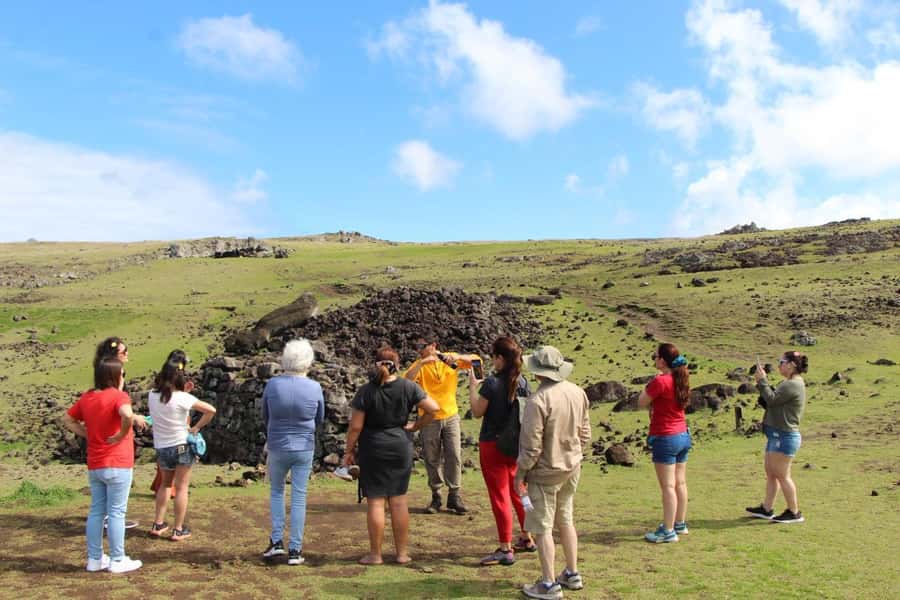
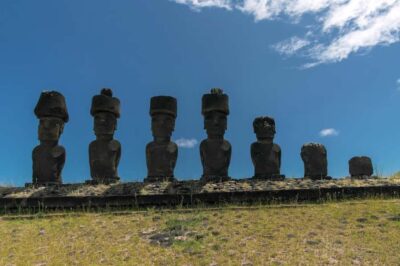
Next you visit Ahu Akivi, which includes 7 moai. This stop is classic Rapa Nui viewing, and it’s also a helpful contrast after quarry time. Quarry viewing asks you to imagine labor and scale. Akivi gives you a direct moai payoff.
From there, you continue to Tahai Village. Even when you’re tired from the day’s first round of walking, Tahai is an easy place to keep your eyes trained on moai compositions and the general sacred-site layout.
If the morning felt a little slow for you, this afternoon tends to land better. You go from “sacred geography” into “stone supply,” and that change of pace keeps the mental gears turning.
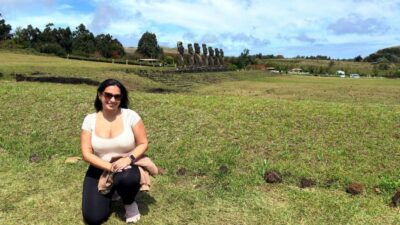
Full-Day Tour: The Southeast and Northeast Moai Circuit
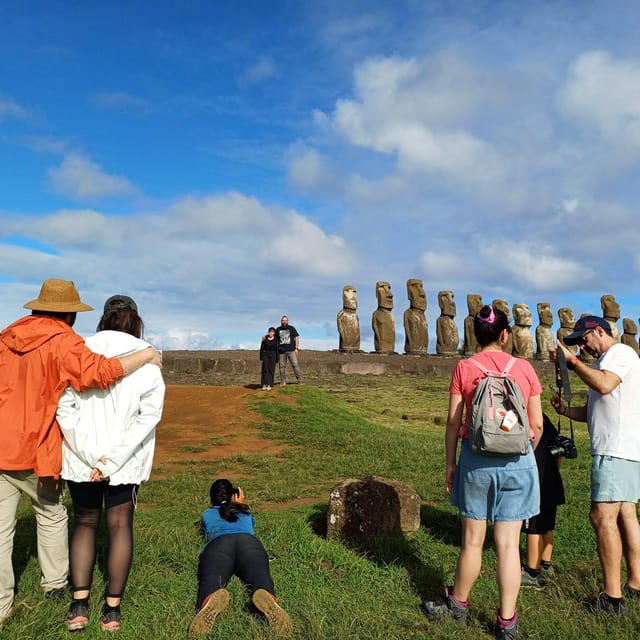
The next day is the full-day excursion, built around the southeast and northeast parts of Rapa Nui. It’s a full loop of major sites, and it’s where you get most of the biggest moai moments.
You start with pickup again, then head to the Vaihu Complex. After that comes Akahanga Village, the stop tied to where the first king of Rapa Nui was entombed. This is one of those details that gives the day more than scenery. It adds a human anchor to all the stone and ritual spaces.
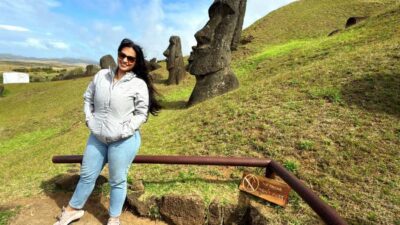
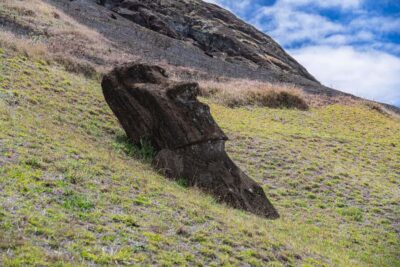
Then you move to Rano Raraku Quarry, which supplied most of the stone for the island’s moai. This is the “why it looks like this” stop. Quarry time is different from moai platform time. At a quarry, you can better understand the process, and you get a stronger sense of scale because you’re near the source material itself.
Lunch is included here in a practical way: you stop at a restaurant just in front of the quarry. Food and drinks are not included, but having the meal right by the site is a smart rhythm. It prevents an extra travel segment and keeps you from losing the daylight.
Ahu Tongariki, Te Pito Kura, and the 10m Moai Moment
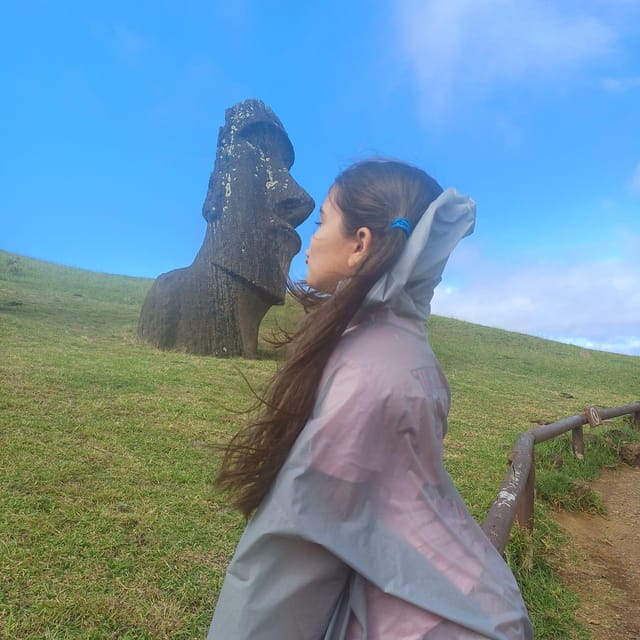
After lunch, the tour hits two of the most dramatic moai stops in the itinerary.
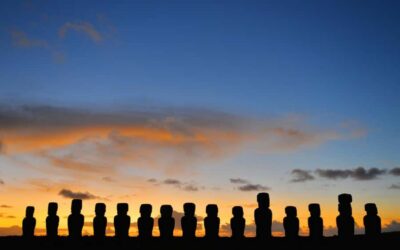
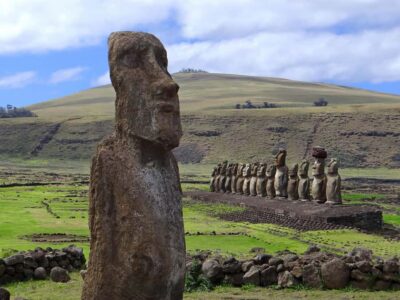
First is Ahu Tongariki, with 15 moai. The tour also notes it includes the heaviest moai ever erected on the island. That detail matters when you’re standing there, because you’re not just admiring a row. You’re trying to visualize maximum weight, maximum engineering effort, and maximum impact.
Next comes Te Pito Kura, where you can check out the largest moai statue ever built, measuring 10m tall. A measurement like 10m makes it easier to understand why this is a headline stop. It gives you a yardstick, not just a vague impression of giant.
Between Tongariki and Te Pito Kura, I’d expect you to be a bit sun-worn. This is not the time to go ultra-light on water. You’ll be outside, and you’ll be doing short walks between viewpoints.
Anakena Beach: The Hour You’ll Actually Remember
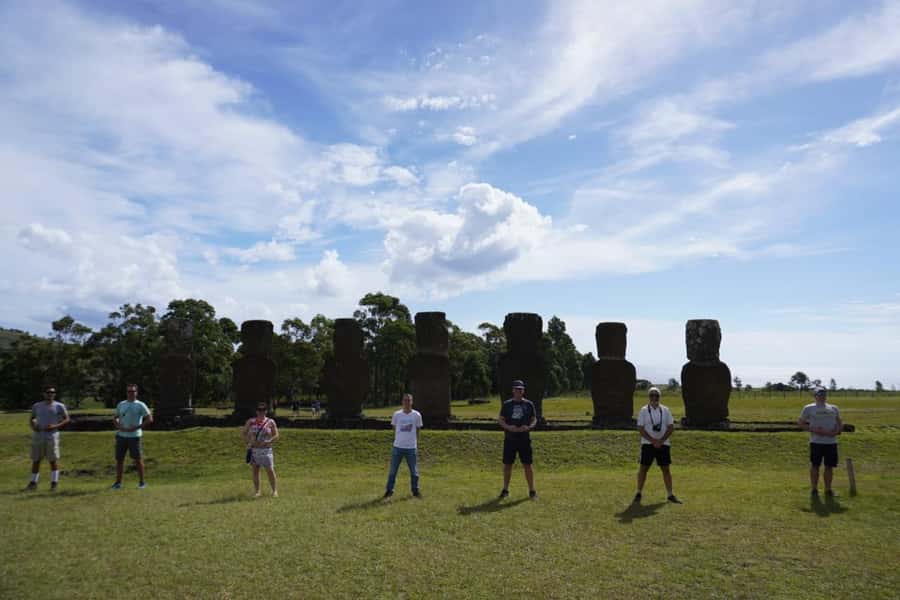
The final part of the full day gives you breathing room: you get about an hour of free time at Anakena Beach. This is the tour’s built-in payoff for the long day of stone.
Anakena is described as a scenic beach with a palm grove set against white sand. That combo does real work for your mood. You get to reset your senses. You also get a clean break from the “look but also read” feeling that ruins and sacred sites can create.
Bring beachwear and a towel if you plan to cool off. Even if you don’t swim, the shade and sand time can help you recover for whatever you do after the tour ends back in Hanga Roa.
Price and Value: What $177 Includes (and What You Still Need)
The price is $177 per person, and it covers more than you might expect for a packaged island circuit. What’s included:
- airport reception with a flower necklace
- 2 half-day tours and 1 full-day tour
- an English/Spanish-speaking guide
- hotel pickup and drop-off
- transportation
What’s not included:
- the national park ticket
- food and drinks
So is it good value? For me, yes, if you want to see multiple major moai and sacred stops without renting a vehicle or plotting route times yourself. The included transport and pickup remove a headache that can be expensive in time and energy on Rapa Nui.
Just budget realistically for the extras. The national park ticket is the one big missing line item. On top of that, lunch is timed near the quarry, but you’ll still pay for what you order. Plan your day with cash or card options in mind, and consider carrying snacks if you’re the type who gets hungry quickly.
What to Bring so You’re Comfortable (Not Cranky)
Rapa Nui weather can shift, but sun exposure is part of the package. The essentials you should actually pack for this specific tour mix include:
- comfortable shoes with grip
- hat
- sunscreen
- water
- towel
- beachwear
- breathable clothing
- camera
- passport (a copy is accepted)
One small reality check: even with a guide and transport, you’re still outside for long stretches. Towel and sunscreen are not optional extras here, especially with the Anakena stop at the end.
Smoking is not allowed, and the tour also forbids alcohol and drugs. If you’re thinking of a relaxed vibe, plan to keep it low-key and follow the on-the-ground rules.
Who This Tour Fits Best (and Who Should Think Twice)
This is a strong fit if you want a structured way to hit the island’s big-name sites without working around logistics. It’s also a great choice if you like explanations tied to actual places, since the route connects quarry stone sources to the finished moai viewing stops like Akivi, Tongariki, and Te Pito Kura.
It may not be ideal if you’re the type who hates group pacing or wants total freedom with zero scheduled stops. This is a “see a lot” plan, and it keeps you moving.
It also isn’t suitable for wheelchair users, based on the stated accessibility limits. The tour involves walking at multiple outdoor sites, so consider alternative formats if mobility is a concern.
Should You Book This 3-Excursion Moai Package?
I’d book it if you want three days worth of major Rapa Nui sights, but compressed into a well-organized schedule with hotel transfers. The combination of Orongo and Rano Kau, the stone source trail from Puna Pau to Rano Raraku, and the moai giants at Ahu Tongariki and Te Pito Kura, plus the relief of Anakena Beach, is a smart mix.
Skip it if you’re chasing only beach time, or if you already know Rapa Nui sites inside out and want a lighter, more custom day-by-day plan. This tour’s strength is structure, not solitude.
If you do book, pack like you expect sun and uneven paths. Bring water, keep your shoes solid, and save energy for the full day. That’s where the biggest moai moments, including the 10m Te Pito Kura highlight, do their best work.
FAQ
Where does the tour pickup and drop-off happen?
Pickup and drop-off are in Hanga Roa. You board the bus outside your hotel.
Is an airport welcome included?
Yes. The package includes airport reception with a flower necklace.
What languages are the guides?
The guide speaks English and Spanish.
Are meals included during the tours?
Food and drinks are not included. You will have lunch as part of the day near the quarry, but you pay for what you eat.
Is the national park ticket included?
No. The national park ticket is not included.
What should I bring for the sites and the beach stop?
Bring comfortable shoes, a hat, towel, camera, sunscreen, water, beachwear, breathable clothing, and your passport (a copy is accepted).
Is this tour suitable for wheelchair users?
No. It is not suitable for wheelchair users.
The Rest Of Our Chile Tours
Everything Else We Have Reviewed In Chile

Rapa Nui, Three More Ways
Not quite it? Here is the rest of what we have reviewed around Chile
More in Easter Island & the Moai.
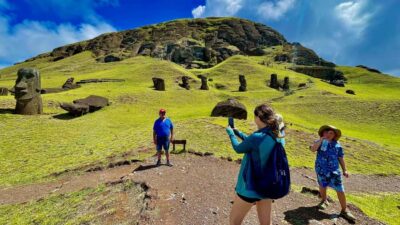 ★ 4.6Rapa Nui Culture Sightseeing TourFrom $80307 reviews
 ★ 4.3Easter Island Highlights 2-Day TourFrom $170205 reviews
 ★ 4.5Easter Island Sightseeing Full Day TourFrom $70189 reviews
 ★ 4.3Journey from Orongo to Ana Te PahuFrom $7075 reviews
 ★ 4.5Rapa Nui StargazingFrom $14062 reviews
 ★ 4.8Two days of Full Day Tour of Rapa Nui + Sunrise in TongarikiFrom $25055 reviews
 ★ 5.0Half Day Tour in Rapa NuiFrom $1,50048 reviews
 ★ 4.5Sunrise Tongariki: Sunrise at Tongariki Park Private TourFrom $12047 reviews
Browse the lists this tour appears in