
Review · RAPA NUI
Hanga Roa: Full Day Moai and Mistery
Moai sightings start with a hush. This 7-hour Moai route is interesting because it strings the big Easter Island icons into one story you can follow, guided by local experts including archaeologist Ene at key stops.
I also like the hospitality and the easy Hanga Roa pickup, since the driver and local guide handle the long island connections. One possible drawback to consider: some departures can feel a bit rushed through less striking stops, even around major sites like Tongariki.
Key things that make this tour worth your time
- Six major Moai stops in one day, from Vaihu to Anakena Beach
- Local guide storytelling, including archaeologist Ene on some departures
- Rano Raraku quarry views, with Moai in different stages of completion
- Tongariki’s restored lineup, with fifteen Moai against the Pacific
- A shift from ruins to ritual, via Akahanga and Pito Kura
- Accessible format, with wheelchair access and hotel-area pickup from Hanga Roa
In This Review
- How a Full-Day Moai Circuit Helps You Actually Understand Easter Island
- Vaihu: The First Moai Moments at a Sacred Starting Point
- Akahanga: Fallen Moai, Topknots, and the Story in What Went Wrong
- Rano Raraku Quarry: The Moai Birthplace That Explains the Craft
- Tongariki: Fifteen Moai, Pacific Views, and Restoration as Part of the Story
- Pito Kura: Ceremonial Space and Ritual Clues Between Ruins
- Anakena Beach: The Perfect Finish After Stone and Story
- Price and Value: What 100 USD Covers (and What You Need to Budget Extra)
- Language, Pickup, Accessibility, and Day-Ready Expectations
- Who Should Book This Tour, and Who Might Want a Different Style
- Should You Book Hanga Roa: Full Day Moai and Mistery?
- FAQ
- How long is the Hanga Roa Full Day Moai and Mistery tour?
- What stops are included during the day?
- Is pickup included, and where does it start?
- What languages are the live guides?
- Is the National Park ticket included in the price?
- What is the price per person?
- Is the tour wheelchair accessible?
How a Full-Day Moai Circuit Helps You Actually Understand Easter Island
Easter Island can feel like a lot of driving and a lot of stone, unless someone gives you the thread. This tour does that work for you by moving through the island in a logical flow, from early Moai settings to the quarry where they were made, then to the places where the island’s ceremonial life shows up again.
You also get a guide who speaks English or Spanish, so the information lands instead of bouncing off. And based on how the experience is run, hospitality is not an afterthought. You’re not just paying for transport, you’re paying for people who can interpret what you are seeing.
The route is a good match for first-timers who want value, especially if you only have one day on Easter Island. If you are the type who hates rushing, then just keep this in mind: this is a packed day, and pacing depends on the day and guide energy.
Deeper into Rapa Nui: the other island tours
- From Hanga Roa: Rapa Nui Culture Sightseeing Tour
★ 4.6 · 307 reviews - From Hanga Roa: Easter Island Highlights 2-Day Tour
★ 4.3 · 205 reviews - From Hanga Roa: Journey from Orongo to Ana Te Pahu
★ 4.3 · 75 reviews - Two days of Full Day Tour of Rapa Nui + Sunrise in Tongariki
★ 4.8 · 55 reviews
Vaihu: The First Moai Moments at a Sacred Starting Point
Vaihu is where the tour begins, and it sets the tone right away. This is where you look at Moai standing in a quiet, open setting, and where the guide can help you notice that the statues are not just sculptures. They are part of a worldview, tied to the Rapa Nui people and their spiritual connections to land and ancestors.
What I like about starting here is that it gives you a baseline. When you later see the fallen Moai at Akahanga, and the different “phases” of unfinished statues at Rano Raraku, your brain already has something to compare against. Without that first visual reference, the later sites can feel like disconnected photographs.
Time at Vaihu matters. If you get an energetic guide, this stop can be more than a quick photo stop. If you do not, you might feel like you are mostly watching Moai without getting the why. Either way, this start is the right move for a one-day itinerary.
Akahanga: Fallen Moai, Topknots, and the Story in What Went Wrong
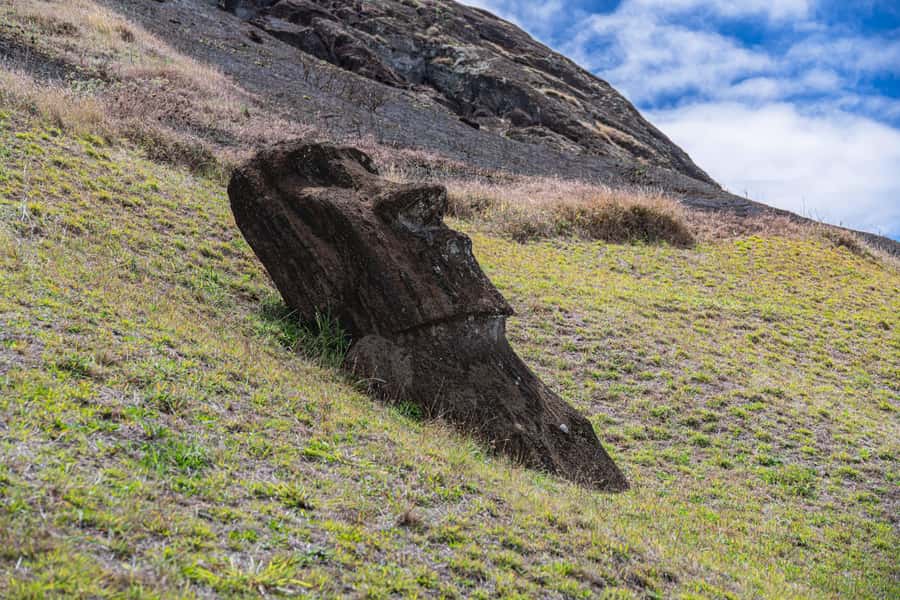
Next comes Akahanga, another archaeological stop that changes the mood. Instead of statues standing upright, you see Moai in more broken or fallen states, including their distinctive topknots scattered across the area.
This is the stop where the island’s story gets less tidy. Moai are not only about creation and pride, they also reflect disruption. A strong guide will connect what you see, fallen figures, scattered headpieces, and the ground itself, to the island’s turbulent past.
A helpful way to think about Akahanga is as the tour’s “evidence” chapter. Vaihu gives you presence. Rano Raraku gives you process. Akahanga gives you consequence.
If pacing gets tight that day, Akahanga is still worth the time because it visually explains a major idea: these monuments did not remain static. They changed, toppled, and left traces that still carry meaning.
Rano Raraku Quarry: The Moai Birthplace That Explains the Craft
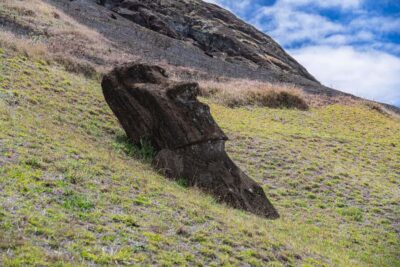
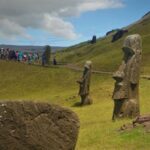
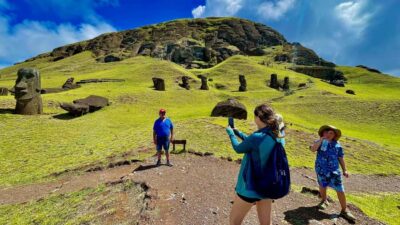
Rano Raraku is the quarry where the Moai were made, and it is one of the most important stops on any Easter Island Moai day. This volcanic crater setting matters because it turns statues from “mysterious artifacts” into something closer to a real production site.
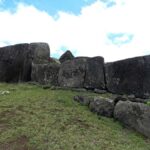
Here, you can see Moai in different stages of completion, including some still embedded in the rock and others standing in ways that show how the process ended. When a guide like Ene is explaining the quarry logic, you start to understand why Easter Island’s sculpture looks the way it does. The form is not random. It follows the environment, the material, and the work style.
What you should watch for is contrast. Compare an unfinished Moai anchored in the rock to one that has been shaped and set up. That visual difference helps you connect the dots between quarry, transport, and the final display spots.
A drawback to watch for: when days get overly rushed, Rano Raraku can become a quick walkthrough. But if you get decent timing and a guide who keeps the story going, this is the stop that can make the whole day click.
More Chilean days out, start to finish
Tongariki: Fifteen Moai, Pacific Views, and Restoration as Part of the Story
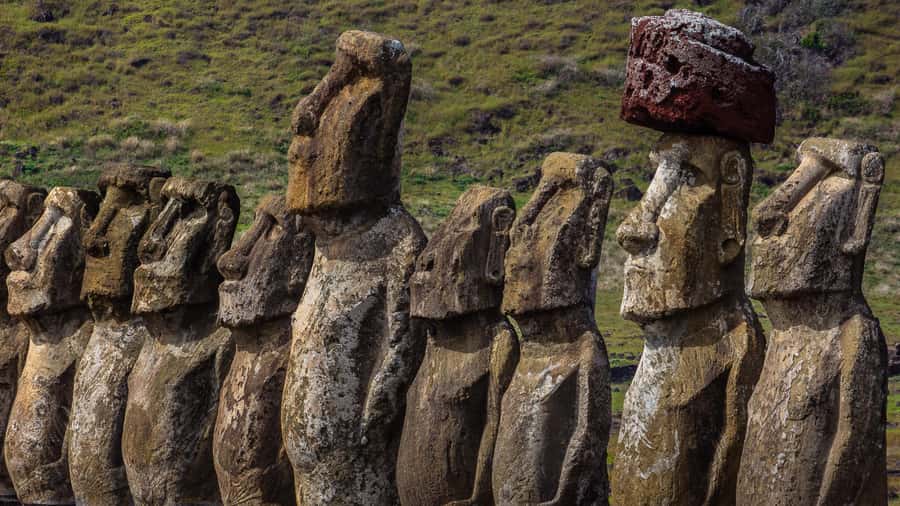
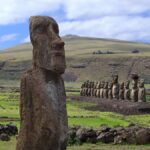
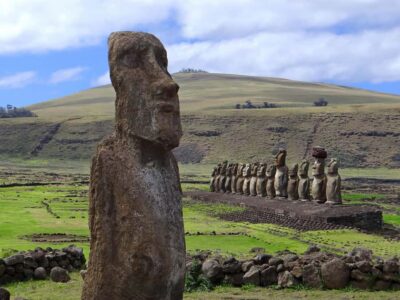
Tongariki is the Moai lineup stop people talk about for a reason. Fifteen statues stand in formation against the Pacific Ocean, and the sight hits like a wave. The guide’s job here is not just pointing out stone. It explains restoration efforts and the symbolic meaning of the monumental assembly.
This is where you see Moai as a cultural message, not just a collection of individual figures. Tongariki also shows how modern work has reconnected people to the island’s heritage. Restoration is part of the current story, and a good guide will help you understand why rebuilding or repositioning matters for cultural pride and memory.
If the day’s pacing is off, Tongariki can be rushed. That is the kind of situation where you might feel like you arrived for the big moment, then blinked and moved on. Still, even with a quick pass, the lineup scale makes it hard to forget.
If you care most about iconic photos, Tongariki is your time anchor. Plan your attention here, especially if you know you will be photographing everything else.
Pito Kura: Ceremonial Space and Ritual Clues Between Ruins
Pito Kura is described as a sacred ceremonial village with unique features. Compared with the louder Moai sites, this stop can feel more interpretive. You are not only looking at objects. You are learning about rituals and ceremonies that once took place in this sacred space.
For me, this is the value add that turns a “Moai day” into a deeper Rapa Nui culture day. You leave Tongariki thinking about statues as monuments, then Pito Kura brings you back to the people and the practices tied to spiritual life.
Because the tour is only seven hours, you might not get every detail. But the guide should at least help you connect the space’s purpose to what you are seeing. If your guide is less lively, this stop can shrink into a quick scan. If your guide is strong, it becomes the most meaningful one of the day because it shifts the focus from stone to human ritual.
Anakena Beach: The Perfect Finish After Stone and Story
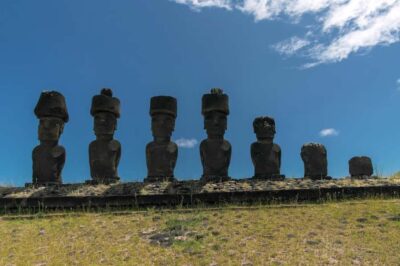
The tour ends at Anakena Beach, where turquoise water meets golden sand and coconut palms. This is a smart ending. Your brain has been processing Moai forms, quarry stages, and ceremonial settings. Then the day gives you a chance to slow down and reset.
Even if you do not stay long, Anakena changes the tone. It reminds you that Easter Island is not a museum. It is a living place with ocean, weather, and daily life around the edges of the archaeological core.
If you want a practical travel reason this finish works: you get a visual reward that is different from stone. It also gives you a simple way to celebrate the day without hunting for food elsewhere immediately.
Price and Value: What 100 USD Covers (and What You Need to Budget Extra)
The price is listed at $100 per person for a full day, about seven hours, with transportation, a driver, and a local guide included. That is not only a convenience fee. On Easter Island, driving time is part of the cost of getting to multiple major sites.
The big catch to plan for is the National Park ticket, which is not included. So the real value is $100 plus the entry fee you choose or are required to purchase.
Where this tour tends to be good value is when the guide energy matches the itinerary. When a guide can connect each site into one story, you are paying for interpretation, not just movement. One positive theme in the provided feedback is that the guides are able to pack in a lot of information without making it feel like a lecture.
Where value can drop is pacing. If stops feel like they are being rushed, you are still seeing the major names, but you might not be getting your money’s worth on the explanation side. So I would judge this tour on your tolerance for a packed day and your need for time at each site.
Language, Pickup, Accessibility, and Day-Ready Expectations
You can join with English or Spanish live guiding, and pickup is included from Hanga Roa. That matters because it removes a common first-timer headache: getting from the center of Hanga Roa to scattered sites without negotiating everything yourself.
The tour is listed as wheelchair accessible. That suggests the day is designed to be navigable for more people than a purely rugged, hike-heavy excursion. Still, since the stops include archaeological areas, your comfort needs depend on the exact walking surfaces and time spent at each point.
Also note that starting times depend on availability. If you have tight plans, it is worth checking early so you do not end up with the least convenient departure.
Finally, the day is seven hours. That is enough time to cover the main Moai zones, but not enough for lingering in every photo spot. Set expectations for a steady flow, not a slow wander.
Who Should Book This Tour, and Who Might Want a Different Style
This tour makes sense if you want one structured day that hits the headline Moai sites: Vaihu, Akahanga, Rano Raraku, Tongariki, Pito Kura, then Anakena. It also suits you if you like cultural tourism, meaning you care about what the statues mean and how ceremonial life connects to the monuments.
It is a good fit for people who appreciate a guide with credentials and strong storytelling. The feedback specifically mentions archaeologist Ene as highly knowledgeable and engaging, which is a big deal on Easter Island where symbolism matters as much as the stones.
If you are the type who gets irritated by rushed stops, you might want to compare pacing options from other operators before locking in. Some departures can feel like time is spent on less impressive sections while the main sights get shorter treatment.
If you are traveling with limited time on the island, the convenience of transportation plus guidance is a real advantage. If you have multiple days and you want deeper time at fewer stops, you might prefer a slower tour that gives you longer at the single most important site.
Should You Book Hanga Roa: Full Day Moai and Mistery?
I think you should book this tour if you want a one-day overview that actually connects the dots. The combination of Moai coverage, local expert guiding, and a clear ending at Anakena is a strong formula for most first-timers.
Book it with confidence if you care about learning, not just seeing. Guides including Ene are highlighted for stone-by-stone understanding, and the overall vibe includes hospitality, not just logistics.
Hold off or consider a different format if you hate tight pacing. This day moves, and on some runs it can feel like certain stops get less time than you would like. If Tongariki is your top priority, and you want maximum time there, you may want to check whether the day’s schedule allows for that kind of attention.
If you do book, plan your expectations around a structured circuit, then let the guide do the work of turning Moai into meaning.
FAQ
How long is the Hanga Roa Full Day Moai and Mistery tour?
The tour duration is 7 hours.
What stops are included during the day?
The tour includes Vaihu, Akahanga, Rano Raraku, Tongariki, Pito Kura, and ends at Anakena Beach.
Is pickup included, and where does it start?
Pickup is included from Hanga Roa, and the first stop is Vaihu.
What languages are the live guides?
The live tour guide offers English and Spanish.
Is the National Park ticket included in the price?
No. The National Park ticket is not included.
What is the price per person?
The price is listed at $100 per person.
Is the tour wheelchair accessible?
Yes, the tour is listed as wheelchair accessible.
Chilean Days Out, Start To Finish

Everything Else We Have Reviewed In Chile


Rapa Nui, Three More Ways
Not quite it? Here is the rest of what we have reviewed around Chile



More in Easter Island & the Moai.
 ★ 4.6Rapa Nui Culture Sightseeing TourFrom $80307 reviews
 ★ 4.3Easter Island Highlights 2-Day TourFrom $170205 reviews
 ★ 4.5Easter Island Sightseeing Full Day TourFrom $70189 reviews
 ★ 4.3Journey from Orongo to Ana Te PahuFrom $7075 reviews
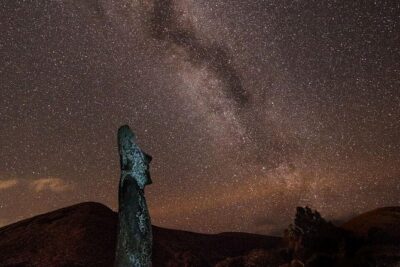 ★ 4.5Rapa Nui StargazingFrom $14062 reviews
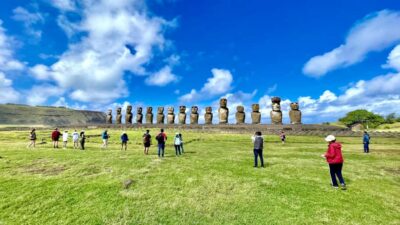 ★ 4.8Two days of Full Day Tour of Rapa Nui + Sunrise in TongarikiFrom $25055 reviews
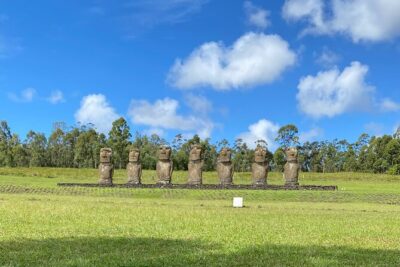 ★ 5.0Half Day Tour in Rapa NuiFrom $1,50048 reviews
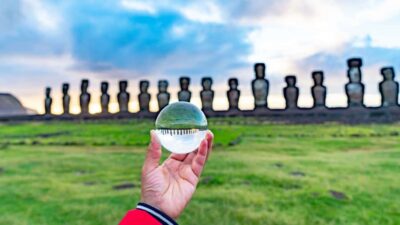 ★ 4.5Sunrise Tongariki: Sunrise at Tongariki Park Private TourFrom $12047 reviews
Browse the lists this tour appears in