
Review · RAPA NUI
Easter Island: Full-Day Tour to Anakena
Moai by the sea, in one day. This full-day Anakena tour strings together the big ocean-facing Ahu Tongariki and the quarry Rano Raraku, then leaves you time to cool off at Anakena Beach. I love how the route hits both ceremonial sites and volcanic sites, not just statues. I also like that you get an included picnic lunch in a dramatic setting. One consideration: it only operates in good weather, so plan with that in mind.
Hotel pickup and drop-off from Easter Island hotels makes the day feel efficient, not stressful. I also like that you get a live guide in English or Spanish, and that strong guides such as Bruno or Vincent are able to explain why the moai matter, including what damage and restoration mean for what you see today. Bring a towel, because you will spend real time outdoors.
In This Review
- Key highlights I’d plan around
- Why this Anakena day tour works so well in 8 hours
- Start in Hanga Roa, then track moai along the coasts
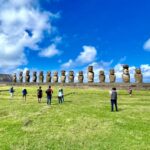
- Ahu Tongariki: the oceanfront moai lineup you plan your day around
- Rano Raraku: where the moai quarry changes your perspective
- Picnic lunch at Rano Raraku, and why it is smart
- Ahu Nau Nau and the moai that make you look twice
- Rano Kau crater viewpoints, plus volcano context for the whole island
- Anakena Beach: swimming time, caves, and two nearby shoreline breaks
- Guided pacing, and why the guide makes or breaks the day
- Price and value: is $171 a smart spend for one full day?
- Who should book, and who should skip this tour
- Should you book the Easter Island full-day Anakena tour?
- FAQ
- Is the Rapa Nui National Park entrance fee included?
- What is included in the tour price?
- How long is the tour?
- What language is the guide available in?
- Where does the tour start and end?
- What should I bring?
- Is this tour suitable for cruise passengers or wheelchair users?
Key highlights I’d plan around
- Ahu Tongariki’s 15 moai near the ocean for that classic coastal view
- Rano Raraku and the Cantera de los Moais with 390-plus moai-in-the-making
- Picnic lunch at Rano Raraku so you stay in the action, not on the move
- Anakena Beach time for swimming, plus cave stops inside a gorge
- Poike and Ovahe beaches for a slower moment by the water
- Ahu Akahanga and Ahu Nau Nau to round out the moai story across the island
Deeper into Rapa Nui: the other island tours
- From Hanga Roa: Rapa Nui Culture Sightseeing Tour
★ 4.6 · 307 reviews - From Hanga Roa: Easter Island Highlights 2-Day Tour
★ 4.3 · 205 reviews - From Hanga Roa: Journey from Orongo to Ana Te Pahu
★ 4.3 · 75 reviews - Two days of Full Day Tour of Rapa Nui + Sunrise in Tongariki
★ 4.8 · 55 reviews
Why this Anakena day tour works so well in 8 hours
If you only have one day on Easter Island, this tour is built for focus. You get a tight circuit of the island’s most famous moai settings, plus crater views, then you end with beach time at Anakena, which is famous for swimming and a calm shoreline feel.
What makes it especially practical is that it is not just a drive-by. You stop at several major ahu sites, and you get enough time at the volcanic crater and the beach to actually absorb the changes in scenery. The day is long enough to feel like a real experience, yet organized enough that you are not guessing your way through the island.
The tour runs about 8 hours, starting in Hanga Roa and returning you to your hotel. That means you can keep your morning simple, and you do not waste half a day coordinating transportation on your own.
Start in Hanga Roa, then track moai along the coasts
The day begins with hotel pickup in Hanga Roa, then you head out along the north and southeast coasts. This matters because Easter Island’s moai are not all meant to be seen the same way. Some are best read from a distance, where you notice their scale against cliffs and ocean. Others reward closer attention, where you can better understand the layout of the ceremonial platforms.
A first stop is Ahu Akahanga, a solid opener that helps you get your bearings fast on how the ahu work. From there, the route continues toward the north and coastal viewpoints that make the statues feel connected to the coastline, not floating in space.
One thing I appreciate about this kind of coastal route is pacing. You see the island as an island, not as separate dots on a map. And if your main goal is moai, this approach is efficient without feeling rushed.
Ahu Tongariki: the oceanfront moai lineup you plan your day around
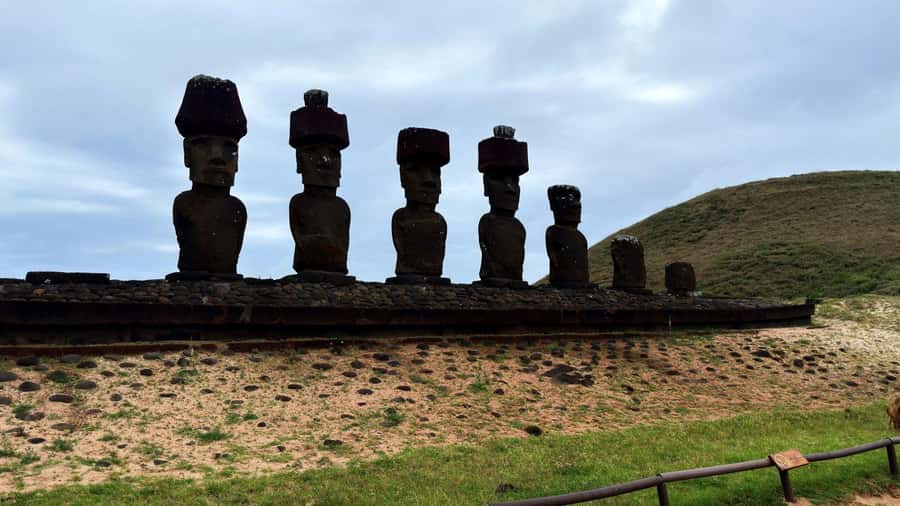
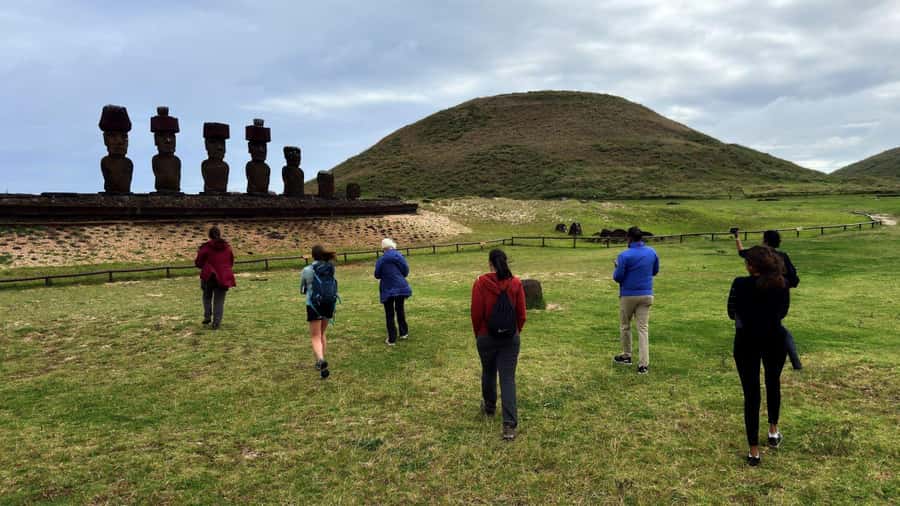
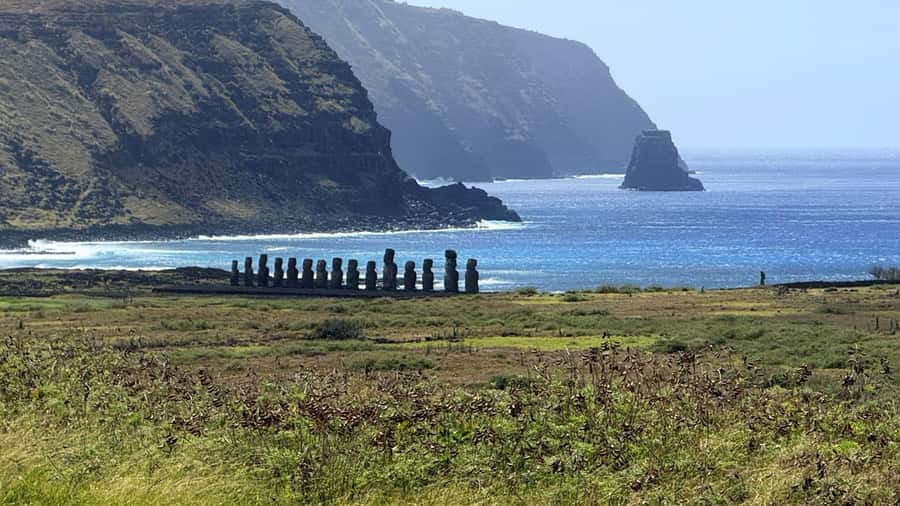
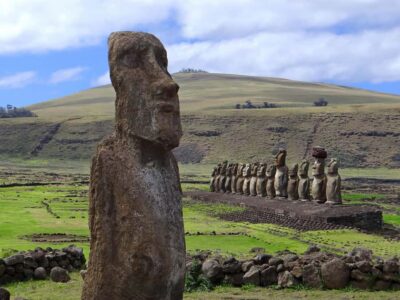
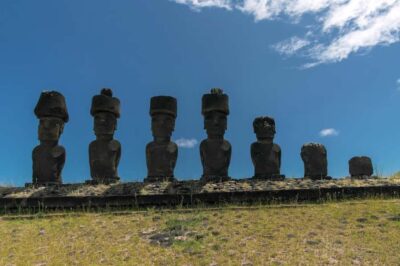
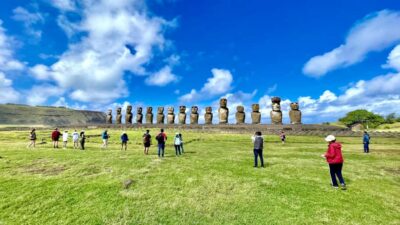
If there is one stop you can anchor your expectations to, it is Ahu Tongariki. This site is known for having 15 giant statues set near the ocean, which gives you that unmistakable Easter Island silhouette.
Here is what you should look for. Notice how the moai face inland or toward sacred directions, while the horizon behind them is pure sea and sky. That contrast helps you understand why these structures sit the way they do. They are not just monuments. They are part of a landscape designed to communicate power, memory, and ceremony.
Ahu Tongariki is also a good place for your guide’s explanation to land. With a solid guide like Bruno or Vincent, you can hear not just the usual basics, but also the consequences of conflict, tsunamis, earthquakes, and the restoration work that shaped what you see now. When someone explains the damage and repair, it changes your experience from sight-seeing to reading the site like a story.
More Chilean days out, start to finish
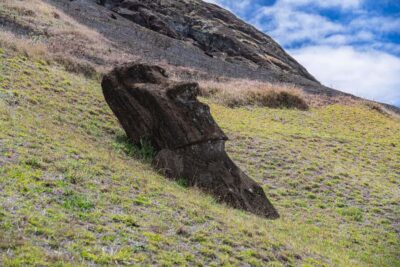
Rano Raraku: where the moai quarry changes your perspective
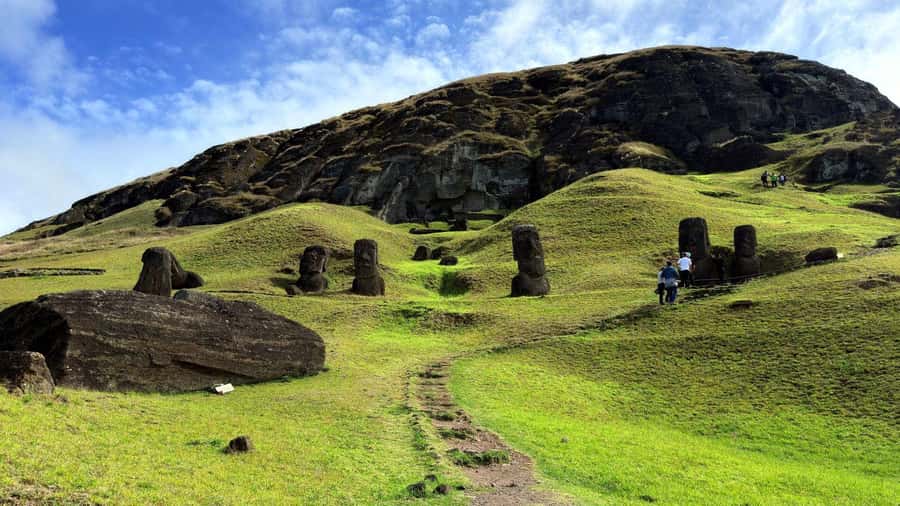
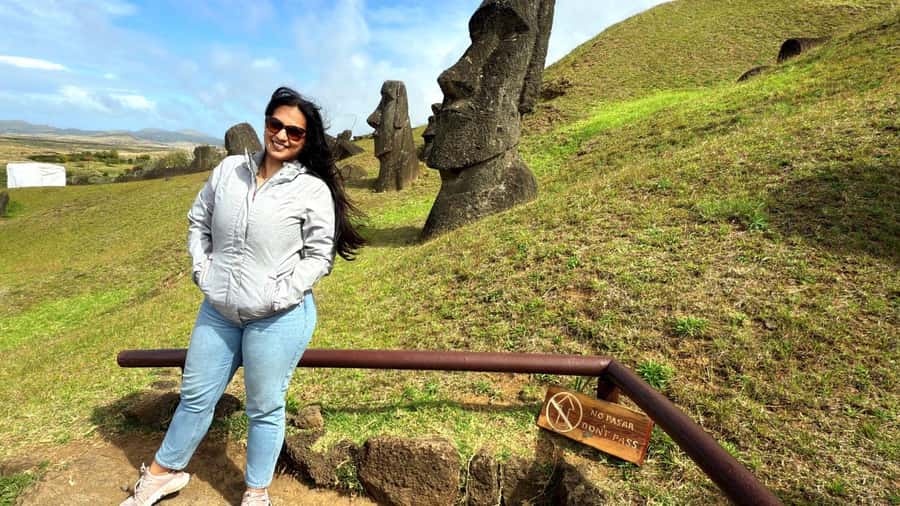
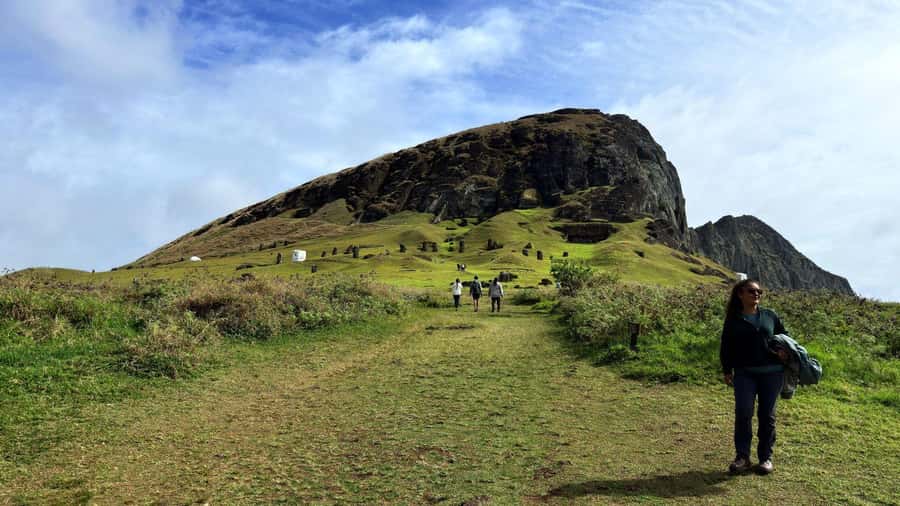
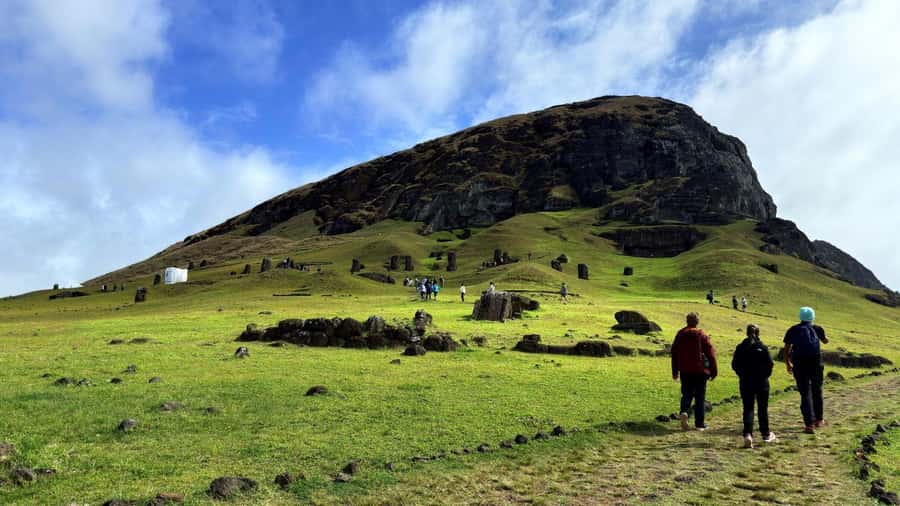
Then you move to the island’s volcanic heart: Rano Raraku, home to the Cantera de los Moais. This is the part of the day that often flips the script on first-time visitors. Instead of only seeing finished or restored moai on ceremonial platforms, you see the quarry world where many figures sit in the landscape.
The Cantera de los Moais is described as having more than 390 figures. That number alone helps you grasp the scale of what was going on here. You are not looking at a handful of statues. You are looking at a working place, a place where carving happened and where the moai story is written in unfinished forms and partially shaped stone.
What I love about this stop is that it gives you context for everything you saw before. At the ahu, the moai feel like icons. At Rano Raraku, they feel like objects with a process and a setting. You start to understand why the island’s geography mattered so much.
Picnic lunch at Rano Raraku, and why it is smart
Lunch is included, and it is a picnic lunch at Rano Raraku. That might sound like a small detail, but it is a big value for your day. You do not lose time driving to a separate restaurant, and you get to keep your focus where the views and atmosphere are strongest.
Practically speaking, picnic lunch also suits the way this tour is structured. You are outdoors for most of the day, and you likely will not want a long sit-down meal. Instead, you can eat, reset your energy, and then keep going while your eyes are still locked on volcanic scenery.
Quick tip: bring your towel, and plan for wind or sun. The crater area can feel exposed, and after a few hours on the moai trail, comfort matters.
Ahu Nau Nau and the moai that make you look twice
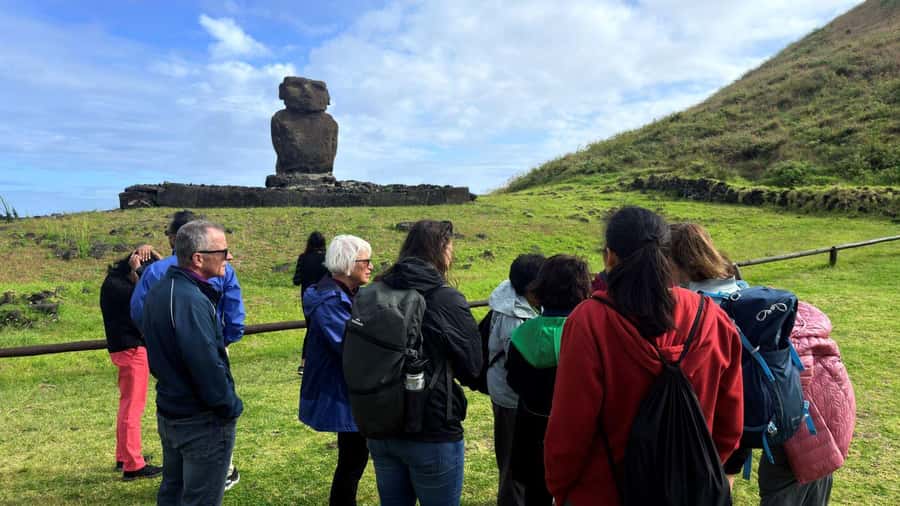
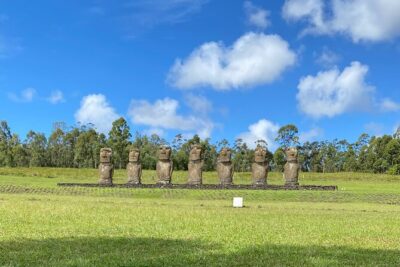
After the quarry stop, the tour continues with more impressive moai structures, including Ahu Nau Nau. This is where the day helps you build a stronger mental map of how different ceremonial sites contribute to the island’s big picture.
Ahu Nau Nau is especially useful for your understanding because it rounds out the route beyond the most famous platform views. In a moai day, variety matters. You want to see more than one type of staging, more than one kind of setting, and more than one way the stone interacts with the coast and cliffs.
If you have a guide who explains what happened to the statues, this is often the second moment that feels educational, not just visual. Learning why restoration work matters will help you notice details you might otherwise skip, like positioning and how the site reads from different angles.
Rano Kau crater viewpoints, plus volcano context for the whole island
The highlights also include a stop at Rano Kau, described as the largest volcanic crater on Easter Island. Even when you are mainly there for moai, crater stops add the missing piece: why this island looks the way it does, and why so many of the important sites follow volcanic terrain.
A crater is not just scenery. It becomes a way to connect dots. When you pair Rano Kau with what you saw at Rano Raraku, you get a stronger sense of the island’s volcanic engine and the dramatic settings where ceremonial life took place.
If you like photography, crater viewpoints are also your “pause” moments. You can step back, take in wide views, and then shift your brain from statue focus to geography focus.
Anakena Beach: swimming time, caves, and two nearby shoreline breaks
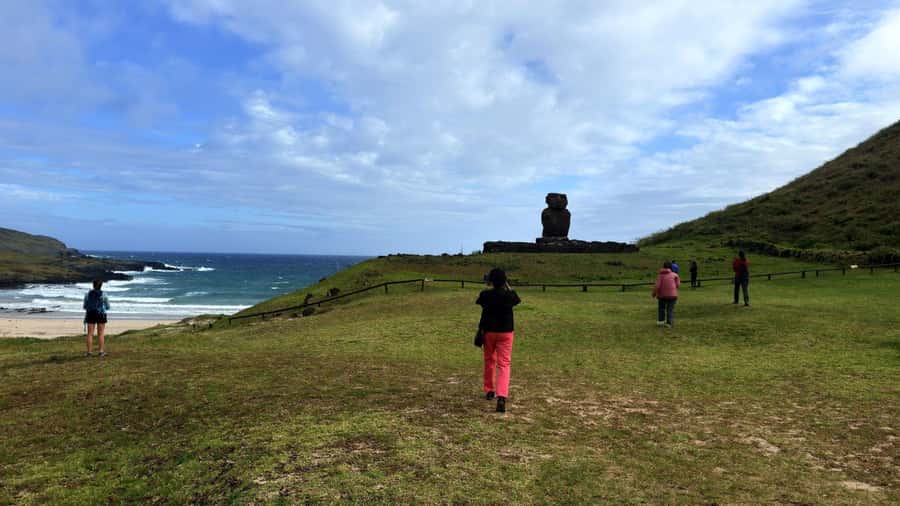
The last big anchor of the day is Anakena Beach, one of the island’s best swimming beaches. After hours of moai platforms and volcanic scenery, this feels like a reward. It is also a different sensory experience. Instead of stone and cliffs, you get sand, water, and a chance to slow down.
The tour includes stops around Anakena that go beyond just standing on the shoreline. You will visit two small caves within a gorge. That detail matters because it adds texture to the visit. You are not just doing a beach break, you are also exploring small natural features in the area.
You also get nearby beaches, Poike and Ovahe, where you can stop and relax. This is a nice way to break up the beach time. You can wander a bit, change your vantage point, and then settle back in where it feels calmest for you.
Practical advice: if you plan to swim, give yourself enough time to actually get in the water, not just dip your feet. And if you are sun-sensitive, take advantage of shade breaks whenever you can, because it is a long day.
Guided pacing, and why the guide makes or breaks the day
This tour lives or dies on guidance. The stops are famous, but what turns them into meaning is the explanation. The reviews highlight guides like Bruno and Vincent, both praised for their passion for the island and for patient, clear explanations.
Here is what you should take advantage of when you book. Ask questions about restoration, about why statues ended up where they did after damage, and about how the island’s dramatic past connects to what survives today. When your guide ties the moai to real events like tsunamis, earthquakes, and civil wars, the day becomes more than a photo run.
Also note the language option. The tour is guided in English and Spanish. If you feel more comfortable asking questions in one of those languages, that alone can make the experience better, because you will catch the nuance instead of just the headline facts.
Price and value: is $171 a smart spend for one full day?
At $171 per person, this tour is not a budget play, but it also is not out of reach for what it includes. You are paying for an 8-hour guided circuit, hotel pickup and drop-off, a picnic lunch at Rano Raraku, and a guide in English or Spanish.
The main cost you should plan for is the Rapa Nui National Park entrance fee, listed as USD 100, and noted as not included. When you budget for that, you get a clearer picture of your real per-person total.
Still, there is good value here if your priority is efficiency. You cover multiple major sites in one organized day, including the oceanfront lineup at Ahu Tongariki, the quarry at Rano Raraku, and the swimming payoff at Anakena. If you tried to piece this together with separate transport and guide time, you would likely spend more time coordinating and more money overall.
For the best fit, look at this as a one-day “core sites” package. If you already plan to spend days on smaller hikes or very slow beach days, this can still work well as the moai and volcano day.
Who should book, and who should skip this tour
This tour is a strong match for you if you want a structured, full-day introduction to Easter Island. It is especially good if your time is tight and you want to see major moai platforms, volcanic craters, and then finish with beach time.
It is also a smart pick if you want comfort in logistics, since hotel pickup and drop-off are included and the day is organized back to Hanga Roa.
Skip it or reconsider if you have mobility needs that require wheelchair access, since it is not suitable for wheelchair users. Also, if you are arriving on a cruise ship, this tour is specifically noted as not suitable for cruise guests. And if weather is likely to be rough, remember the service operates only under good weather conditions.
If you want the island in one day, and you like guided context for the moai, this tour deserves a spot on your plan.
Should you book the Easter Island full-day Anakena tour?
My take: book it if you want the best mix of moai, volcanic context, and an honest beach finish, all in one day. The value comes from the combination of big-name sites plus real time at the quarry and Anakena Beach, not just quick stops.
I would hesitate only if your main goal is deep, slow exploration without a schedule, or if you know your trip timing might collide with bad weather. For most one-day visitors, though, this is exactly the kind of structured day that helps you see the island’s landmarks without turning your trip into a transportation puzzle.
If you can handle a full day outdoors, and you are willing to budget the Rapa Nui National Park fee, this tour is a solid choice for a first Easter Island visit.
FAQ
Is the Rapa Nui National Park entrance fee included?
No. The Rapa Nui National Park entrance fee is not included, and it is listed as USD 100.
What is included in the tour price?
Hotel pickup and drop-off from Easter Island hotels, a guided tour in English and Spanish, and a picnic lunch at Rano Raraku are included.
How long is the tour?
The tour duration is 8 hours.
What language is the guide available in?
The tour guide is available in English and Spanish.
Where does the tour start and end?
It starts in Hanga Roa with hotel pickup and ends in Hanga Roa with drop-off back at your hotel.
What should I bring?
You should bring a towel.
Is this tour suitable for cruise passengers or wheelchair users?
It is not suitable for cruise ship guests, and it is not suitable for wheelchair users.
The Rest Of Our Chile Tours

Everything Else We Have Reviewed In Chile

Rapa Nui, Three More Ways
Not quite it? Here is the rest of what we have reviewed around Chile


More in Easter Island & the Moai.
 ★ 4.6Rapa Nui Culture Sightseeing TourFrom $80307 reviews
 ★ 4.3Easter Island Highlights 2-Day TourFrom $170205 reviews
 ★ 4.5Easter Island Sightseeing Full Day TourFrom $70189 reviews
 ★ 4.3Journey from Orongo to Ana Te PahuFrom $7075 reviews
 ★ 4.5Rapa Nui StargazingFrom $14062 reviews
 ★ 4.8Two days of Full Day Tour of Rapa Nui + Sunrise in TongarikiFrom $25055 reviews
 ★ 5.0Half Day Tour in Rapa NuiFrom $1,50048 reviews
 ★ 4.4Easter island: Snorqueling tour on coral reefsFrom $11047 reviews
Browse the lists this tour appears in