
Review · RAPA NUI
Easter Island: Half-Day Archaeology Tour
Rapa Nui packs a lot into a short morning. This half-day archaeology tour uses a smart route across key ceremonial platforms, plus the famous Puna Pau quarry for the story behind red topknots. I love the pace, it feels easy going without rushing your photos. I also love the way the guide connects each moai to a bigger picture of island life, not just carved stone.
The main thing to plan around is the extra Rapa Nui National Park entrance fee (USD 100) since it is not included in the tour price. Also, this is not a fit if you are bringing strollers or large bags, and it is not suitable for wheelchair users.
In This Review
- Key highlights to look for
- Why this 3-hour Easter Island route feels worth it
- Getting to the sites: pickup, timing, and how the day runs
- Rapa Nui National Park: moai everywhere, wildlife too
- Ahu Tahai: a lone moai moment and why it sticks
- Puna Pau quarry: where the red topknots come from
- Ahu Akivi: seven 16-foot moai facing the ocean
- Ahu Vianpu and Ahu Huri a Urenga: ceremonial sites tied to place
- Price and real value: what $91 covers, and what it does not
- Pace, comfort, and what to bring for easy walking
- Who should book this archaeology tour
- Should you book this Easter Island Half-Day Archaeology Tour?
- FAQ
- How long is the Easter Island half-day archaeology tour?
- Where does the tour start?
- Is the Rapa Nui National Park entrance fee included in the price?
- What languages is the guided tour offered in?
- What group size should I expect?
- What should I bring?
- Is the tour suitable for wheelchair users?
- Is this tour for cruise passengers?
Key highlights to look for
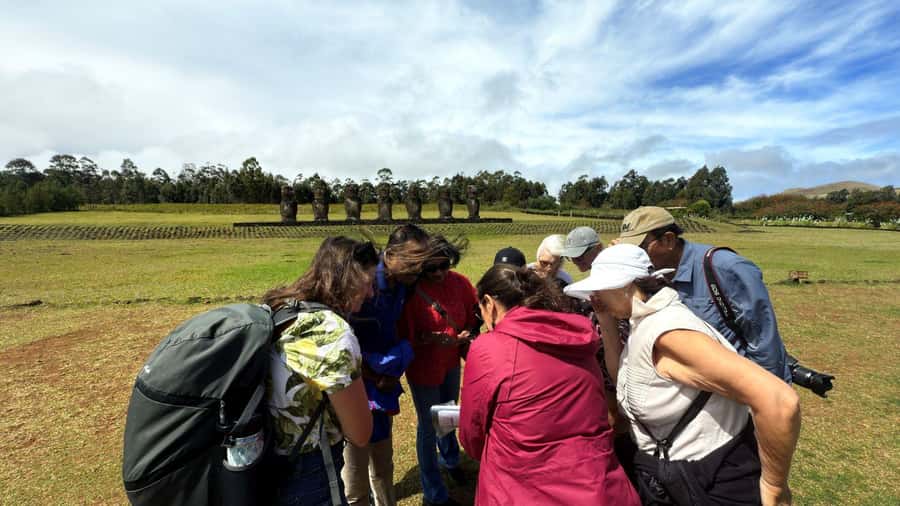
- Seven moai at Ahu Akivi facing the ocean, with a theory that links them to explorers
- Puna Pau red scoria pukao, the topknots and their quarry origin
- Ahu Tahai’s lone moai look, protected by an imposing figure nearby
- Rapa Nui National Park scope, wildlife sanctuary and UNESCO World Heritage Site with hundreds of moai
- Small group size (up to 15), which keeps questions from turning into a waiting game
Deeper into Rapa Nui: the other island tours
- From Hanga Roa: Rapa Nui Culture Sightseeing Tour
★ 4.6 · 307 reviews - From Hanga Roa: Easter Island Highlights 2-Day Tour
★ 4.3 · 205 reviews - From Hanga Roa: Journey from Orongo to Ana Te Pahu
★ 4.3 · 75 reviews - Two days of Full Day Tour of Rapa Nui + Sunrise in Tongariki
★ 4.8 · 55 reviews
Why this 3-hour Easter Island route feels worth it
Easter Island is not a museum you can sprint through. In just about three hours, you still get real context: what moai are, where key ceremonial platforms sit, and why certain places matter. The half-day format works especially well if you have limited time in Hanga Roa, want to keep your afternoon open, or you simply do not want another all-day drive.
You start with hotel pickup in Hanga Roa, so you avoid the first stress of the day. Then your guide handles the connecting tissue, the why behind each stop. You will walk a bit, but it is built for a steady, understandable pace.
Getting to the sites: pickup, timing, and how the day runs
This tour is scheduled as a 3-hour experience, and the exact start times depend on availability. After pickup from your hotel, you travel into Rapa Nui National Park with your guide and make several short stops tied to specific platforms and features.
A couple of practical notes that really matter on Easter Island:
- You should wait in the hotel lobby 10 minutes before your pickup time.
- The driver will wait no longer than 5 minutes after the scheduled pickup time.
That small window is common in island tours, so set yourself up to be ready. Also, keep the day light on gear. No luggage or large bags, and the tour does not allow baby strollers.
Rapa Nui National Park: moai everywhere, wildlife too
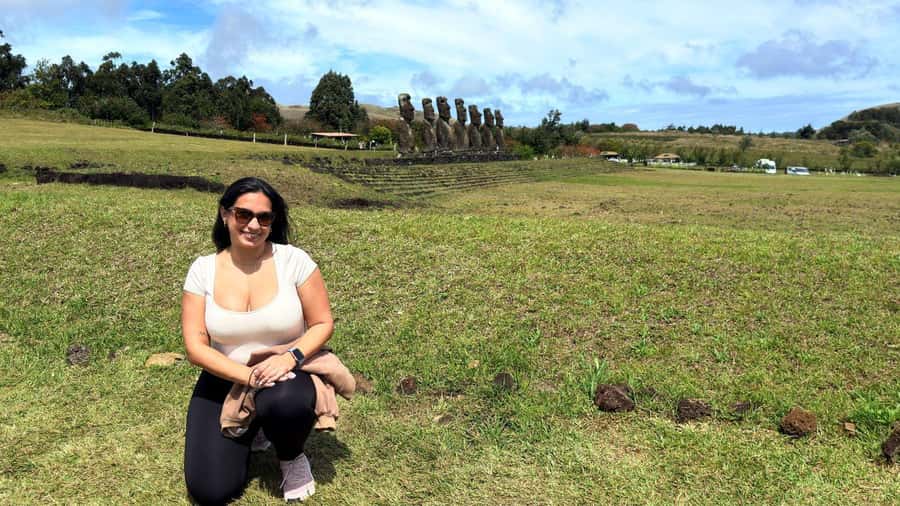
Your first big “wow” moment is stepping into Rapa Nui National Park, a UNESCO World Heritage Site that covers most of Easter Island. It is not just archaeology. It also functions as a wildlife sanctuary, so your guide may point out how the area is managed as a living natural space, not a theme park.
Here is the scale you are dealing with: the park contains about 900 moai and around 300 ahu (ceremonial platforms). The moai are carved from solidified volcanic ash, which helps explain why you see so much variation in form and surface wear across the island.
For you, this matters because you stop thinking of moai as random statues. You start seeing them as markers in an organized ceremonial system, tied to ancestor spirits and high-ranking members of each tribe, according to the beliefs associated with the carvings.
More Chilean half days that still fit a lot in
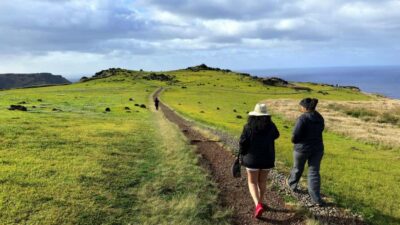
Ahu Tahai: a lone moai moment and why it sticks
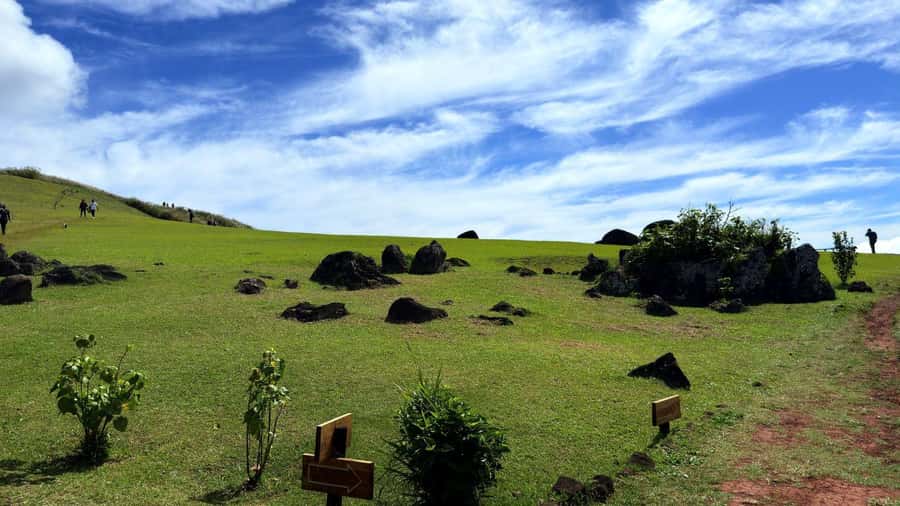
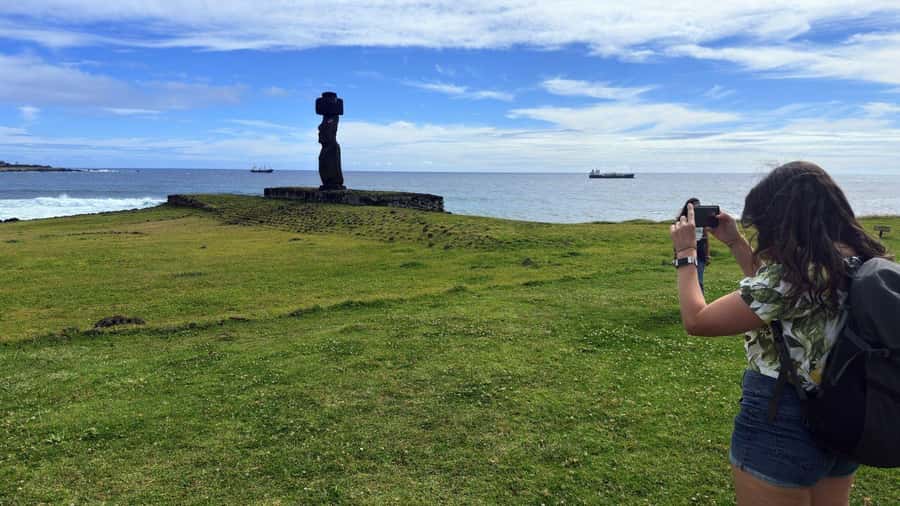
Next, you head to Ahu Tahai, a ceremonial platform with a distinctive feature that makes it memorable right away. This is the place tied to the idea of a unique moai standing alone, and it is protected by an imposing figure taller than 13 feet.
That “protected” detail is more than a visual quirk. It gives you a concrete example of how these sacred areas were set up to frame the presence of the figures. Instead of only thinking about the moai itself, you pay attention to the platform, the arrangement, and how the site communicates status or meaning.
If you like your archaeology with clear visual cues, this stop is a good one. You will likely spend a little extra time here because the setup makes the explanation easy to follow.
Puna Pau quarry: where the red topknots come from
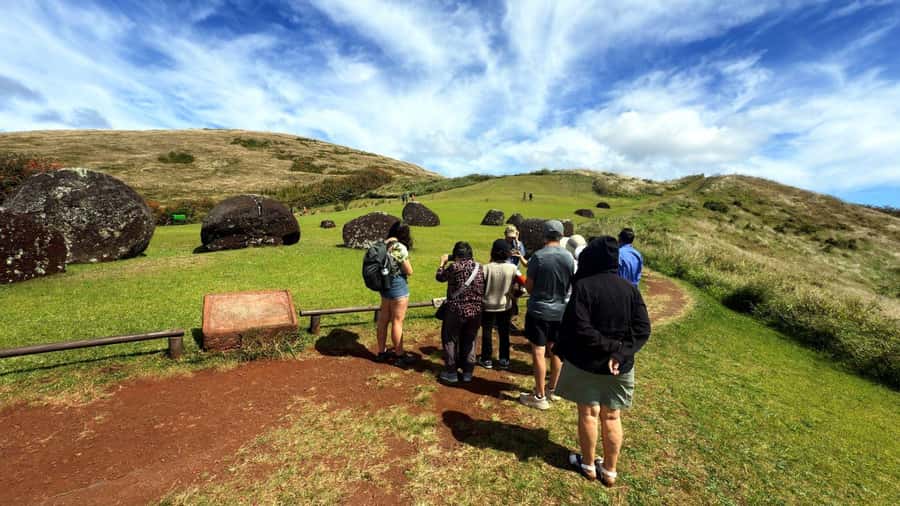
Then comes one of the most practical, satisfying stops on the route: Puna Pau. This is where some moai show a different look, the pukao, or topknots, made from red scoria.
You are not just seeing the result, you are learning how it was sourced. The tour description points out that roughly 30 pukao are located in or near the Puna Pau quarry, the volcanic rock source for that red material. That is a strong clue for how material, labor, and symbolism all connect.
One theory you will hear is that the red scoria used for pukao may have helped impress rival tribes. Even if you take theories as theories, it is still a useful way to interpret color. On Easter Island, not all details are about decoration. Some details are about identity and influence.
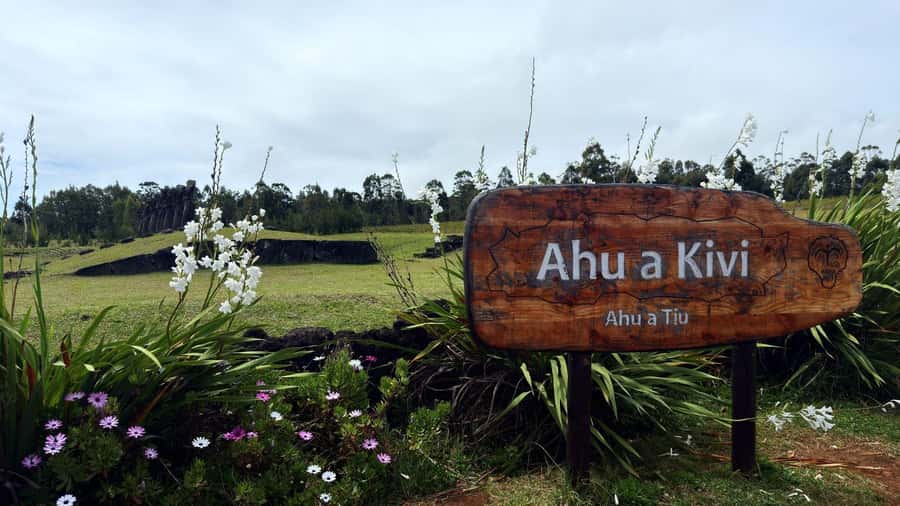
Ahu Akivi: seven 16-foot moai facing the ocean
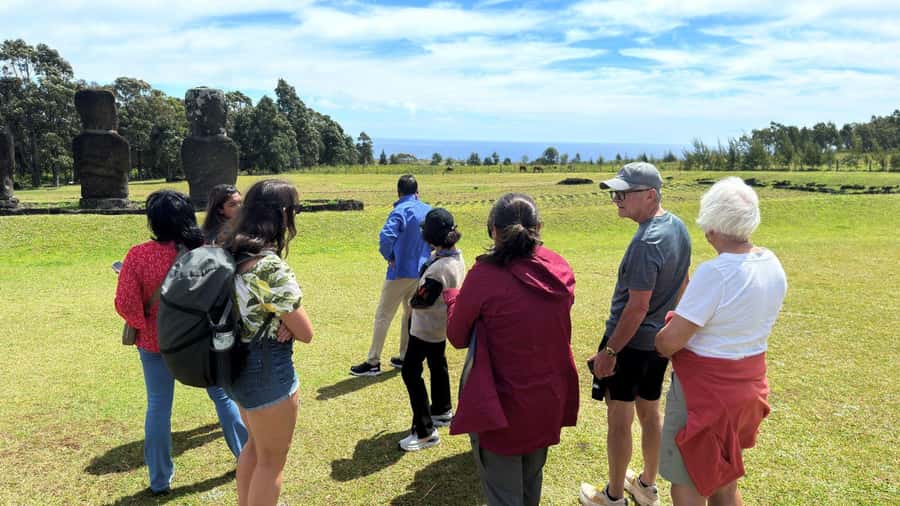
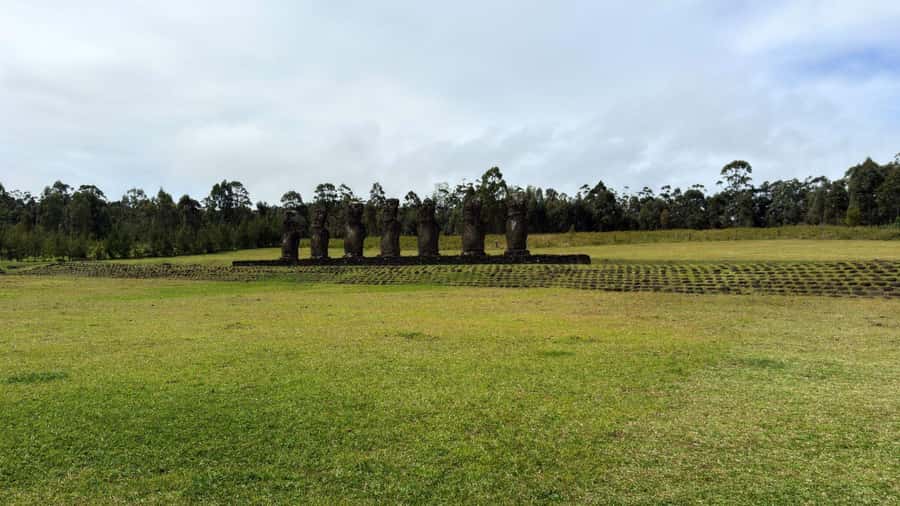
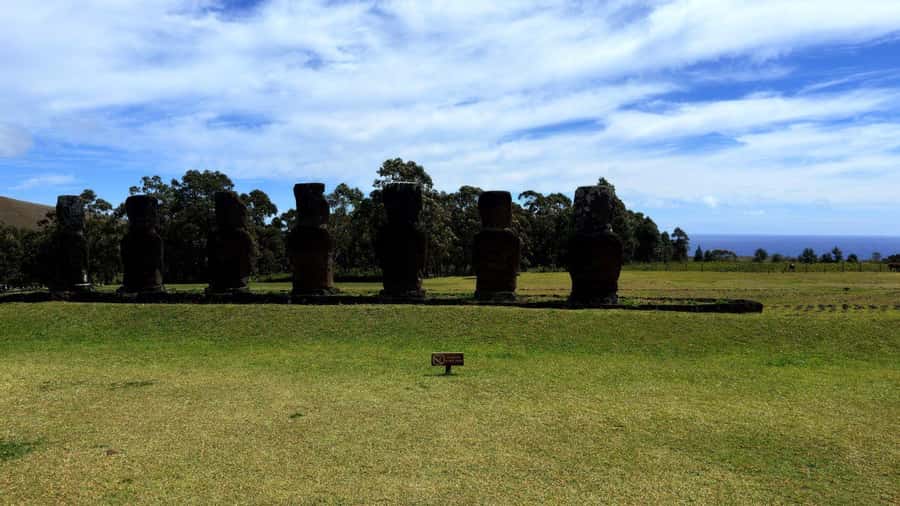
If you want the stop that changes the way you picture moai, make time for Ahu Akivi. Here you will see a line of seven moai that look out toward the ocean. The moai at this site each stand about 16 feet tall and weigh around 18 tons.
What makes Ahu Akivi such a standout is the orientation. In many other cases, moai are set so their backs face the ocean, not their faces. At Ahu Akivi, that choice is reversed.
One theory presented for this unusual positioning links the figures to seven explorers from the Polynesian homeland of Hiva, sent out by a chief to find Rapa Nui. In that explanation, the moai face the ocean in the direction the explorers traveled.
For you, the value is how quickly this stop helps you read the island. You stop treating moai like a single style. You start noticing that different platforms communicate different stories through placement, facing, and arrangement.
Ahu Vianpu and Ahu Huri a Urenga: ceremonial sites tied to place
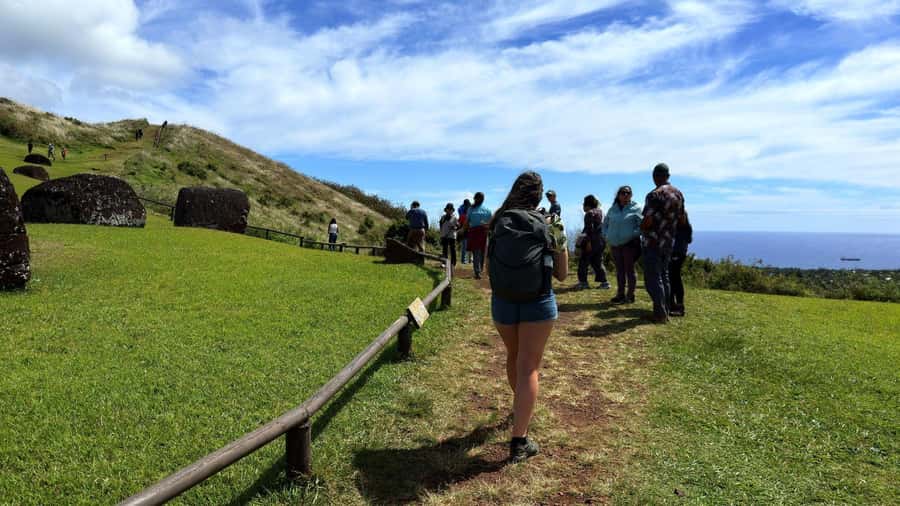
The tour also includes a stop connected to Ahu Vianpu, listed as a ceremonial site on the highlights. Even with only a short visit, it matters because it widens the range of what you are seeing. You are not just hammering the “most famous” angles, you are collecting more reference points across the island’s ceremonial landscape.
Your final stop is Ahu Huri a Urenga, one of the platforms that is not on the coast. Instead, it sits in the interior and corresponds to an agricultural area. That inland placement is meaningful. It helps you see moai and platforms as part of everyday connected life, not only coastal ritual space.
When you wrap up here, you are getting a sense of how the ceremonial world was mapped onto the island’s physical world: coast, quarry, interior agricultural areas. That is the kind of context that makes Easter Island feel coherent instead of random.
Price and real value: what $91 covers, and what it does not
At USD 91 per person, the tour is priced for a half-day outing that still gives you multiple high-impact archaeological stops. What you actually get here is the value:
- Hotel pickup and drop-off in Easter Island hotels
- A guided tour in English and Spanish
- A small group capped at 15 participants, which usually means you can ask questions without yelling over a bus full of strangers
What you do not get is the Rapa Nui National Park entrance fee (USD 100). For planning, you should treat that as part of the real trip cost once you arrive, so you are not surprised.
Is the tour worth it with that separate fee? I think it can be, especially if you want a guided explanation connecting Ahu Tahai, Puna Pau, Ahu Akivi, and the inland stop at Ahu Huri a Urenga. Without a guide, you might see a collection of stone figures and platforms. With a guide, the stops start talking to each other.
Pace, comfort, and what to bring for easy walking
This is a short tour, but you will still be outside and moving between sites. Bring comfortable shoes because you will want stable footing on uneven ground. Leave big bags behind. The tour rules also say no alcohol and drugs, which is common for guided park visits.
Also be aware of suitability. The tour is not wheelchair accessible, so if mobility is an issue, plan accordingly. And if you are a cruise passenger, this tour is not intended for you, since it is considered for passengers staying in hotels.
Who should book this archaeology tour
This tour is a great match if:
- You want real guided context but only have a half-day to spare
- You prefer a small group and a relaxed pace over a rushed checklist
- You are specifically interested in moai platforms plus the story of pukao and Puna Pau
It may not be your best choice if you:
- Need wheelchair accessibility
- Are traveling with a stroller or large luggage
- Are on a cruise and need a cruise-only tour setup
Should you book this Easter Island Half-Day Archaeology Tour?
Yes, if you want a smart introduction to the big ceremonial players on Easter Island, without taking over your entire day. The route hits the kinds of stops that change how you understand moai: ocean-facing placement at Ahu Akivi, the quarry-to-topknot link at Puna Pau, and the inland ceremonial context at Ahu Huri a Urenga.
I would book it especially if you value a guide who keeps the explanations clear and the experience calm. Just go in knowing about the separate park entrance fee, and come wearing shoes built for uneven ground. If you do that, this half-day will feel like a solid use of time, not a compromise.
FAQ
How long is the Easter Island half-day archaeology tour?
The tour lasts about 3 hours.
Where does the tour start?
It includes hotel pickup from Hanga Roa.
Is the Rapa Nui National Park entrance fee included in the price?
No. The Rapa Nui National Park entrance fee is not included and costs USD 100.
What languages is the guided tour offered in?
The guide offers Spanish and English.
What group size should I expect?
It is a small group, limited to 15 participants.
What should I bring?
Bring comfortable shoes.
Is the tour suitable for wheelchair users?
No, it is not suitable for wheelchair users.
Is this tour for cruise passengers?
No, it is not suitable for cruise ship guests, and it is only considered for passengers staying in hotels.
The Rest Of Our Chile Tours



Everything Else We Have Reviewed In Chile

Rapa Nui, Three More Ways
Not quite it? Here is the rest of what we have reviewed around Chile



More in Easter Island & the Moai.
 ★ 4.6Rapa Nui Culture Sightseeing TourFrom $80307 reviews
 ★ 4.3Easter Island Highlights 2-Day TourFrom $170205 reviews
 ★ 4.5Easter Island Sightseeing Full Day TourFrom $70189 reviews
 ★ 4.3Journey from Orongo to Ana Te PahuFrom $7075 reviews
 ★ 4.5Rapa Nui StargazingFrom $14062 reviews
 ★ 4.8Two days of Full Day Tour of Rapa Nui + Sunrise in TongarikiFrom $25055 reviews
 ★ 5.0Half Day Tour in Rapa NuiFrom $1,50048 reviews
 ★ 4.4Easter island: Snorqueling tour on coral reefsFrom $11047 reviews
Browse the lists this tour appears in