
Review · RAPA NUI
Easter Island: The Moai Trail Private Archeological Tour
Moai feel strange in photos, but human in person. This private 6-hour route ties together ceremony, conflict, and creation as you move from ahu platforms to the quarry where moai were carved. I love the way the story stays practical, not spooky, especially when the guide leans into cultural context. I also love the pacing of a private vehicle, so you are not stuck watching other groups block your view. One thing to consider: the tour includes multiple stops on uneven ground, so it is not a fit if you have mobility limits.
The tour is built for people who want more than sightseeing. When guides such as Sol, Isa, Hugo, Miguel, or Yoyo are leading, they are specifically praised for engaging storytelling, humor, and detailed history, not just reciting facts. If it rains, you still keep moving, and the explanations help you make sense of what you are seeing. You should budget extra for entrance fees and plan to dress warm, since Easter Island weather can shift fast.
In This Review
- Key takeaways before you go
- Why Easter Island’s Moai Trail works as a private tour
- Hotel pickup in Hanga Roa, then straight to Ahu Akahanga
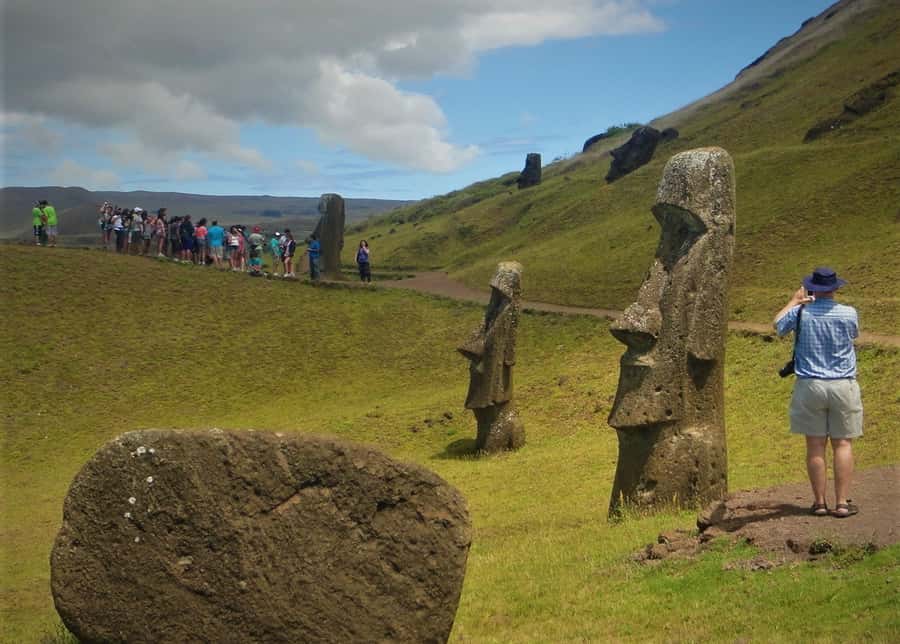
- Rano Raraku quarry: where you see the making of moai
- Ahu Tongariki, 15 moai lined up like a statement
- Te Pito Kura and Paro moai, plus the navel-of-the-world legend
- Anakena Beach and Ahu Nau Nau: arrival stories and carved stone details
- The practical side: time, weather, and what you still need to pay
- Who this Moai Trail tour fits best
- Should you book this private Moai Trail tour?
- FAQ
- Are entrance fees included in the $200 price?
- How long is the private Moai Trail tour?
- Where does the tour start and end?
- What sites are included during the 6-hour route?
- What languages does the guide speak?
- Is this tour suitable for wheelchair users or limited mobility?
Key takeaways before you go
- Ahu Akahanga to Anakena gives you a full arc, from major ceremonial sites to the island arrival story.
- Rano Raraku quarry is the highlight zone, with moai in various carving stages so you see the work process, not only the result.
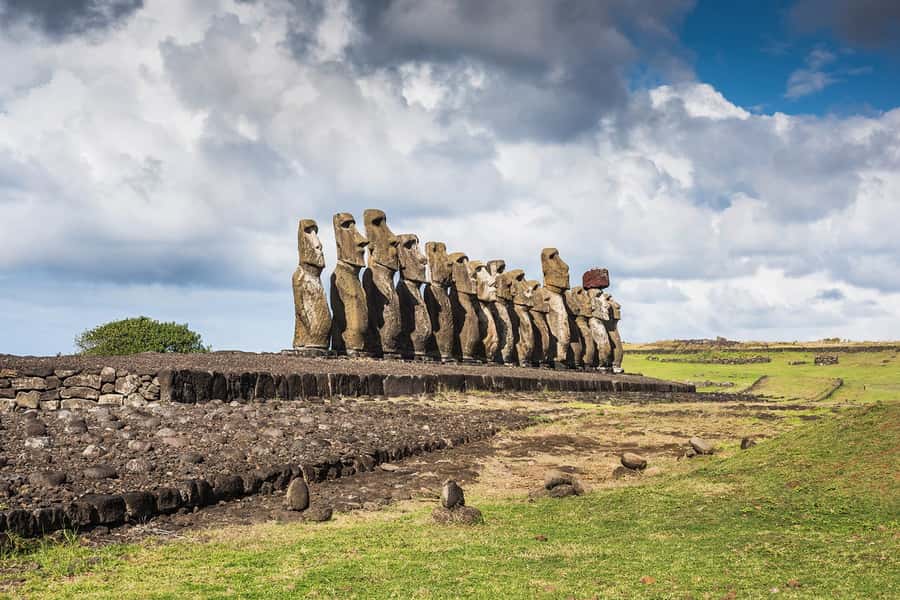
- Ahu Tongariki is the island’s biggest moai platform, featuring 15 statues lined up in a dramatic view.
- Te Pito Kura and the navel-of-the-world stone add legend to the geology and keep the tour from feeling purely archaeological.
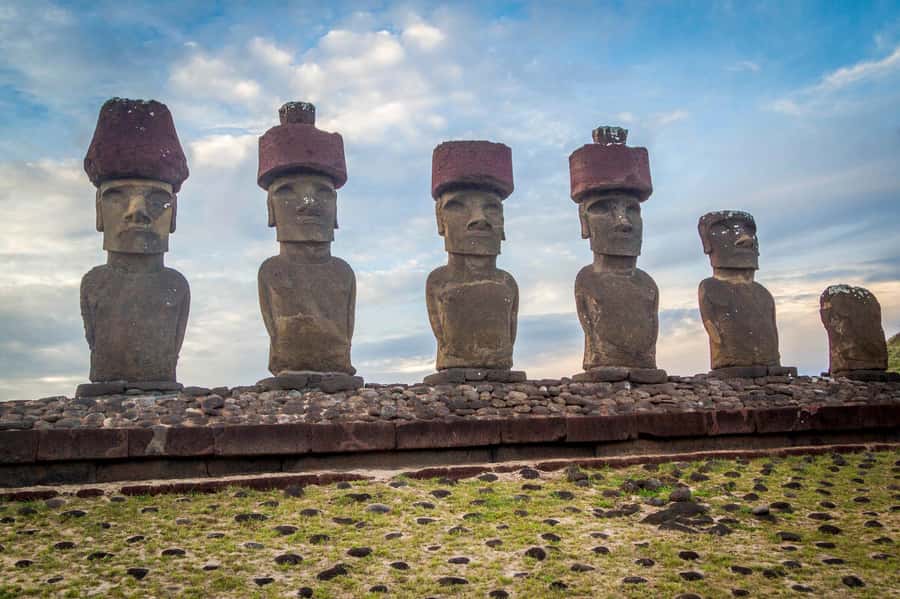
- Ahu Nau Nau at Anakena is a bonus for close-up stonework, including moai with pukao and petroglyphs on the back.
- Private guide plus hotel pickup means fewer logistical headaches in Hanga Roa and a smoother day.
Deeper into Rapa Nui: the other island tours
- From Hanga Roa: Rapa Nui Culture Sightseeing Tour
★ 4.6 · 307 reviews - From Hanga Roa: Easter Island Highlights 2-Day Tour
★ 4.3 · 205 reviews - From Hanga Roa: Journey from Orongo to Ana Te Pahu
★ 4.3 · 75 reviews - Two days of Full Day Tour of Rapa Nui + Sunrise in Tongariki
★ 4.8 · 55 reviews
Why Easter Island’s Moai Trail works as a private tour
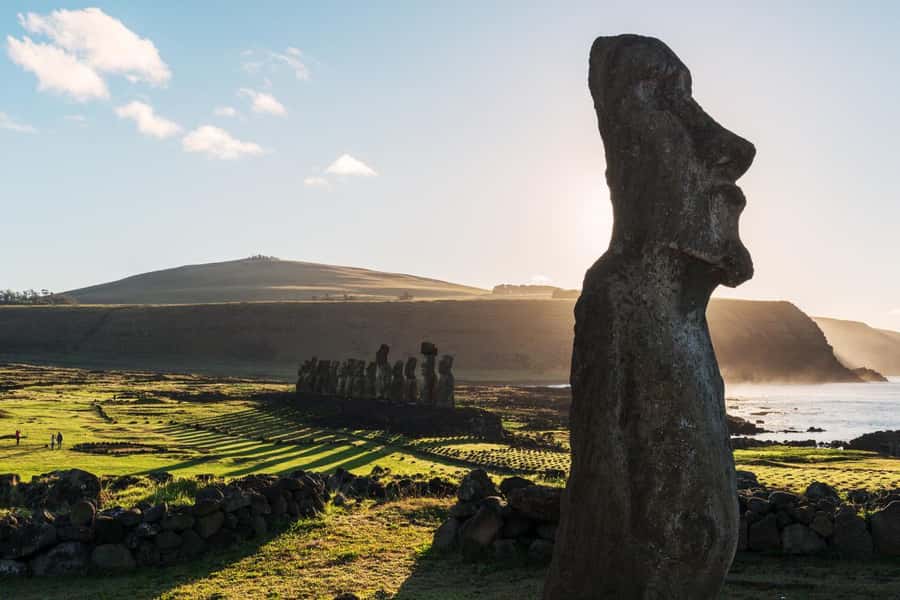
Easter Island can feel like two experiences at once. One side is these giant stone heads, staring back with that steady, almost serious expression. The other side is the human reality behind them, including ceremony, craft, status, and conflict.
That is why this tour format clicks. You get picked up in Hanga Roa and driven between sites in a private vehicle, which matters on an island where distances and timing can be tricky. Then you spend real time at the places that explain how moai were made and why they mattered, especially the quarry area at Rano Raraku.
The best version of the tour is the one with strong storytelling. In the experiences you are likely to see described by previous guests, guides are repeatedly singled out for being engaging, funny, and able to connect the past to questions you still hear today. If you end up with someone like Hugo, Miguel, or Yoyo, you can expect a broader historical framing, not just a checklist of stops.
Hotel pickup in Hanga Roa, then straight to Ahu Akahanga
Your day starts with pickup from your hotel in Hanga Roa, which is a big deal here. No figuring out transport. No wasting morning time. You just roll into the island’s history while your legs are still fresh.
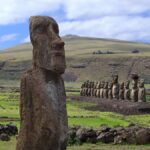
The first stop is Ahu Akahanga, where you get a guided look at a significant ceremonial center. The ahu are not random pile-ups of stone. They are key platforms that helped organize community life, ancestor power, and public display. Standing near the moai in this early phase helps you understand what you will later see at larger, more famous sites.
This first stretch is also where the guide usually sets up an important theme: tribal wars and the moai that were knocked down during fighting. That detail makes everything else click later, because you start seeing the moai not only as art, but as messages, targets, and symbols.
Rano Raraku quarry: where you see the making of moai
If you only had time for one site, Rano Raraku is usually the one that earns that status. Here, you do not just look at moai. You see the quarry and the place where the volcanic rock used for carving came from. That means the day turns from “wow” into “how exactly did they do it?”
You get a long guided visit, about 3.5 hours, at Rano Raraku. That time matters because you are not only walking past statues. You are moving through a work zone, seeing moai in different stages of carving. Even if you are not a stonework person, you can feel the logic of the process: selection of material, shaping, and the gradual move from block to figure.
This is also where the tour usually helps you understand the scale of effort behind each statue. A moai is not a quick project. It is a long, coordinated undertaking that requires materials, labor, and a reason to justify the work. When your guide keeps the focus on what the quarry represents, the moai stop being mysterious and start being impressive in a real, human way.
Practical tip: wear comfortable shoes. The ground can be rocky, and you will be on your feet for a while.
Other private runs through Chile
Ahu Tongariki, 15 moai lined up like a statement
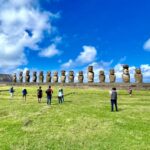
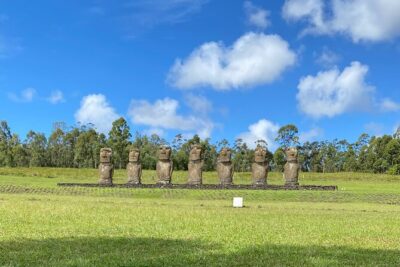
Next comes Ahu Tongariki, and yes, it is dramatic. This is the largest ahu platform on the island, and it contains 15 moai. The arrangement gives you a sense of collective power, the way multiple statues reinforce the authority of a single ceremonial space.
A good guide does something subtle here: they help you read the platform like a scene. You see the figures as a group, not just separate heads. You also start to notice how these platforms relate to movement, light, and sightlines. That is why Tongariki feels so different from earlier stops.
You will spend about two guided hours here. That is enough time to slow down, absorb, and ask questions. It is also long enough for the guide to connect this place to the larger themes of ancestor veneration and social organization.
If you are worried about overcrowding, the private format helps. The whole point is that you can focus on the space, not on the logistics of weaving through crowds.
Te Pito Kura and Paro moai, plus the navel-of-the-world legend
After Tongariki, the route shifts into a more legend-forward stop: Ahu Te Pito Kura. You visit it for about 30 minutes, which sounds short until you realize how much meaning can sit in a small area.
This ahu includes the highest statue on the island, and you will also see Paro moai. The big extra here is the spherical stone next to the ahu, described in legend as the navel of the world, often referred to as Te Pito or Te Henua. According to the story, it was brought to the island on Hotu Matua’s boat.
That kind of detail can feel like “myth talk” if it gets tossed out without context. But when the guide connects it to the overall cultural landscape of the island, it stops being random folklore and becomes part of how people explained their place in the universe.
A tip for your own mindset: treat this stop as a cultural map, not as a debate. Your goal is to understand why this legend was important enough to pass down, not to score points on accuracy.
Anakena Beach and Ahu Nau Nau: arrival stories and carved stone details
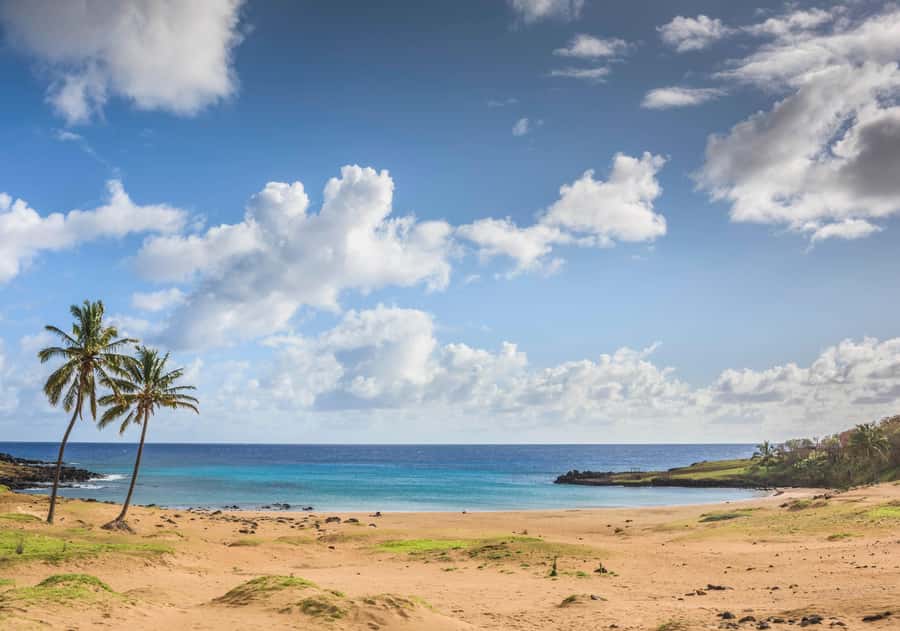
Then you get to the part that feels like a reward. Anakena Beach brings you to white sand and a more relaxed pace, but it is still connected to serious history.
The tour time here is about 1.5 hours, including visits to key archaeological spots tied to the island’s origin story. You will learn about Ariki Hotu Motua and his sister Avareipua, the figures associated with arriving on the island.
The tour also includes Ahu Nau Nau, an ancient complex construction site. This stop is where you get close to moai with pukao and petroglyphs on the back of the statues. That is a detail you might not catch if you are rushing. And it is exactly the kind of stonework nuance that makes the tour feel more like study than a photo stop.
Here is the balanced reality: beach time is limited, and this is still a guided archaeological day. You will not get a full leisurely vacation on the sand. But you do get a meaningful ending, because you finish with both environment and symbolism.
The practical side: time, weather, and what you still need to pay
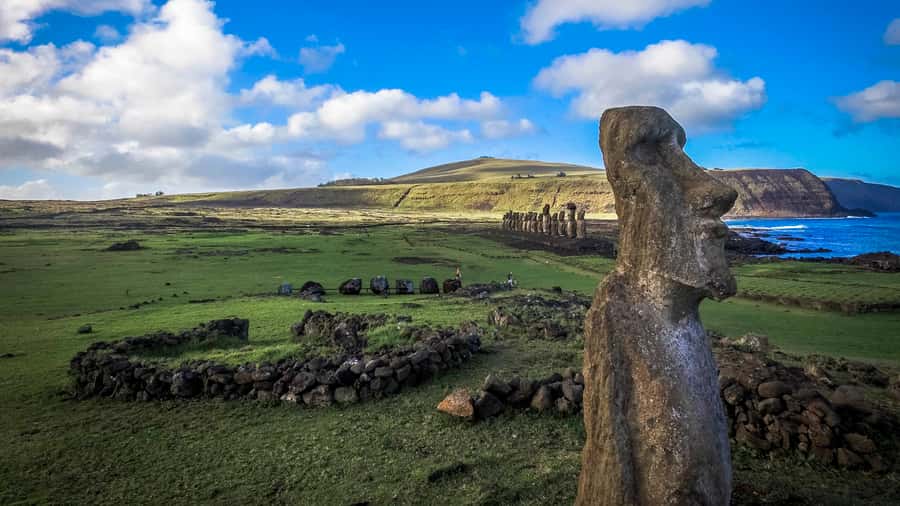
This is a 6-hour private tour, with hotel pickup and drop-off, plus a professional guide and transportation in a private vehicle. That structure is a strong value for Easter Island, where independent planning can turn into a time sink.
Now the cost reality check. The price is listed as $200 per person, and entrance fees are not included. Entrance fees are listed separately as $80 per person. So your planning number is closer to $280 per person for the full experience, plus food and drinks.
Is that worth it? For many people, yes, because the tour groups the key sites into one efficient day and gives you long, guided time at the quarry and major platforms. If you tried to do this on your own, you would spend a lot more energy coordinating. Even with a driver, you would lose the interpretive layer that helps the moai make sense beyond visuals.
What to bring is simple:
- Comfortable shoes
- Warm clothing
Even if the day starts mild, Easter Island weather can shift, and warm layers keep you comfortable while you wait at platforms or stand for viewpoints.
Who this Moai Trail tour fits best
This private tour is best for people who want a structured way to see the island’s core moai sites without turning the day into a transportation puzzle.
You will likely enjoy it most if you:
- Want a guided focus on Rapa Nui history and symbolism
- Care about understanding why moai were carved, placed, and sometimes knocked down
- Like the idea of seeing both the finished statues and the quarry where they began
It is not a good match for people with mobility impairments or wheelchair users. It is also not available for cruise ship passengers. If you are planning with those constraints, you should look for an alternate format that better matches accessibility and schedule.
Should you book this private Moai Trail tour?
Book it if you want the most efficient and meaningful way to cover the moai highlights in one day, with a guide who can turn stone, legend, and history into something you can actually understand and remember. The pacing is designed for attention: enough time at Rano Raraku to see carving stages, enough time at Tongariki to absorb the scale, and enough time at Anakena to finish with both story and detail like the petroglyphs on the backs of the statues.
Skip it or reconsider if the extra entrance fees stretch your budget or if you need an easier physical day due to mobility concerns. Also, if you only want quick photo stops, the guided focus and archaeology pacing may feel a bit more “learning day” than “wander day.”
If you are doing Easter Island for the moai, this is one of the cleanest ways to see the island’s greatest hits and get the context that makes the moai feel real.
FAQ
Are entrance fees included in the $200 price?
No. Entrance fees are not included, and they are listed as $80 per person.
How long is the private Moai Trail tour?
The tour duration is 6 hours.
Where does the tour start and end?
Pickup happens at your hotel in Hanga Roa, and you are dropped back at your hotel in Hanga Roa at the end.
What sites are included during the 6-hour route?
The tour includes guided visits to Ahu Akahanga, Rano Raraku, Ahu Tongariki, Ahu Te Pito Kura, and Anakena, including Ahu Nau Nau.
What languages does the guide speak?
The live tour guide speaks English and Spanish.
Is this tour suitable for wheelchair users or limited mobility?
No. It is not suitable for people with mobility impairments or wheelchair users. It also is not available for cruise ship passengers.
The Rest Of Our Chile Tours


Everything Else We Have Reviewed In Chile

Rapa Nui, Three More Ways
Not quite it? Here is the rest of what we have reviewed around Chile



More in Easter Island & the Moai.
 ★ 4.6Rapa Nui Culture Sightseeing TourFrom $80307 reviews
 ★ 4.3Easter Island Highlights 2-Day TourFrom $170205 reviews
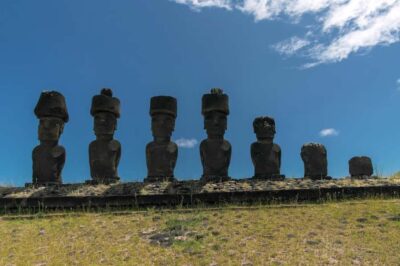 ★ 4.5Easter Island Sightseeing Full Day TourFrom $70189 reviews
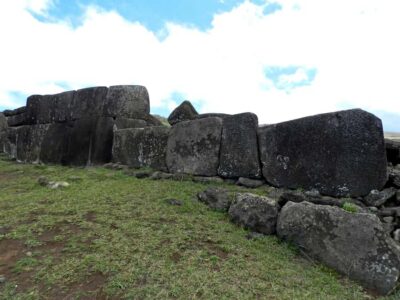 ★ 4.3Journey from Orongo to Ana Te PahuFrom $7075 reviews
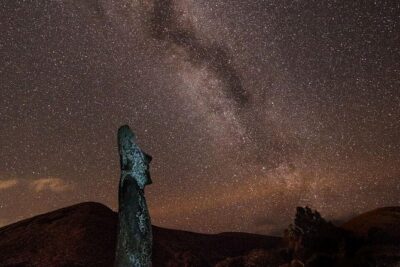 ★ 4.5Rapa Nui StargazingFrom $14062 reviews
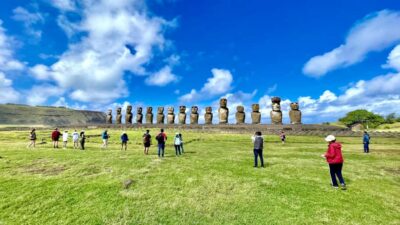 ★ 4.8Two days of Full Day Tour of Rapa Nui + Sunrise in TongarikiFrom $25055 reviews
 ★ 5.0Half Day Tour in Rapa NuiFrom $1,50048 reviews
 ★ 4.5Sunrise Tongariki: Sunrise at Tongariki Park Private TourFrom $12047 reviews
Browse the lists this tour appears in