
Review · RAPA NUI
From Hanga Roa: Rapa Nui Culture Sightseeing Tour
Moai in one day can feel like a lot, but this route is built to make sense of them. You get guided context from local Rapa Nui guides, then you move through the island’s big hitters like Rano Raraku and Tongariki without having to plan the logistics yourself. It is a solid, easy way to see the classic Easter Island sights and understand why they matter.
My favorite parts were the clear storytelling and the flow from monument to quarry to beach. You also get time to actually look up close and take photos, not just speed past statues. One thing to consider is that it is a long day with a lot of riding and fixed site timing, and lunch can run late since lunch is not included.
In This Review
- Key things that make this tour worth your time
- Moai, quarry, beach: why this one-day loop works
- Meeting point and the pace of your 8-hour day
- Vaihu (traditional village) first: context before the statues
- Ahu Akahanga: walking the legends behind more moai
- Rano Raraku quarry: seeing moai-in-progress changes everything
- Tongariki’s standing moai: the platform that feels engineered
- Te Pito Kura: the magnetic stone and the spiritual meaning
- Anakena beach with 1.5 hours: your decompression zone
- Price and what you actually get for $80
- Guides, languages, and the human factor
- Who should book this tour, and who might pass
- Should you book Hotumatur Rapa Nui Culture Sightseeing Tour?
- FAQ
- How long is the From Hanga Roa Rapa Nui Culture Sightseeing Tour?
- What sites does the tour visit?
- Where does the tour pick up and drop off?
- Is transportation included?
- Are the national park tickets included?
- Is lunch included?
- What languages are available for the live guide?
- Is the tour wheelchair accessible?
- What time should I wait in the hotel lobby for pickup?
- Is free cancellation available?
Key things that make this tour worth your time
- Local guides who know the moai stories and explain them in both English and Spanish
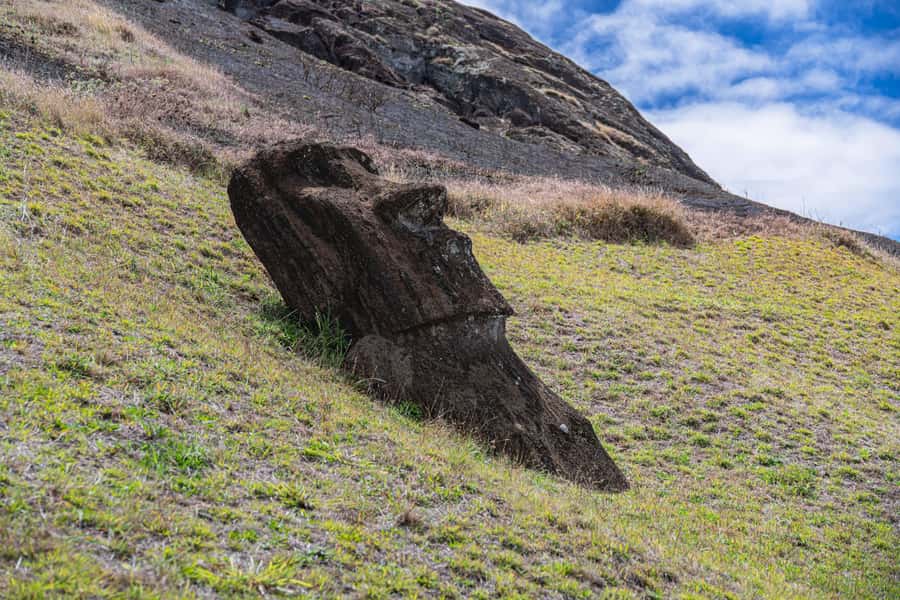
- Rano Raraku quarry where you can see moai-in-progress
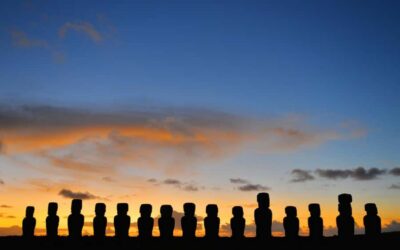
- Tongariki’s giant lineup of standing moai on the largest platform on the island
- Te Pito Kura and the magnetic stone belief, tied to spiritual use
- Anakena beach time with 1.5 hours to linger
- Hotel pickup and drop-off in Hanga Roa so you are not juggling transport
Deeper into Rapa Nui: the other island tours
- From Hanga Roa: Rapa Nui Culture Sightseeing Tour
★ 4.6 · 307 reviews - From Hanga Roa: Easter Island Highlights 2-Day Tour
★ 4.3 · 205 reviews - From Hanga Roa: Journey from Orongo to Ana Te Pahu
★ 4.3 · 75 reviews - Two days of Full Day Tour of Rapa Nui + Sunrise in Tongariki
★ 4.8 · 55 reviews
Moai, quarry, beach: why this one-day loop works
If you are short on time on Easter Island, you usually face a choice: either do a fast “checklist” tour or spend the day hoping transit and timing line up. This day trip is attractive because it concentrates on the places most people dream about when they picture Rapa Nui, then adds enough explanation that the day feels like more than sightseeing.
The big value is the sequence. You start with a more grounded cultural introduction, then you go to the ceremonial sites with ahu platforms, then you head to the quarry (Rano Raraku) to see how the moai were carved. After that, you finish with Te Pito Kura and Anakena, so the day ends with both meaning and relaxation.
The other reason I like this style of tour is the practicality. It handles the driving, the stops, and the pacing. Even if you are the type who likes to wander, the guided structure keeps the day from turning into stress.
Meeting point and the pace of your 8-hour day
You start in Hanga Roa with hotel pickup and end back at the same place. There is a bus or coach ride segment of about 45 minutes early on, then the day alternates between short walks and guided visits.
Here’s the rough rhythm:
- You get oriented at the traditional village stop (about a 45-minute guided walk).
- You move to Ahu Akahanga with another 45-minute guided walk.
- Rano Raraku takes about 1 hour with guided time.
- Tongariki is about 45 minutes total for visit and guided walk-through.
- Te Pito Kura is about 45 minutes of guided time plus walking.
- You finish at Anakena with 1.5 hours free time.
Why this matters: if your top priority is moai and you can tolerate a long day, this schedule hits the major sites without leaving you stranded between far-flung points. If you want long, slow wandering at only one or two locations, you might feel the time pressure.
Also, since lunch is not included, your day can shift depending on how quickly the group gets fed. One of the most consistent cautions in the feedback is that slower lunch plans can squeeze the final beach window. If Anakena is a must for you, plan your own expectations and keep a little flexibility in your timing.
Vaihu (traditional village) first: context before the statues
Your tour begins with a traditional village area where you get a guided walk and a cultural orientation before the moai heavy-hitters. This is one of those smart steps that people sometimes skip when they self-tour, because it helps you understand what you are looking at later.
During this first stop you are not just moving between stones. You are getting a feel for how Rapa Nui culture ties together community, ritual spaces, and the way monuments were used. In a good tour day, this is what turns moai from random faces into meaningful symbols.
Keep your expectations realistic: this is a primer stop. It is useful, but it may not hit you as hard as the quarry or the big ceremonial platforms later in the day. That said, having context early tends to make the rest of the loop click faster.
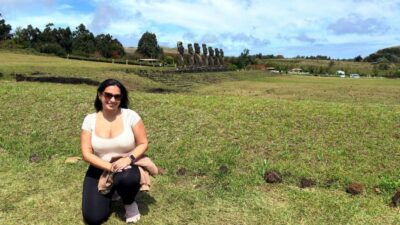
Ahu Akahanga: walking the legends behind more moai
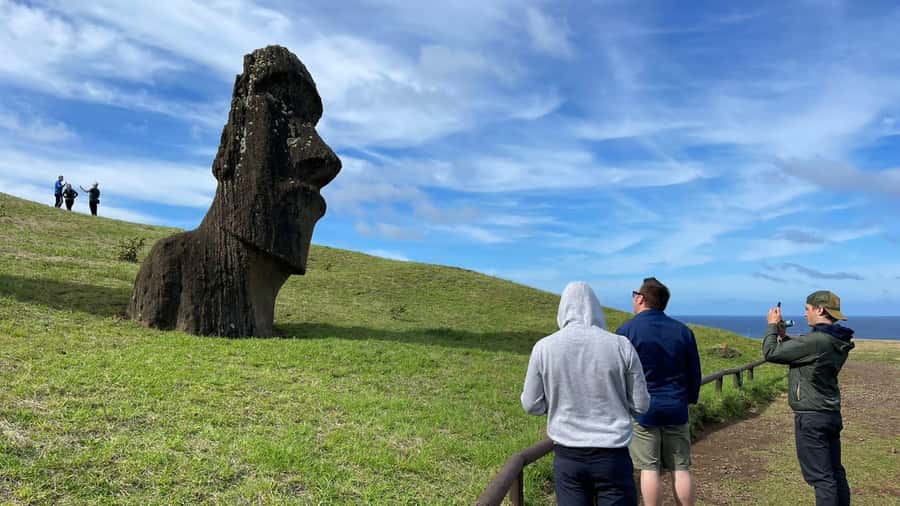
Next up is Ahu Akahanga, a well-known archaeological site with moai set against a rugged natural backdrop. The time here is about 45 minutes, including a guided walk.
What I like about Ahu Akahanga is that it feels like both archaeology and story. You are standing in a place where legends and physical remains overlap, so you get the “why” behind the “what.” The tour framing also makes it easier to notice details you might otherwise miss, like how the ahu platforms shape the way the statues face the world.
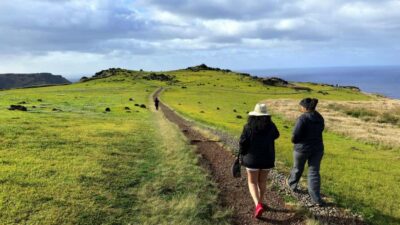
A practical note: this stop is active. You will be walking, and footwear matters if the ground is uneven.
Rano Raraku quarry: seeing moai-in-progress changes everything
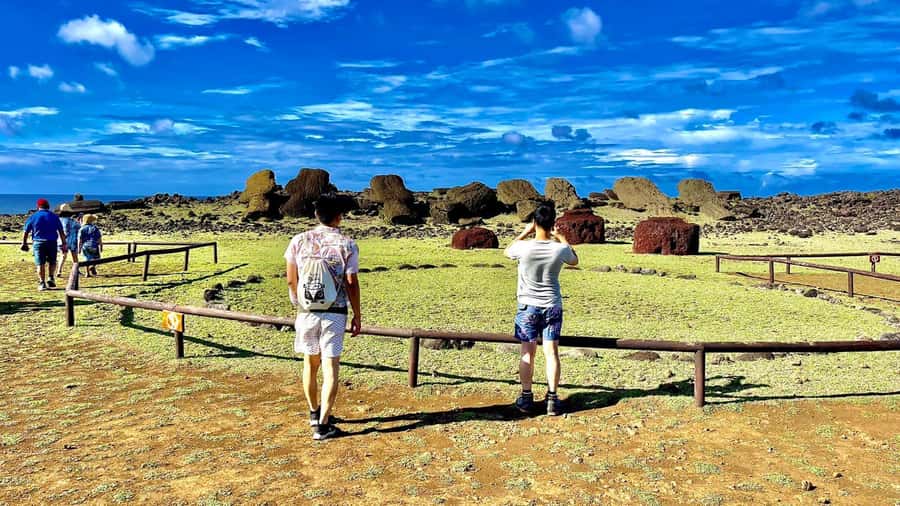
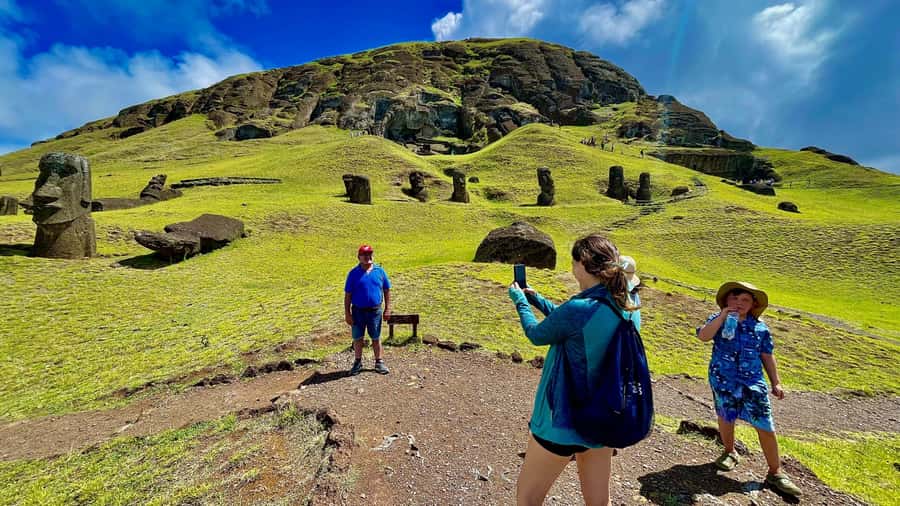
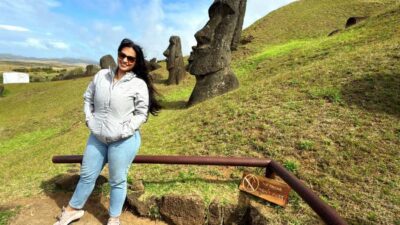
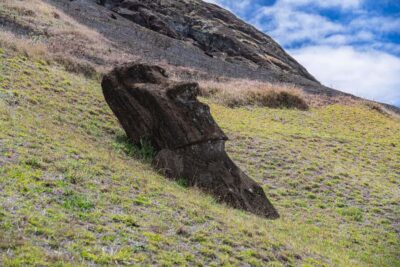
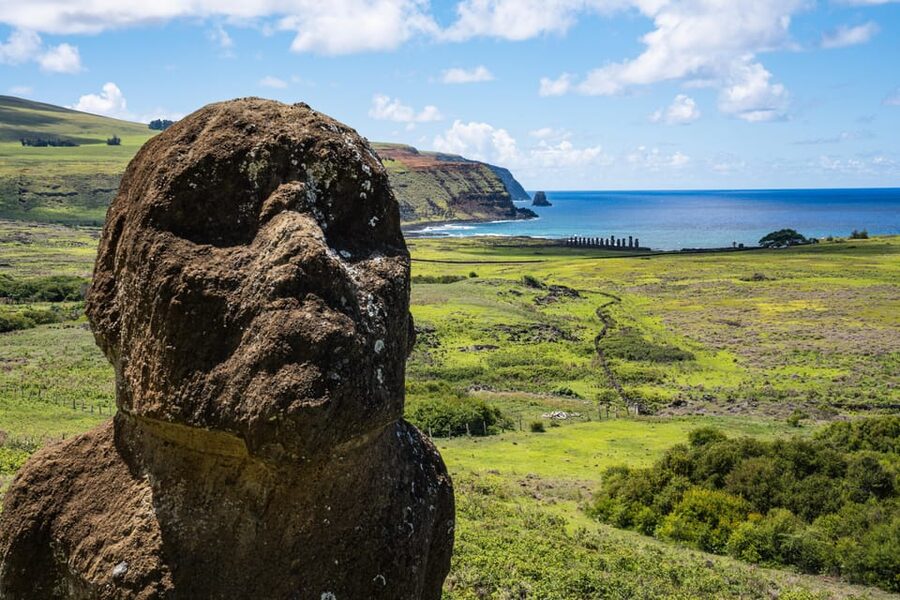
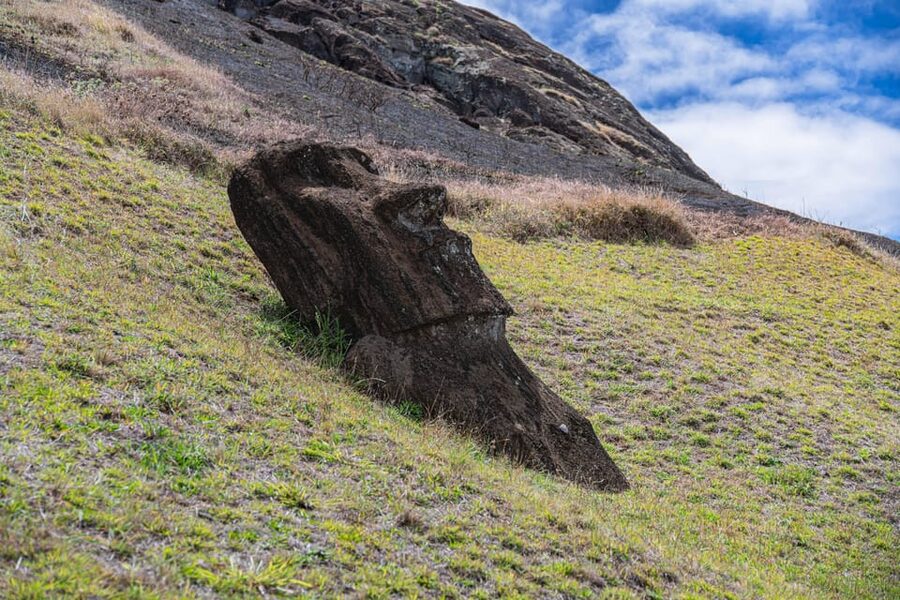
Then comes the highlight for many people: Rano Raraku, the quarry where the moai were carved. You get about 1 hour here with guided time.
This stop is special because you are not just seeing finished monuments. You are seeing the quarry itself and the moai that were left unfinished. That small shift in perspective is huge. Instead of thinking of moai as finished art objects, you start thinking about them as a long process, involving labor, skill, and planning.
If you only have one “deep” moai moment in your day, make it this one. It is also one of the best places for photography because you can frame statues against the quarry setting and get a sense of scale.
One more reason it works: the guided explanation helps you interpret what you are looking at, rather than leaving you with big stones and guesses.
Tongariki’s standing moai: the platform that feels engineered
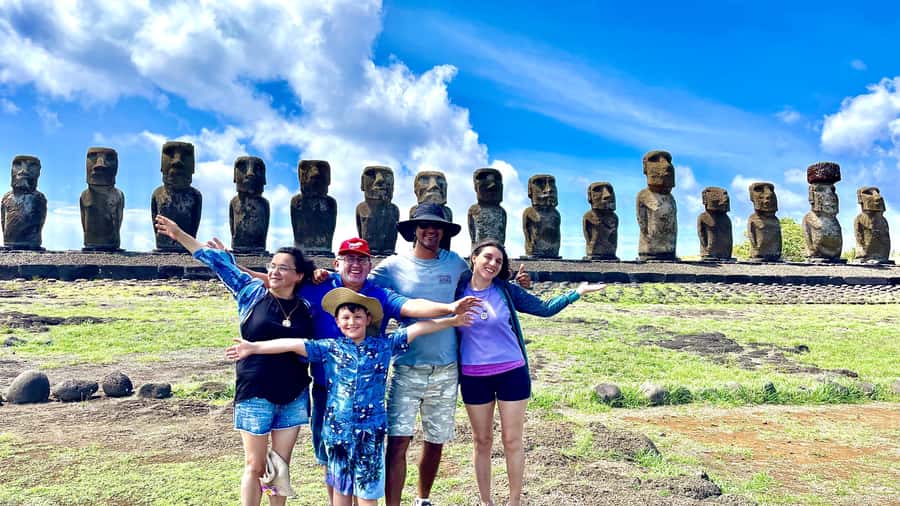
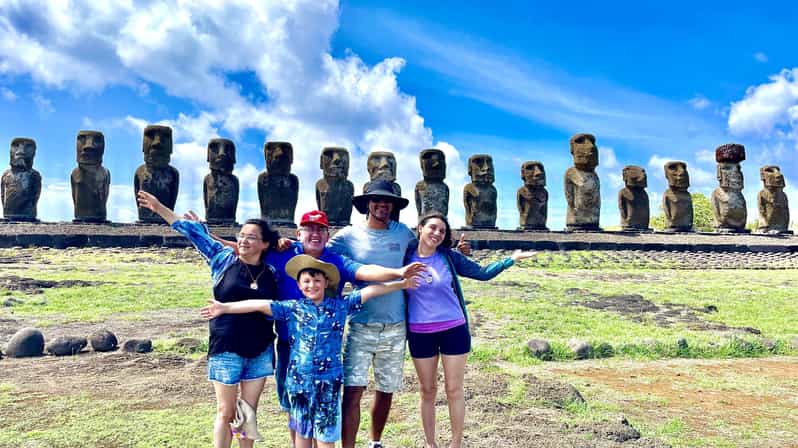
After the quarry, your tour heads to Ahu Tongariki, where you visit and get guided time for about 45 minutes.
This is the site where the island shows off its monumental confidence. The platform is known for being the largest with standing moai on Easter Island. When you see it in person, you understand that these were not random statues. They were built to command a ceremonial space.
What you gain from guided time here is direction. You learn what to look for, how the platform relates to the statues, and how Tongariki fits into the broader story of moai placement on the island.
A small travel reality: since this is a set-route day, you will likely want your camera ready the whole time. Take your first wide shots early, then slow down for the close-in photos while you still have the guide’s narrative fresh.
Te Pito Kura: the magnetic stone and the spiritual meaning
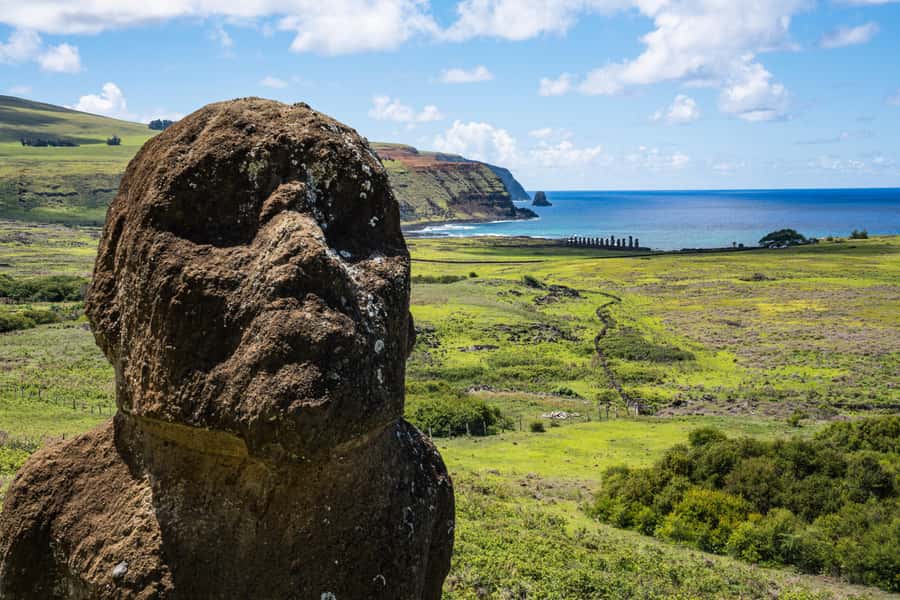
Next is Te Pito Kura, where you stand in front of the magnetic stone, a feature believed to have mystical powers and treated as spiritually important by island inhabitants.
You get around 45 minutes for guided time and walking. This stop is different from the others because it is not only about scale and stonework. It is about belief, ritual significance, and how sacred objects shape stories.
If you are into cultural meaning rather than only visuals, you will probably enjoy this part most. It is a reminder that moai and ceremonial spaces are part of a bigger worldview, not just an art museum on a cliff.
Anakena beach with 1.5 hours: your decompression zone
You end at Anakena, a palm-framed beach with bright blue water. You get 1.5 hours of free time, which is a gift on an otherwise scheduled day.
This is where you stop performing and start living like you have arrived. If the weather is decent, you can swim. The feedback specifically recommends bringing swim shorts and a towel, because Anakena can be the best beach moment of your trip.
Because it is at the end, you want to protect this time. If lunch runs long or the group is delayed, Anakena can feel rushed. I recommend having a simple game plan: sunscreen, water, and your swim stuff accessible so you can make the most of your window.
Price and what you actually get for $80
At about $80 per person for an 8-hour guided day, the value depends on what you would otherwise pay to get around and interpret the sites. This tour includes:
- Hotel pickup and drop-off in Hanga Roa
- Transportation
- A local guide
It does not include:
- The national park ticket
- Lunch
So the real cost is not only the $80. Budget extra for the park entry and your meal plan. On the plus side, a guide can be worth it here because these places are easy to misread without context. You are not just looking at moai, you are learning how the quarry, ahu platforms, and sacred stones fit together.
If you want maximum value, this is easiest when:
- You have limited time on the island.
- You want the main “icon” sites in one day.
- You prefer not to hire separate transport and still feel confident about what you are seeing.
Guides, languages, and the human factor
The most praised element across feedback is the guide. Multiple named guides are praised for being local, respectful, and strong communicators, including Javiera, Hivi, and Frank/Franco. One review notes a guide speaking English, Spanish, and Rapa Nui languages, which can make the experience feel more grounded and less scripted.
You also get live interpretation in English and Spanish.
Now the balanced bit: guide quality can swing. One outlier account describes a negative experience with a guide named Gabriel, including an insulting remark. That is not the typical theme, but it is a reminder to treat tours like real human interactions. If something feels off, ask questions calmly and switch attention to what you can control, like the sites themselves and your pace in free time.
Who should book this tour, and who might pass
I think this tour is a great fit if you:
- Want the classic Easter Island moai sites without planning a full itinerary.
- Like history and culture, but you also want built-in pacing.
- Appreciate a local guide who explains the meaning behind the monuments.
- Can handle a long day with multiple walking segments.
It might be less ideal if you:
- Want extra time at fewer locations, with long unstructured exploring.
- Are sensitive to schedule pressure, especially around lunch and the end beach window.
- Prefer to travel fully independently with your own timing.
One more practical note: it is listed as wheelchair accessible, so if mobility is a concern, this is one of the better structured options to consider.
Should you book Hotumatur Rapa Nui Culture Sightseeing Tour?
My take: yes, if your priority is seeing the island’s top moai sites in one day with real guidance. The day is long, but the route is thoughtfully stitched together, quarry to ceremonial platform to sacred stone to beach.
If you book, do three things to make it smoother:
- Plan for park ticket costs and lunch since both are not included.
- Bring what you need for Anakena because it is your last big moment.
- Keep your schedule flexible so you do not end the day disappointed.
If you want, tell me your travel month and whether you care more about moai, archaeology, or beach time, and I will help you decide if an all-in-one day tour like this matches your style.
FAQ
How long is the From Hanga Roa Rapa Nui Culture Sightseeing Tour?
It lasts 8 hours.
What sites does the tour visit?
You’ll see a traditional village area, Ahu Akahanga, Rano Raraku, Ahu Tongariki, Te Pito Kura, and Anakena.
Where does the tour pick up and drop off?
Pickup and drop-off are included in Hanga Roa.
Is transportation included?
Yes. Transportation is included as part of the tour.
Are the national park tickets included?
No. National park tickets are not included.
Is lunch included?
No. Lunch is not included.
What languages are available for the live guide?
The live guide speaks English and Spanish.
Is the tour wheelchair accessible?
Yes, it is listed as wheelchair accessible.
What time should I wait in the hotel lobby for pickup?
Please wait in the hotel lobby 10 minutes before your scheduled pickup time.
Is free cancellation available?
Yes. You can cancel up to 24 hours in advance for a full refund.
The Rest Of Our Chile Tours


Everything Else We Have Reviewed In Chile

Rapa Nui, Three More Ways
Not quite it? Here is the rest of what we have reviewed around Chile



More in Easter Island & the Moai.
 ★ 4.3Easter Island Highlights 2-Day TourFrom $170205 reviews
 ★ 4.5Easter Island Sightseeing Full Day TourFrom $70189 reviews
 ★ 4.3Journey from Orongo to Ana Te PahuFrom $7075 reviews
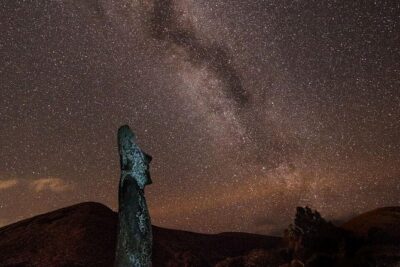 ★ 4.5Rapa Nui StargazingFrom $14062 reviews
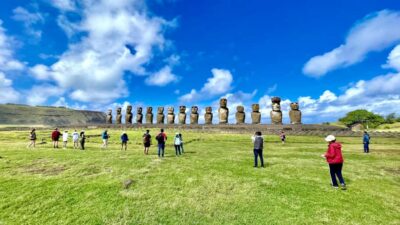 ★ 4.8Two days of Full Day Tour of Rapa Nui + Sunrise in TongarikiFrom $25055 reviews
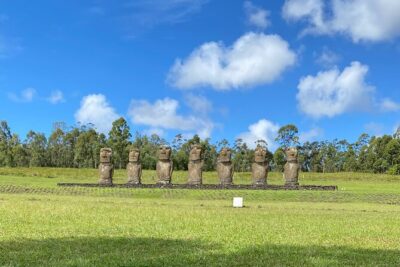 ★ 5.0Half Day Tour in Rapa NuiFrom $1,50048 reviews
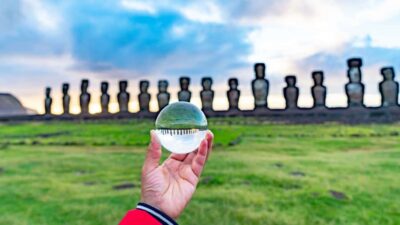 ★ 4.5Sunrise Tongariki: Sunrise at Tongariki Park Private TourFrom $12047 reviews
 ★ 4.4Easter island: Snorqueling tour on coral reefsFrom $11047 reviews
Browse the lists this tour appears in