
Review · NIGHT SKIES
Rapa Nui Stargazing
Rapa Nui nights are made for the stars. On this 3.5 hour small-group outing, you head away from town, set up telescopes, and learn how Polynesians used the sky for navigation. Then you finish with night access near Ahu Nau, with a beach photo moment at Anakena.
Two things I really like are the low light pollution and the hands-on way the guide explains what you are seeing. You also get a hotel drop-off, so the night stays simple, not like a DIY astronomy mission.
One consideration, though: the whole experience depends on conditions. If weather or wind kicks up, you may get canceled or rescheduled close to departure, since telescopes and comfort do not mix well with gusty nights.
In This Review
- Key highlights worth planning around
- Why Rapa Nui stars look better from the dark
- Getting there at KatipareHanga Roa: timing that matters
- What happens at the stargazing site, step by step
- Telescopes, binoculars, and the sky targets you might catch
- Polynesian navigation: why the talk actually helps
- Anakena Beach after dark: hot drink and photo time
- The last stop near Ahu Nau: night access you will remember
- Price and value: what $140 buys you
- Small group size and the comfort factor
- Weather reality: how to maximize your odds
- What to bring so you enjoy the whole night
- Who should book this stargazing tour
- Should you book Rapa Nui Stargazing?
- FAQ
- What does the tour include?
- Where do we meet for the tour?
- Is hotel pickup included?
- How long is the Rapa Nui stargazing tour?
- What time does the tour start?
- How big is the group?
- Are admission tickets included?
- Are souvenir photos included?
- What happens if weather changes?
- Can I get a refund if I cancel?
Key highlights worth planning around
- Small groups (max 12) so you can actually see through telescopes and ask questions.
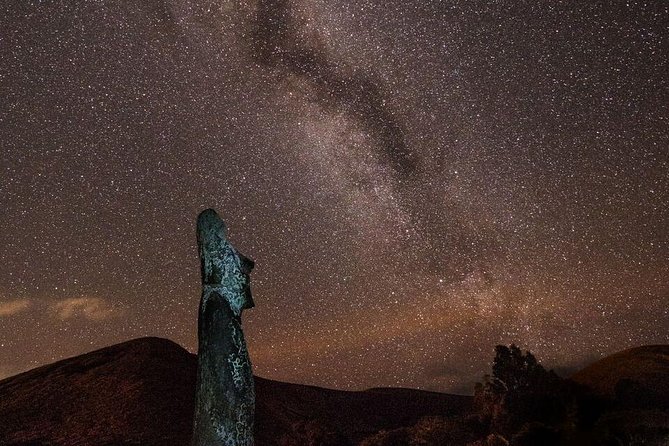
- Low light viewing outside town for a better Milky Way experience.
- Hot beverage plus local cake while you wait for the sky to cooperate.
- Night access near Ahu Nau for a special end-of-tour moment.
- Polynesian star navigation talk that makes the constellations feel practical.
- Hotel drop-off included, with meeting at Katipare library instead of hotel pickup.
Deeper into Rapa Nui: the other island tours
- Rapa Nui Stargazing
★ 4.5 · 62 reviews - Half Day Tour in Rapa Nui
★ 5.0 · 48 reviews - Terevaka Horse Excursion: The highest point and 360° view.
★ 4.7 · 38 reviews - Adventures in Rapa Nui: High-quality tourism with Easter Island Your Tour.
★ 4.9 · 28 reviews
Why Rapa Nui stars look better from the dark
On Easter Island, you are surrounded by dark skies when you get far enough from the lights. That is the core value here: this is not a quick stop where you glance up and move on. You drive to a remote viewing setup, then spend real time observing the sky.
The difference you are hoping for is simple. Under darker conditions, more stars show up, and the Milky Way gets easier to see with your own eyes. When the group is small, you also get better turn-taking around telescopes and binoculars, instead of everyone crowding one spot.
The tour also leans into context. You are not just looking at random dots. You get a guide-led presentation that connects what you see in the night sky to Polynesian wayfinding, the same kind of thinking that helped people cross huge stretches of ocean without GPS.
Getting there at KatipareHanga Roa: timing that matters
You meet in front of Centro Lector Katipare (Katipare library) in Hanga Roa. No hotel pickup is included, but you do get hotel drop-off after the tour.
The start time shifts by season, so make sure you confirm your exact departure before you plan dinner. During summer, the meet time is listed as 20:00. During winter, it is listed as 19:30. For the months from September to April, start times are noted as roughly 20:30 to 21:00 in front of the library.
Duration is about 3 hours 30 minutes. Plan on being out late. One common pattern in similar night tours is that you arrive back after the stars have had time to fully dark-adapt, so a late-night finish is the norm.
If you want the best odds of making the trip happen, schedule this earlier rather than later. The company can only confirm based on local conditions close to departure, and weather on Rapa Nui can change faster than you expect.
What happens at the stargazing site, step by step
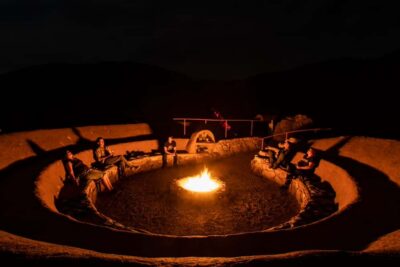
The night is set up like this: you meet at Katipare library, then you drive to a remote viewing location. Before you go to the main beach stop, the group sets up telescopes at that quieter site.
Once telescopes and binoculars are ready, the guide runs the star talk. This is where you start recognizing what you are seeing, not just staring upward. Then you cycle through observing targets as the sky settles and darkens.
From there, you head toward Anakena Beach for the next portion of the tour. Anakena is also where the photo moment usually happens. The Anakena stop is listed as about 40 minutes.
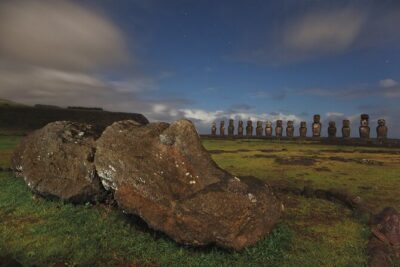
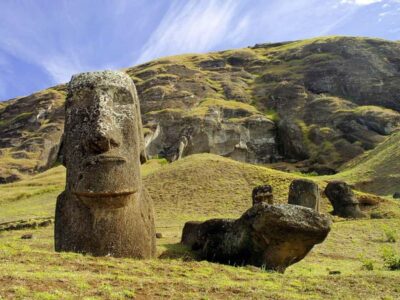
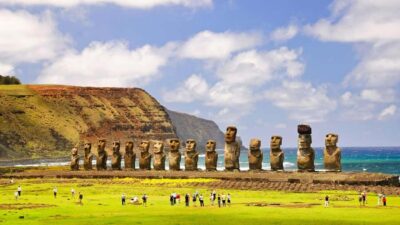
Finally, the tour ends with special access near Ahu Nau at night. That last stop is the reason this outing feels different from a basic telescope night. It is not only science. It is also night-time Rapa Nui setting, moai context, and the feeling of stepping into the island after dark.

Telescopes, binoculars, and the sky targets you might catch
One of the top reasons people book this is the telescope time. Under the right conditions, you get views that are hard to replicate on your own from town.
Based on guide-led observations described here, you can reasonably expect targets like:
- The moon, including craters
- Jupiter and Saturn, with Saturn’s rings being a standout when conditions are clear
- Star clusters such as Pleiades
- Bright stars like Sirius
- Nebula targets that may be possible depending on the night, like the Horsehead Nebula
You might also get a classic Milky Way moment. One highlight that keeps coming up is seeing the Milky Way clearly from the darker area near Anakena, not the bright glow of Hanga Roa.
Two practical notes. First, wind affects telescope stability, so if the night is gusty, observing can be less comfortable or less productive. Second, clouds can thin out the sky view quickly. If you get partial cloud cover, you may still see stars, but you might not get the full set of crisp targets you were hoping for.
Polynesian navigation: why the talk actually helps
This tour does not treat constellations like trivia. The presentation connects the sky patterns to Polynesian wayfinding, the same idea of using stars as practical guides across ocean routes.
In plain terms, you learn how people used the sky as a map. That makes a big difference if you are not an astronomy person. Instead of saying, I saw Saturn, you understand why that particular point matters in a larger system.
Guides also tend to guide your attention in real time. If you ask a question, you are not stuck watching a slideshow from afar. You are getting help focusing on what is worth seeing next.
On nights with really good visibility, the talk plus telescope time becomes the best kind of combination: learning that does not slow the fun down.
Anakena Beach after dark: hot drink and photo time
After the remote setup, you head to Anakena Beach. This is where the tour shifts from pure astronomy into the full Rapa Nui night vibe.
A key comfort perk is included here: you get a hot beverage and local cake. It is a small thing, but it matters on chilly island nights when the sky is spectacular and you do not want to be fighting cold the whole time.
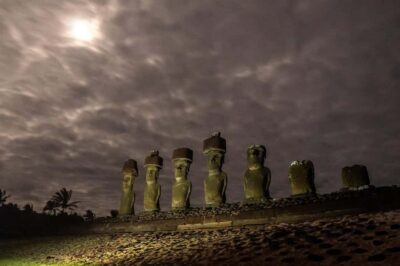
Anakena is also your photo moment. The tour includes time for you to get photos taken near the beach setting with moai imagery. You should know that souvenir photos are not included, but you can purchase them afterward.
One thing I like about this part is that it is not just random posing. You get that sense of place. You are at a recognizable Rapa Nui site, under a darker sky, with the telescope views still fresh in your mind.
The last stop near Ahu Nau: night access you will remember
The end of the tour includes special access near Ahu Nau at night. That matters because it gives the outing a sense of progression, not just a loop of looking up.
Night access also changes the mood. Daytime cultural sites can feel like you are rushing through details. At night, you notice different things: silhouettes, placement, and how the setting frames the sky.
This is also where the tour pacing matters. You are already tired in a good way from the stargazing, so having a final structured stop helps you end on a high note instead of wandering in the dark.
If you are someone who loves photos, this is the segment that can feel the most cinematic, even if you do not plan to shoot long exposures yourself.
Price and value: what $140 buys you
At $140 per person for about 3 hours 30 minutes, this is not a budget activity. The value comes from the combination of things that are hard to assemble alone on Easter Island:
- Low-light remote viewing
- Telescope and binocular use
- A guided presentation focused on what you are seeing
- Small-group interaction, with a max of 12 people
- Hotel drop-off
- Night access near Ahu Nau
If you tried to DIY it, you would still need darkness, a safe meeting plan, transport, and someone who can point out what is worth looking at. Here, you are paying for guidance and logistics, not just for the view.
Also, the small group size is part of the price justification. With fewer people, you are more likely to get time at the telescope and not just take a quick peek and move on.
Small group size and the comfort factor
This is limited to a maximum of 12 travelers, which is one of the best reasons to book it. On a night-sky tour, “intimate” is not a marketing word. It means you can see what the guide is showing, and you can ask questions without shouting.
It also makes telescope rotation more workable. You are not stuck waiting while the whole group takes turns at once. That is huge if your goal is to actually see Saturn’s rings or get a clear view of the moon’s crater texture.
Comfort matters, too. This is why wind and weather are such deal breakers. A telescopic setup is more sensitive than you might guess, and cold nights can get long fast when you are waiting for the next clear window.
Weather reality: how to maximize your odds
This tour depends on favorable weather conditions. If it is canceled due to poor weather, you will be offered an alternative date or a full refund.
A few reviews and operator notes point to a real-world constraint: you may not know for sure until close to departure, because conditions at Anakena and at the telescope site can change. In other words, the stars might look clear in town while the viewing site is windy or otherwise unsuitable.
This is why I strongly suggest booking it on one of your first nights on the island. Then you have flexibility if your scheduled night gets canceled. If you are only in Rapa Nui for a short window, build in backup options.
Also pay attention to moon phase. There are scenarios where the timing of a full moon can reduce the star visibility and trigger cancellations, with an alternative night hike offered instead in some cases. If moonlight is a major concern for you, plan around that too.
What to bring so you enjoy the whole night
Even with hot chocolate, nights on Rapa Nui can feel cold. Bring at least one warm layer, especially if you run chilly easily.
Bring a flashlight or headlamp. You will need it for walking and for finding your way around in low light. You do not want to fumble with your phone screen brightness while everyone else is trying to see the sky.
If you are into photos, keep your expectations realistic. The tour includes photo time with purchased souvenir photos, and guides may do photo effects for the group. But your own best shots will still depend on clear skies and your willingness to handle low light carefully.
Who should book this stargazing tour
This tour is a great fit if:
- You want a guided night-sky experience rather than a self-guided stargazing app.
- You care about learning the sky through the lens of Polynesian navigation, not only astronomy facts.
- You like small groups and want time at telescopes, not just a quick glance.
- You are willing to plan around weather and moon conditions.
It is also a good choice for couples and families who want a structured night activity without worrying about transport. The hotel drop-off reduces stress, since you are not left to figure out late-night rides.
If you are someone who hates uncertainty, you may find the weather-dependent nature frustrating. That said, that risk comes with almost every high-quality stargazing plan on Rapa Nui, because the stars are only as good as the night you get.
Should you book Rapa Nui Stargazing?
Book it if you can give yourself at least one backup night and you genuinely want the telescope-plus-guided-sky experience. The dark-sky viewing, the Polynesian navigation story, and the chance at a night finish near Ahu Nau make it more than a casual look at constellations.
Skip it or reconsider if your schedule is tight to the point that a weather cancellation would ruin your trip. This is not the kind of activity you want as your only late-night plan. Also consider your comfort with chilly outdoor time and low-light walking, since you will likely want layers and a light source.
If your timing is flexible, this is one of those experiences that can quietly become the memory you build the trip around: the sky, the island setting, and the feeling of understanding the stars as more than distant points of light.
FAQ
What does the tour include?
The tour includes a driver/guide, live commentary, hotel drop-off, and a small-group format (max 12 people). You also get a hot beverage and local cake during the night setup.
Where do we meet for the tour?
You meet in front of the Katipare library (Centro Lector Katipare) in Hanga Roa.
Is hotel pickup included?
No. Hotel pickup is not included. You’ll start at Katipare library and then get hotel drop-off after the tour.
How long is the Rapa Nui stargazing tour?
The duration is about 3 hours 30 minutes (approx.).
What time does the tour start?
Meeting times vary by season. During summer it is 20:00, and during winter it is 19:30 at Katipare library. For Sept to April, start times are listed around 20:30 to 21:00.
How big is the group?
The tour is limited to a maximum of 12 travelers.
Are admission tickets included?
An admission ticket is not included for the Anakena Beach stop (listed as admission ticket not included).
Are souvenir photos included?
Souvenir photos are not included. Photo purchases are available.
What happens if weather changes?
This experience requires good weather. If the tour is canceled due to poor weather, you will be offered another date or a full refund. If weather changes while you are out, they will try to take you out again on another night for free, subject to availability.
Can I get a refund if I cancel?
You can cancel up to 24 hours in advance for a full refund. After the tour starts, refunds are not offered.
Everything Else We Have Reviewed In Chile

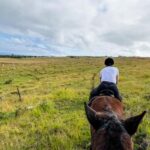
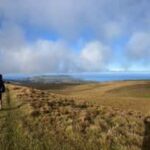
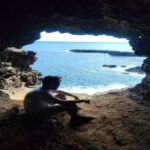
More Chilean Skies Worth Staying Up For
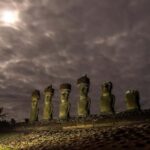
Rapa Nui, Three More Ways

Not quite it? Here is the rest of what we have reviewed around Chile
More in Stargazing & Observatory Tours.
 ★ 4.8Etno-Stargazing Tour with TransferFrom $41629 reviews
 ★ 4.7Stargazing ExperienceFrom $35489 reviews
 ★ 4.3Sky Costanera Observatory Admission TicketFrom $45208 reviews
 ★ 4.5Astronomical Tour with Guide and Pick Up San Pedro de AtacamaFrom $38145 reviews
 ★ 4.5“Astronomical Adventure in San Pedro de Atacama”From $3596 reviews
 ★ 3.9Guided Atacama Desert Stargazing TourFrom $4993 reviews
 ★ 5.0Stargazing Hiking Valle de ElquiFrom $10046 reviews
 ★ 4.6Pisco Elqui: Mountaintop Stargazing and Night PortraitFrom $5420 reviews
Browse the lists this tour appears in