
Review · RAPA NUI
Easter Island: Private Full Day History Of The Moai
A day on Easter Island can feel like a scavenger hunt, in a good way. This private tour strings together the island’s most talked-about moai sites plus the quieter places that still feel mysterious, all with a guide who explains what you are actually looking at.
I love the mix of ceremonial platforms and moai in different stages and positions. I especially like how the route brings you to the “moai factory” at Rano Raraku, then finishes at the water, where the day stops feeling like a museum and starts feeling like Rapa Nui.
One drawback to consider is that the day is packed, so a few stops are shorter photo-and-walk moments. Also, even though English, Spanish, and French are offered, the clarity of explanations can vary by guide, so if you care about asking lots of questions, I’d bring a short list of what you want to understand.
In This Review
- Key things to know before you go
- Why this private Moai day feels worth the time
- Price and what you get for $219 per person
- Starting on ceremonial ground: Ahu Vinapu and Ahu Akahanga
- One Makihi: when a moai is lying down
- Rano Raraku, the moai factory: your longest walking window
- Ahu Tongariki: the island’s big group-of-15 moment
- Ovahe and Anakena: rose sand, swimming potential, and a breather
- The guide experience: what makes the day go right
- Price and time planning tips that will save your mood
- Who this tour suits best, and who might want a different format
- Should you book this private Easter Island history day?
- FAQ
- Is this tour private?
- How long is the tour?
- What is included in the price?
- What is not included?
- What languages are the live guides?
- Where does the pickup happen?
- Can I cancel for a refund?
Key things to know before you go
- You get a true private format, so you can set the pace and ask follow-ups without sharing a tiny van with strangers.
- You visit moai where they are still in their original ceremonial context, not just scattered “best-of” viewpoints.
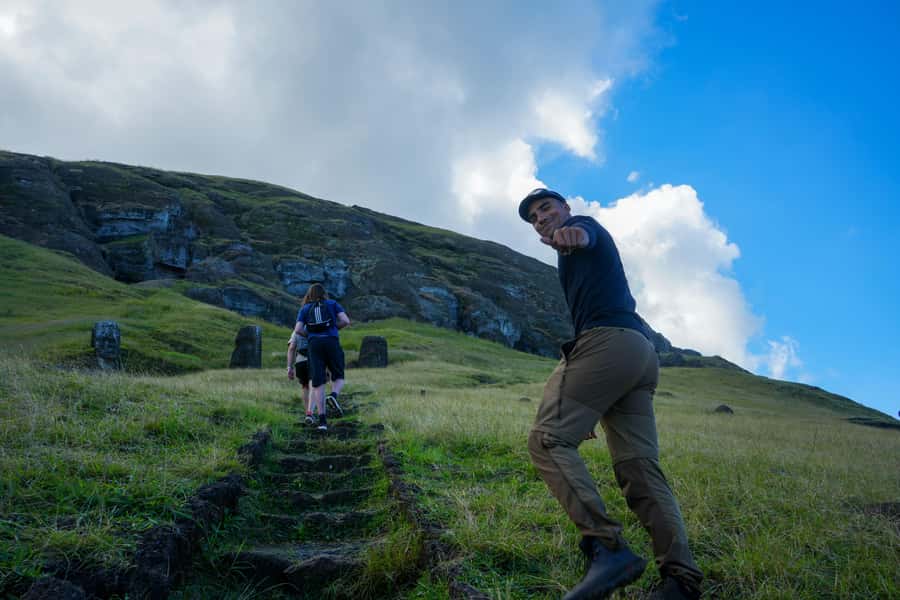
- Rano Raraku is the big walking stop where you can move among the carved stone and get a sense of how the statues were made.
- Ahu Tongariki is the group-of-15 moment that many people picture when they think of Easter Island.
- Beach time is part of the story, with Ovahe’s rose sand and Anakena’s crystal-clear water and swimming potential.
- Hotel pickup and drop-off are included, with a “wait 10 minutes” rule that helps you stay on schedule.
Deeper into Rapa Nui: the other island tours
- Rapa Nui Stargazing
★ 4.5 · 62 reviews - Half Day Tour in Rapa Nui
★ 5.0 · 48 reviews - Terevaka Horse Excursion: The highest point and 360° view.
★ 4.7 · 38 reviews - Adventures in Rapa Nui: High-quality tourism with Easter Island Your Tour.
★ 4.9 · 28 reviews
Why this private Moai day feels worth the time
Easter Island is not short on moai photos, but it is short on good context. This is a history-focused day built around the places that shaped Rapa Nui ceremonies, not just the places that photograph well.
You’ll move through several ceremonial sites and viewpoints that tell different chapters of the same story. One moment you’re staring at a raised platform, the next you’re looking at a moai laid down, and then you’re walking near the quarry where the statues were worked. That change in setting is what makes the day click.
The private format matters more here than on a beach tour. Moai are easy to see, harder to read. A good guide helps you notice details you would normally miss, like what the platform setting implies and how the islanders thought about these statues.
Price and what you get for $219 per person
At $219 per person for about 7 hours, the value depends on two things: your travel style and how much you care about explanation.
This tour includes:
- Hotel pickup and return
- An individual water bottle
It does not include:
- Meals
- Park entrances
So you should budget for food and any entry fees for protected areas. In practice, that means either planning to buy a bite during the day or bringing snacks if that’s allowed where you’ll be. If you hate surprises, check what tickets you need before the driver sets off.
Where the price starts making sense is the private pacing and the number of major stops in one day. You are paying to compress a lot of Rapa Nui “big hits” into one organized loop, with an English, Spanish, or French live guide doing the explaining.
Starting on ceremonial ground: Ahu Vinapu and Ahu Akahanga
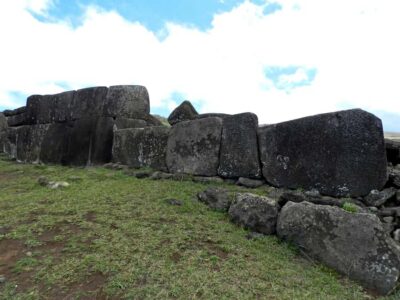
The day begins with Ahu Vinapu, a site known for its stonework style. You’ll stand in front of a wall that people often compare to Inca-style construction because of the careful, fitting stones.
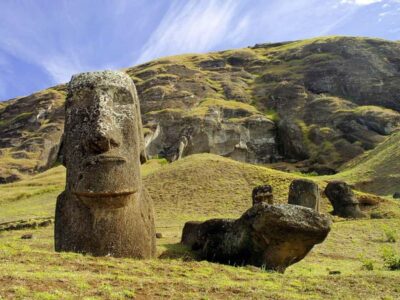
Then you continue to Ahu Akahanga, where you can see moai in a more “original placement” type of setting, raised and set on a ceremonial platform. This is a good early stop because it trains your eyes. Instead of treating moai like isolated sculptures, you start thinking like a ritual site: the platform, the arrangement, and the setting all matter.
If you’re visiting for the first time, I’d treat these two stops as your warm-up. You are learning the visual language before the day gets more intense.
Other private runs through Chile
One Makihi: when a moai is lying down
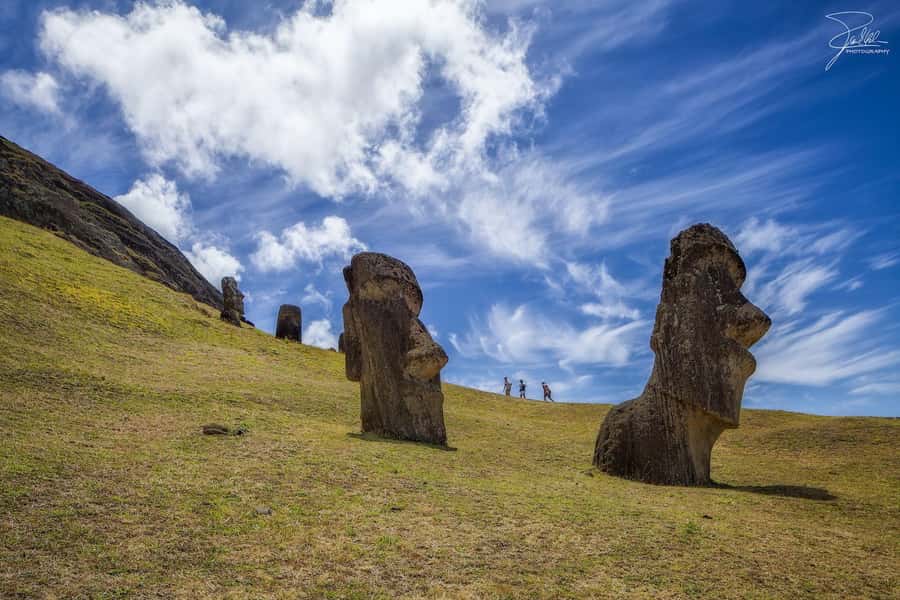
Before you move toward the island’s most dramatic stretches, there’s a stop at Ahu One Makihi. What makes it memorable is the position: the moai here is in a supine, laid-down form rather than a standing, platform-centered one.
This matters because it nudges you away from a single “moai = standing monument” mental model. Easter Island’s carved figures were not all photographed the same way, and positions like this hint at shifts over time in how and where statues were placed and used.
This is also one of the reasons I like the “forgotten and secret” angle in the tour description. Some days feel like a greatest hits list. This one includes a detour that changes the feel of what you think you know.
Rano Raraku, the moai factory: your longest walking window
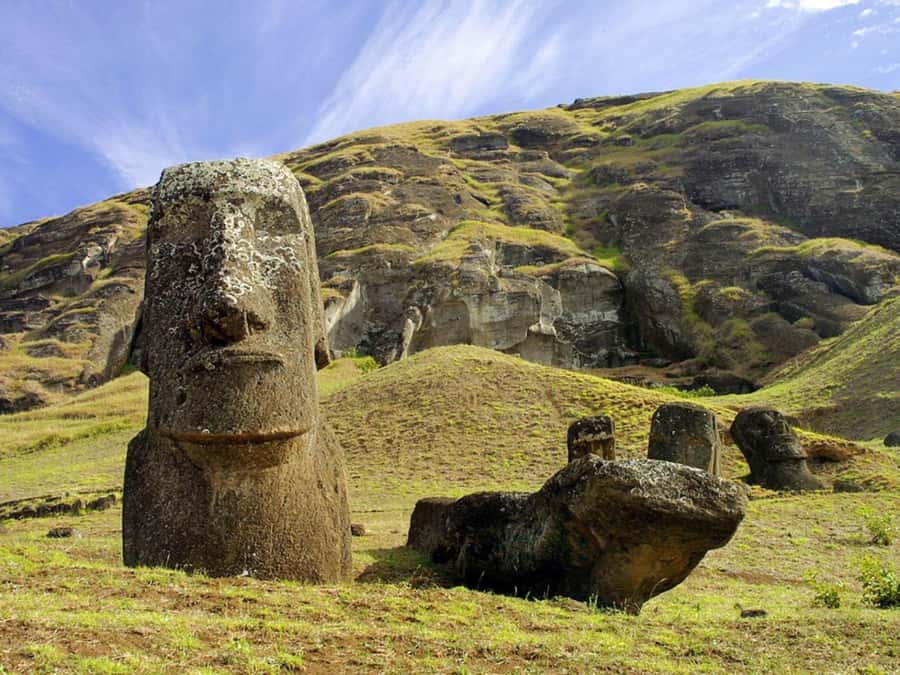
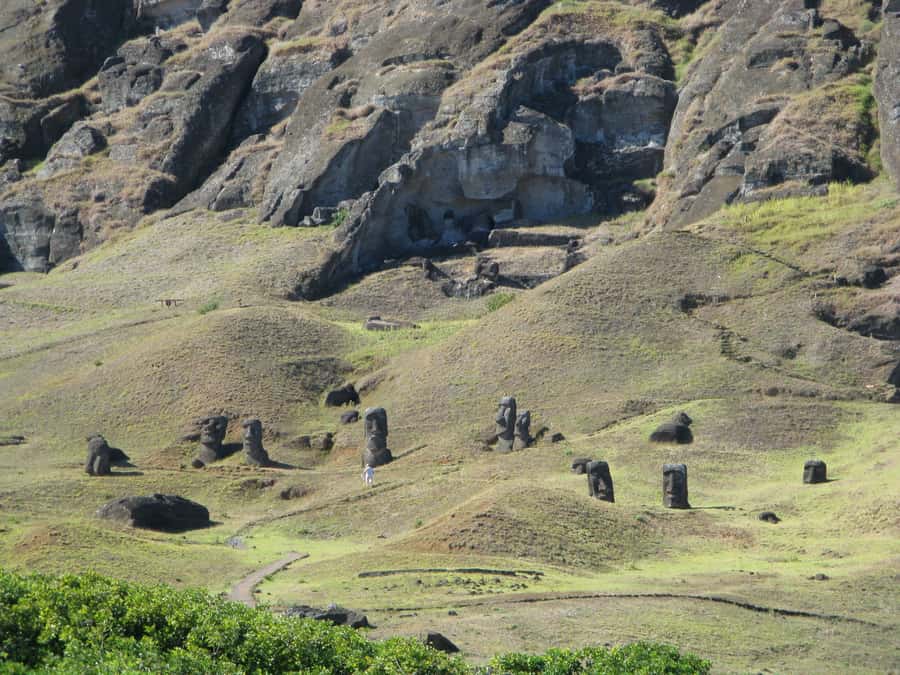
Rano Raraku is the heavy hitter. It’s often called the moai factory because the quarry is where the famous stone statues were built and worked.
What I like about this stop is that it’s not just a viewpoint. You get time to walk and look at the stone in place, so you can picture the process rather than only admire the finished result. You’re not just staring at finished moai, you’re seeing the raw environment where the carving likely began.
Time matters here. This is where your day slows down from “checklist touring” into “stand, look, understand.” If you tend to rush through sites, this is the stop where you’ll get the most out of taking a breath and moving a bit at your own pace.
Practical note: quarry areas can be uneven underfoot. Wear shoes that you trust.
Ahu Tongariki: the island’s big group-of-15 moment
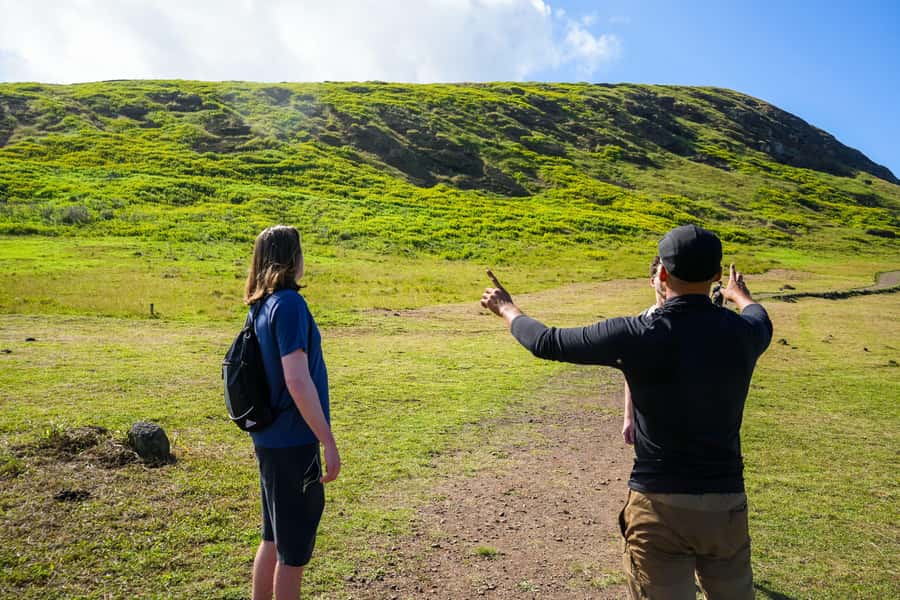
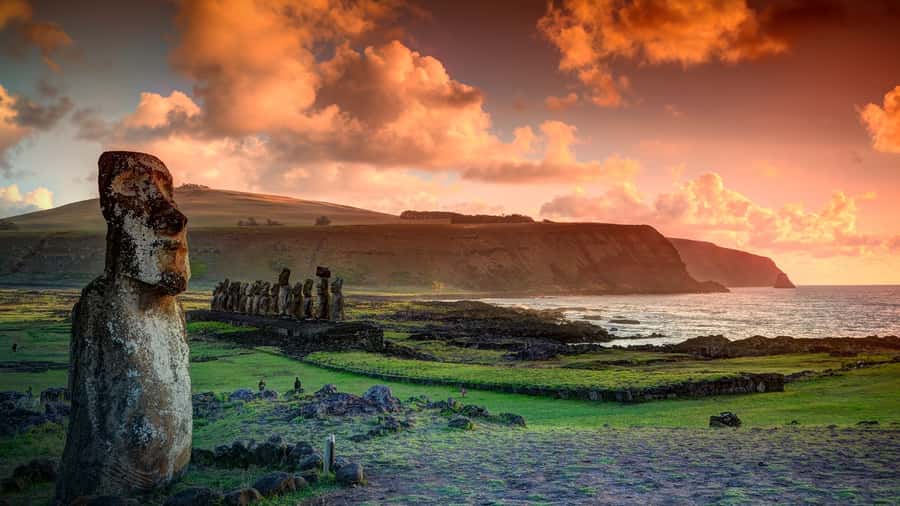
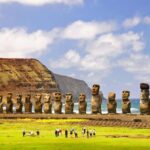
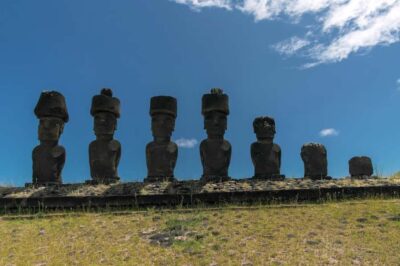
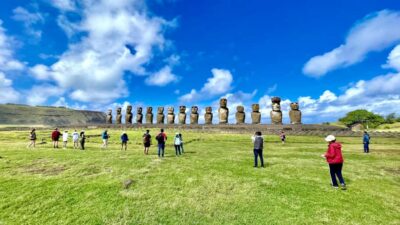
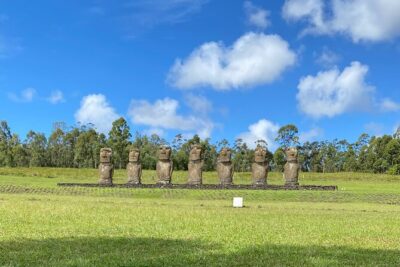
Next comes Ahu Tongariki, the largest group of moai on the island and one of the most striking ceremonial alignments.
You’ll be able to see 15 imposing moai in their original place. It’s one of those scenes that can feel unreal, partly because the sheer scale hits you fast. The guide’s role here is crucial. Without explanation, it can just be “many statues.” With explanation, you start reading the composition and why so many would have mattered together.
This stop is also a timing test. You want enough time to step back for wider views, then move in for closer details. This tour includes a guided period plus sightseeing time, which is what you want at a place like Tongariki.
Ovahe and Anakena: rose sand, swimming potential, and a breather
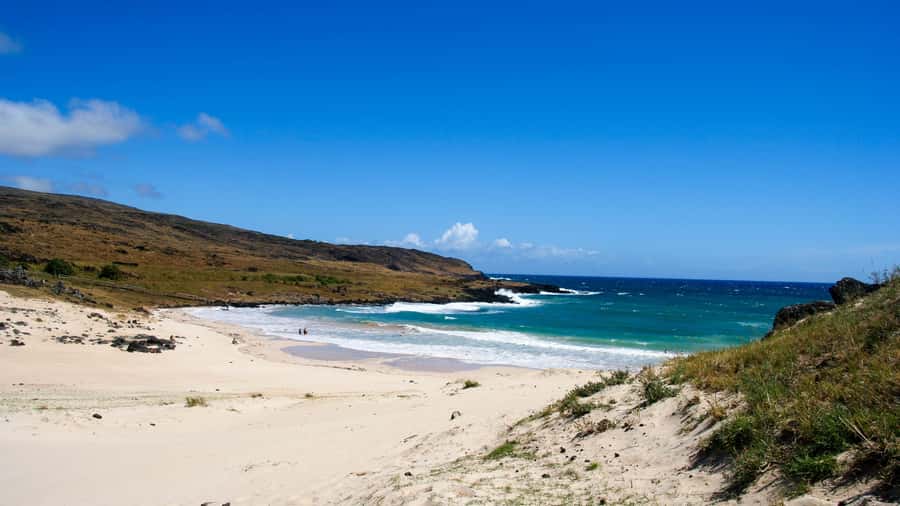
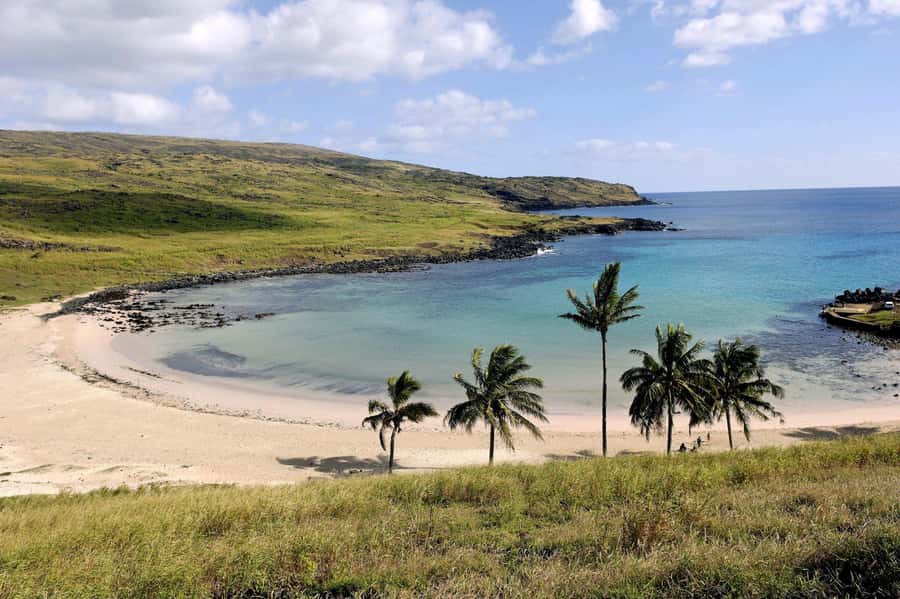
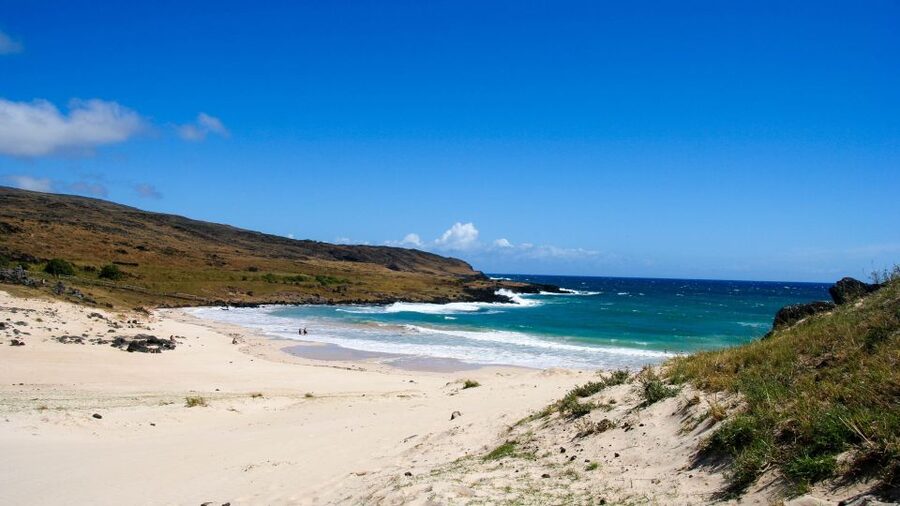
After the stonework intensity, the tour heads toward the ocean with Ovahe beach first. The highlight here is the rose sand, a detail that gives you something tactile to remember.
From there you arrive at Anakena, a beach known for crystal-clear waters and a wide range of water activities. The tour framing makes it clear that this is not just a stop to take a photo and move on. You’ll have time to relax, enjoy the open air, and consider snorkeling if you bring what you need.
There’s also room for personal downtime. The schedule includes extra time at the end of the Anakena stretch for breaks, photos, and shopping on the way. That matters because Easter Island days can get tiring. Having a block where you can slow down is a real quality-of-life upgrade.
If you’re hoping to snack or picnic, remember meals are not included. So plan for food and water beyond the single bottle provided.
The guide experience: what makes the day go right
A private tour is only as good as the guide. The best versions of this experience are powered by two traits: patient teaching and clear, organized storytelling.
In the real world, I’ve seen how a guide like Simon can handle timing hiccups. One example is a situation where he waited because a tender arrived late, then still delivered the key iconic sites with strong explanations of culture and meaning. That kind of calm logistics is the difference between a stressful day and a smooth one.
Another example is a guide named Flora, praised for being kind and a strong guide for the island’s wonders. That kind of warmth matters on a day where you’re standing in the wind and walking between sites.
Because languages are listed as English, Spanish, and French, you should also know that communication quality can vary by guide. If you want deeper back-and-forth conversation, I’d plan to ask your most important questions early in the day, when the tone is easiest to set.
Price and time planning tips that will save your mood
Here are the practical bits you can control.
First, plan for a full day even though it’s listed as about 7 hours. Easter Island drives between sites can eat time, and some stops are intentionally short. If Anakena or Rano Raraku is your top priority, decide now, and don’t pretend every stop will get your full attention.
Second, confirm you understand what you’ll pay for on the ground. Park entrances are not included, and meals are not included. So keep a little cash or card buffer, and check in advance what fees apply if you can.
Third, pickup timing can be sensitive. The tour uses hotel pickup, and you’re told to wait in the lobby about 10 minutes before pickup. If you’re arriving from a boat or shuttle, build in extra time. One smooth outcome in this kind of situation is when a guide can adapt, but you should still protect your schedule.
Who this tour suits best, and who might want a different format
This is a strong fit if:
- you want a private day and you like having a guide do the explaining
- you care about moai in context, not just quick photo stops
- you want both the major sites and at least one more unusual stop like One Makihi
- you want ocean time at the end rather than rushing back immediately
This might be less ideal if:
- you hate tight schedules and want long, unstructured time at fewer sites
- your top goal is only one place, like Rano Raraku, and you’d rather spend the entire day there with extra walking and fewer transfers
Should you book this private Easter Island history day?
If you want a single, organized loop that hits ceremonial moai sites plus the moai factory, this is a solid way to spend a day. The value improves if you’ll actually use the guide for explanations, because moai make more sense when someone points out what to notice.
My recommendation: book it if your ideal day is “move, learn, see the big scenes, then reset at the beach.” If you’re the type who wants minimal driving and maximum time at one site, you may prefer a slower, site-focused private plan instead.
FAQ
Is this tour private?
Yes. It is listed as a private group experience.
How long is the tour?
The duration is listed as 7 hours.
What is included in the price?
Included items are hotel pickup and return, plus an individual bottle of water.
What is not included?
Meals and entrance to the parks are not included.
What languages are the live guides?
The live tour guide is available in English, Spanish, and French.
Where does the pickup happen?
Pickup is included from your hotel. You should wait in the hotel lobby about 10 minutes before the scheduled pickup time.
Can I cancel for a refund?
Yes. Free cancellation is offered up to 24 hours in advance for a full refund.
Private Runs Through Chile
Everything Else We Have Reviewed In Chile
Rapa Nui, Three More Ways

Not quite it? Here is the rest of what we have reviewed around Chile
More in Easter Island & the Moai.
 ★ 4.6Rapa Nui Culture Sightseeing TourFrom $80307 reviews
 ★ 4.3Easter Island Highlights 2-Day TourFrom $170205 reviews
 ★ 4.5Easter Island Sightseeing Full Day TourFrom $70189 reviews
 ★ 4.3Journey from Orongo to Ana Te PahuFrom $7075 reviews
 ★ 4.5Rapa Nui StargazingFrom $14062 reviews
 ★ 4.8Two days of Full Day Tour of Rapa Nui + Sunrise in TongarikiFrom $25055 reviews
 ★ 5.0Half Day Tour in Rapa NuiFrom $1,50048 reviews
 ★ 4.4Easter island: Snorqueling tour on coral reefsFrom $11047 reviews
Browse the lists this tour appears in