
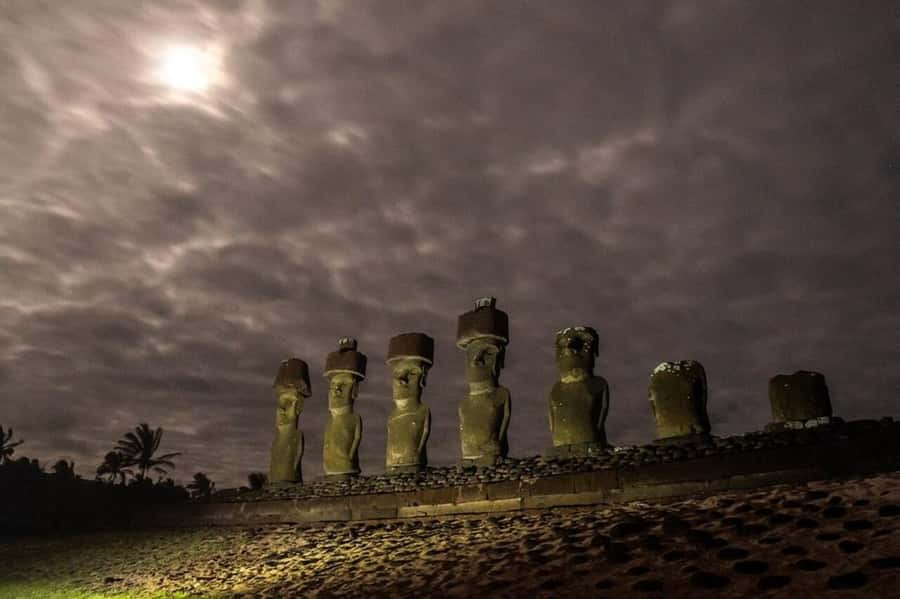
Review · NIGHT SKIES
Easter Island: Rapa Nui Stargazing Tour
If the stars on Rapa Nui are calling, this tour listens. You get Polynesian wayfinding stories, telescope views, and a rare night visit to the Ahu Nau Nau area. It is one of the best ways to understand the island’s sky before you even start guessing at constellations.
I love how this isn’t just staring upward. You learn the basics of astronomy and how Polynesian voyagers used the night sky to travel, which makes the southern constellations feel personal instead of random dots. I also like the practical add-ons, like the included digital photo and the chance to take your own pictures during the best moments.
One drawback to plan around: this experience depends on good weather, and it runs close to full moon only on certain dates. If the sky is cloudy, your tour may be rescheduled or refunded, so build flexibility into your Easter Island schedule.
In This Review
- Key things to know before you book
- Night skies over Rapa Nui, and why this tour feels hands-on
- Meeting at Katipare Library: the real start of your night
- On-board storytelling: how voyagers “read” the sky
- Telescope time at the remote observation site
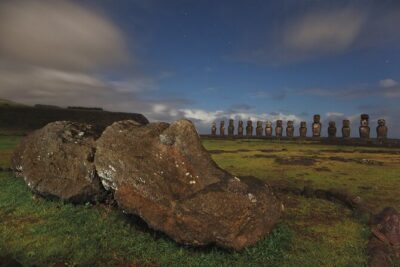
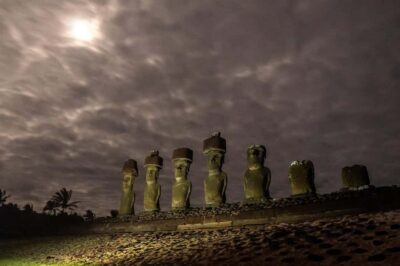
- Coffee break and photo moments near the Moai
- Night access to Ahu Nau Nau: seeing Rapa Nui’s sky with context
- Price and value of a $140, 3-hour stargazing tour
- Weather, full moon timing, and other practical gotchas
- Who this tour suits best
- Should you book this Easter Island stargazing tour?
- FAQ
- Where is the meeting point for the Easter Island stargazing tour?
- What time does the tour start?
- How long is the tour?
- Is hotel pickup included?
- What is included in the price?
- Do I need a National Park ticket?
- Is the tour available near the full moon?
- What happens if the weather is bad?
Key things to know before you book
- Small group size (up to 12), so questions and photo moments feel more controlled.
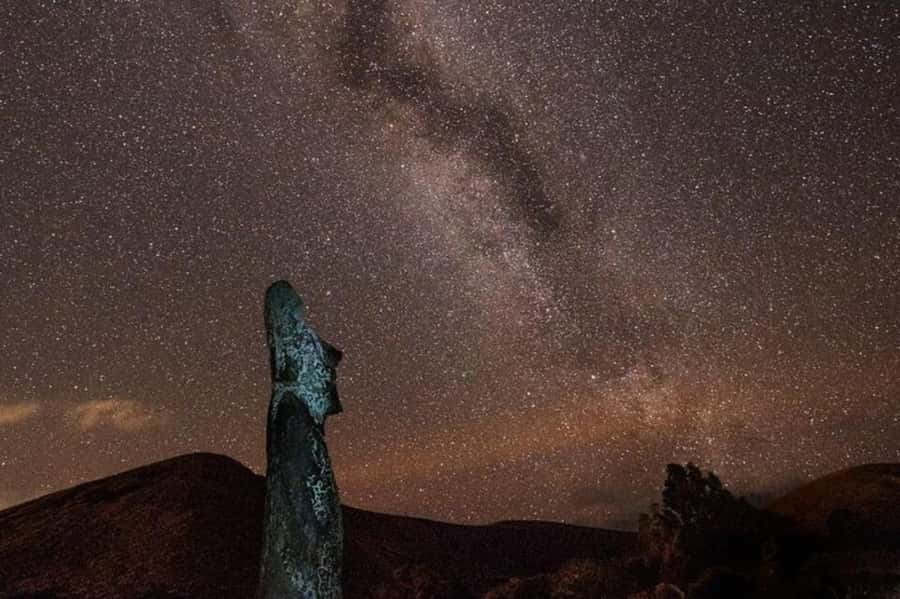
- Telescope viewing at a remote site, not just a quick look through the dark.
- Polynesian navigation taught in plain language, tying the sky to real voyaging ideas.
- Night access to Ahu Nau Nau, plus a coffee break and local cake to keep energy up.
- No hotel pickup, you meet in front of Katipare Library at Katipare.
- Not near the full moon, since it is scheduled to avoid that bright sky.
Deeper into Rapa Nui: the other island tours
- Rapa Nui Stargazing
★ 4.5 · 62 reviews - Half Day Tour in Rapa Nui
★ 5.0 · 48 reviews - Terevaka Horse Excursion: The highest point and 360° view.
★ 4.7 · 38 reviews - Adventures in Rapa Nui: High-quality tourism with Easter Island Your Tour.
★ 4.9 · 28 reviews
Night skies over Rapa Nui, and why this tour feels hands-on
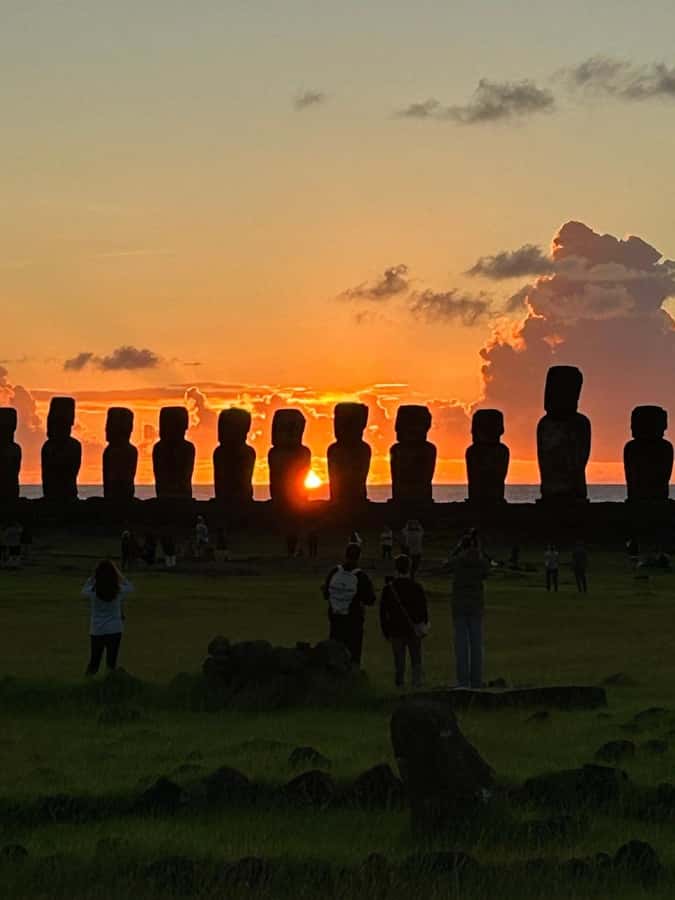
Easter Island’s night sky is a big deal because you are looking from one of the most remote places on Earth. But the real win here is that you do not just arrive and hope you recognize something. You learn how to read the sky, the way Polynesian voyagers did, so your brain stays busy while your eyes catch up.
This tour also leans hard into the Southern Hemisphere viewpoint. Once you start mapping what you are seeing, the stars stop feeling like a scatter plot and start acting like a guide.
The vibe is equal parts teaching and wonder. You get enough structure to be comfortable, but it still leaves room for that slow, quiet moment when the sky finally clicks.
Meeting at Katipare Library: the real start of your night
You meet in front of Katipare Library, Centro Lector Katipare, in Hanga Roa. There is no hotel pickup, so plan your arrival time with that in mind, and do not rely on a last-minute scramble in the dark.
Timing changes by season. The meeting time is 21:00 in summer and 19:00 in winter, so check the exact slot tied to your booking. The tour runs about 3 hours, and the schedule is built around darkness, telescope time, and later access at night.
If you are the type who likes to settle in, arrive a few minutes early. It gives you time to find the group, use the restroom if you need to, and get your camera settings ready before you start moving.
On-board storytelling: how voyagers “read” the sky
Before you ever reach the telescope area, you get live commentary on the way. That matters because it turns stargazing into a lesson with a payoff, not a random tour stop.
You cover:
- Basic astronomy principles in a way you can actually use outdoors
- The history of Polynesian voyaging and settlement
- Navigational techniques tied to sky observation
- Archaeo-astronomy on Rapa Nui, meaning how people may have aligned knowledge and structures with celestial events
This is also where the night sky becomes more than scenery. When someone explains how to think about sky patterns and direction, you start noticing things faster once you are standing in the dark.
If you like guides who keep the momentum going, you may enjoy this part most. A couple of experiences I’m drawing from highlighted a very memorable close to the night, including a traditional song written by the guide Marc. Even if your departure does not include that exact moment, expect an engaging guide who knows how to bring the lesson home.

Telescope time at the remote observation site
The core experience is the hands-on stargazing, with stars and planets viewed through a telescope. This is what you are paying for, because your eyes alone can only do so much. With telescope time, you see the sky with clearer definition, and you get help connecting what you see to what you were taught.
The telescope session happens at a remote observation site, away from the worst of Hanga Roa’s lights. That remoteness helps you actually see more, and it also makes the experience feel special because you are outside the usual daytime Rapa Nui routine.
One practical note based on real group feedback: the ground can be uneven. If you are older, have balance issues, or just want an easier time moving in the dark, wear shoes with solid grip. A small headlamp or phone light with a low glow mode can also help you move safely without ruining your night vision.
You will also likely get guidance on what to look for next, which is where the learning clicks. Without that, stargazing can turn into “wait, where are we?” Telescope time keeps the group anchored.
Coffee break and photo moments near the Moai
Stargazing is cold after a while on the island, even when you think you are prepared. This tour builds in a comfort break, with hot chocolate and local cake included.
The coffee break is not just a snack pause. It is also useful timing. You get a chance to recharge, check camera settings, and then rejoin the group for the next night-sky look.
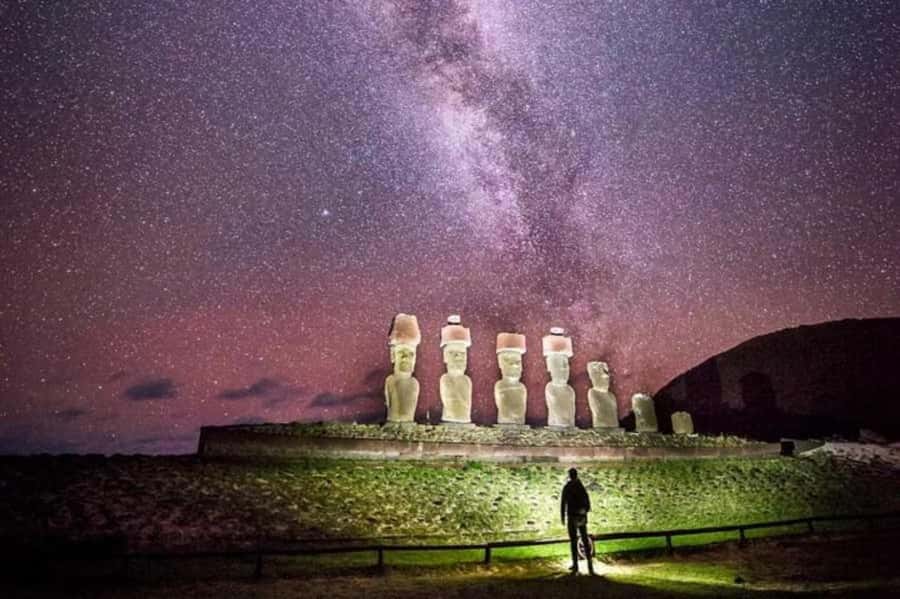
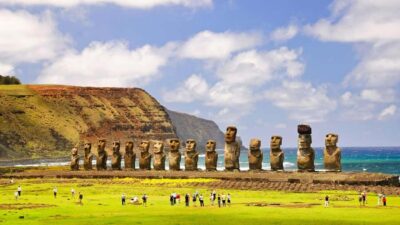
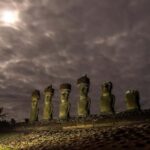
Photo access is another highlight. A digital photo is included, and you also have the option to take your own photos. Some departures include time for photos in front of Moai in the night setting, and you may even be allowed to set up a phone for star shots using a tripod. If you care about astrophotography, bring a simple small tripod rather than something huge. It helps you get stable framing without turning the night into a wrestling match.
Also, if you want photos, think about how you will hold your equipment in low light. Gloves help, and so does a compact flashlight for moving and setting up. Keep it pointed down, not into other people’s eyes.
Night access to Ahu Nau Nau: seeing Rapa Nui’s sky with context
One of the best reasons to book is the chance to access Ahu Nau Nau at night. This is not a daytime pass. You are seeing the site in the kind of darkness that makes the sky feel even more important.
Why that matters: Rapa Nui’s archaeology and astronomy are connected in how you experience them. Standing near a ceremonial platform under southern skies changes the meaning. Instead of thinking about stones and stories separately, you start connecting them through the night sky theme of the tour.
The tour also heads to traditional observatory sites to gaze at the night sky. Even if you only catch a few key constellations, the repeated “look here, now look there” rhythm makes the night feel guided, not chaotic.
The site timing is also crucial because the tour avoids poor viewing conditions. The experience is not available close to the full moon, specifically from 4 days before to 2 days after the full moon. That bright lunar light washes out stars, so planning around the moon schedule is part of why the tour can deliver solid views.
Price and value of a $140, 3-hour stargazing tour
At $140 per person for about 3 hours, this is not the cheapest thing on Easter Island. But it is also not just “a few minutes with a telescope.”
Here is what is included that helps justify the cost:
- Driver and live commentary throughout
- Hotel drop-off
- Telescope-based viewing at a remote site
- Coffee break with hot chocolate and local cake
- Digital photo, plus you can take your own photos
- Small group size, up to 12 travelers
What’s not included is important too: you need your National Park ticket. If you already planned for park access, you will feel the total cost more fairly. If you have not, add that ticket cost into your budget before you decide.
Where value really shows is in learning plus equipment. You get a guide to connect navigation, astronomy, and Rapa Nui context, and then you get telescope views to make the sky easier to understand. For many first-time visitors, that combination is worth more than a longer tour where you only get brief star time.
Weather, full moon timing, and other practical gotchas
This tour requires good weather. If it is canceled due to poor conditions, you are offered a different date or a full refund. That means you should not stack your schedule too tightly on Easter Island if you want this to happen.
You also need to respect the moon rule. The tour is not available close to the full moon (a range of days before and after). If your dates land in that window, you will need to adjust your trip planning so you can book a darker-sky night.
Finally, the tour is not suitable for wheelchair users. The stargazing areas and the uneven ground noted in group feedback can make movement difficult.
Who this tour suits best
This experience is a great fit if you want to understand what you are seeing instead of just taking photos. If you like astronomy basics, cultural history, or learning how people actually navigated using stars, you will enjoy the way the guide connects the dots.
It is also a strong choice for couples and small groups who want a focused night activity. With a maximum of 12 travelers, you are less likely to feel lost in a crowd.
If you hate cold evenings or struggle with walking on uneven ground, you might want to bring a warm layer and plan for cautious steps. A headlamp helps, and sturdy shoes can turn this from uncomfortable to totally manageable.
Should you book this Easter Island stargazing tour?
I think you should book it if your visit includes a night you can keep flexible, and if you want stargazing with real meaning behind it. The telescope time plus Polynesian navigation explanations, and the Ahu Nau Nau night access, is a combination that feels like more than a standard night sky walk.
Pass on it only if you are traveling at a time close to full moon and you cannot shift dates, or if you need an activity that runs regardless of weather. This tour is built for clear skies, and the whole point is to see the southern heavens well.
FAQ
Where is the meeting point for the Easter Island stargazing tour?
You meet in front of Katipare Library (Centro Lector Katipare), Katipare, Hanga Roa, Easter Island.
What time does the tour start?
Meeting time depends on the season: 21:00 in summer and 19:00 in winter.
How long is the tour?
The tour lasts about 3 hours.
Is hotel pickup included?
No. You meet at Katipare Library, and the tour includes hotel drop-off.
What is included in the price?
The tour includes the driver/guide, live commentary on board, hotel drop-off, a digital photo, hot chocolate and local cake, and the option to take your own photos.
Do I need a National Park ticket?
Yes. Park entry is not included, and you will need your National Park ticket.
Is the tour available near the full moon?
No. It is not available close to the full moon, specifically 4 days before and 2 days after the full moon.
What happens if the weather is bad?
The tour requires good weather. If it is canceled due to poor weather, you will be offered a different date or a full refund.
Everything Else We Have Reviewed In Chile

More Chilean Skies Worth Staying Up For
Rapa Nui, Three More Ways

Not quite it? Here is the rest of what we have reviewed around Chile
More in Stargazing & Observatory Tours.
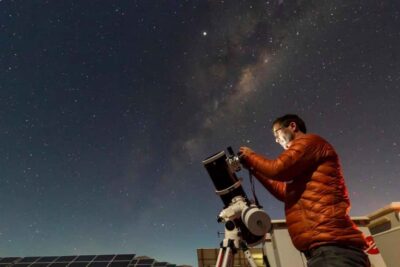 ★ 4.8Etno-Stargazing Tour with TransferFrom $41629 reviews
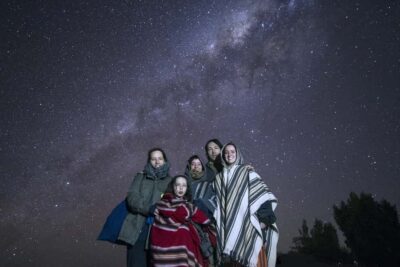 ★ 4.7Stargazing ExperienceFrom $35489 reviews
 ★ 4.3Sky Costanera Observatory Admission TicketFrom $45208 reviews
 ★ 4.5Astronomical Tour with Guide and Pick Up San Pedro de AtacamaFrom $38145 reviews
 ★ 4.5“Astronomical Adventure in San Pedro de Atacama”From $3596 reviews
 ★ 3.9Guided Atacama Desert Stargazing TourFrom $4993 reviews
 ★ 4.5Rapa Nui StargazingFrom $14062 reviews
 ★ 5.0Stargazing Hiking Valle de ElquiFrom $10046 reviews
Browse the lists this tour appears in