
Review · FULL-DAY
Full day tour – DREAM
Moai all day, zero guesswork. This full-day Rapa Nui loop by RAPA NUI DREAM strings together the big signature sites in one run, and I like the reverse order approach that often helps you dodge crowds. Even better, the tour’s real value is the guiding, with famous names like Esteban explaining what you’re seeing in clear, fluent English, so the moai stop being just giant statues. One consideration: National Park entrance tickets and lunch are on you, and the day can run differently on holidays.
A max group size of 15 keeps things human-sized, and you typically get time for photos, not just a stamp-and-go sprint. You’re also set up for a full emotional arc, from moai-carving and village remains to the ocean-facing icons of Tongariki and the arrival story tied to Anakena.
One more practical note, worth planning for: the tour requires moderate physical fitness, and you may do some walking on uneven ground, plus sand at Anakena. If you’re sensitive to delays, build in buffer time because the day can be affected by weather and site hours.
In This Review
- Key highlights at a glance
- Moai all day: what makes this DREAM tour work
- How the route flows, from Vaihu to Anakena
- Ahu Vaihu: fishermen’s bay and village traditions
- Ahu Akahanga: an older village footprint by the water
- Rano Raraku: the moai factory with about 400 unfinished
- Tongariki: the biggest ahu in Polynesia with 15 upright moai
- Te Pito Kura: the magnetic stone and the longest moai
- Ahu Nau Nau near Anakena: 7 moai about 150 meters inland
- Anakena Beach (Hanga Rau o Te Ariki): Hotu Matu’a and a calmer finish
- Price and value: what $120 really covers
- Guide impact: the difference between seeing and understanding
- Timing, crowds, and comfort on Easter Island
- Lunch, tickets, and the two things to budget for
- Should you book this DREAM tour?
- FAQ
- Do I need the National Park entrance ticket for this tour?
- What’s included in the tour price, and what is not?
- How long is the full-day DREAM tour?
- Where does the tour start?
- How big is the group?
- Do I need a certain fitness level?
Key highlights at a glance
- Ahu Vaihu plus a living-culture stop: 8 moais and a specific local sample tied to Rapa Nui village traditions.
- Rano Raraku, the moai factory: around 400 unfinished figures, so you see the making, not just the finished results.
- Tongariki’s 15 upright moai: the island’s biggest Polynesian ahu lineup, positioned with backs to the ocean.
- Te Pito Kura and the magnetic stone: you get the longest moai and the famous magnetism story in one stop.
- Anakena time with meaning: Hanga Rau o Te Ariki connects to the story of King Hotu Matu’a.
- Small group feel: up to 15 travelers, which usually means fewer bottlenecks at each platform.
More Chilean days out, start to finish
- Easter Island: Private Full Day History Of The Moai
★ 4.6 · 12 reviews - Easter Island: Moai Full Day Private Tour
★ 4.8 · 5 reviews
Moai all day: what makes this DREAM tour work
This is a full-day, archaeology-forward tour built around the main “read the island” stops. You’re not just collecting pretty angles of moai. You’re learning how people lived, carved, organized power, and left behind the platforms that still shape the coastline today.
The format matters. It runs about 8 to 9 hours, starting at 9:30 am at Iglesia Católica Tu’u Koihu in Hanga Roa. And the operator uses route logic that can shift by day, including a reverse-order option that can improve crowd flow.
The result is simple: if you have limited time on Easter Island, this is the kind of day that helps you connect the dots between sites instead of treating each stop like a separate postcard.
How the route flows, from Vaihu to Anakena
The itinerary is set up like a map of themes. You start with a ceremonial platform tied to ancestry and community life at Ahu Vaihu. Then you move through village remains and the moai-making landscape at Rano Raraku. After that, you hit the island’s most recognizable public stages: Tongariki and Te Pito Kura.
The last stretch brings you to the shoreline world. You finish near Anakena with Ahu Nau Nau and then the beach itself at Hanga Rau o Te Ariki, where the story of King Hotu Matu’a is told.
One travel-planning tip: the day is not designed as a beach day first. Anakena is meaningful and beautiful, but it’s still an archaeology-cultural schedule, so you should come ready to walk, stand, and look.
Ahu Vaihu: fishermen’s bay and village traditions
Ahu Vaihu is the opening act, and it does a smart job of setting context. This platform features a line of 8 moais on the side near an ancestral bay linked with fishermen.
The other key detail here is cultural: this stop includes a representative sample called Poko Manu Mea, tied to Rapa Nui village traditions and customs. That means you’re not only looking at stone faces. You’re also getting a cultural frame for why these platforms mattered to everyday life and community memory.
At about 30 minutes, it’s not a slow, museum-like experience. But as a first stop, it gives you the mental “hook” for everything that comes later.

Ahu Akahanga: an older village footprint by the water
Next you’ll visit Ahu Akahanga, described as an old village near a small bay.
What’s valuable here is the contrast. You’ve already started with a platform that hints at community roles. Now you see a different type of settlement footprint tied to the coastline. The short timing, about 30 minutes, keeps this stop efficient, and it’s a good breather between longer archaeological sites.
A practical note: the admission ticket for this stop is not included in the tour package. If you are budgeting tightly, make sure you understand what your National Park ticket covers versus what the tour explicitly includes.
Rano Raraku: the moai factory with about 400 unfinished
Rano Raraku is where your understanding changes from “moai as finished icons” to “moai as a process.”
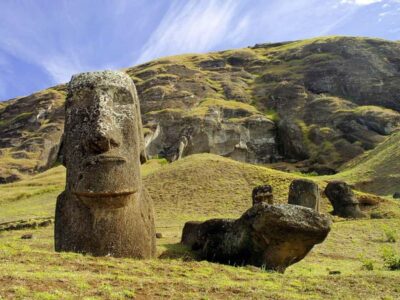
This is the moai factory area, with roughly 400 unfinished specimens. Seeing unfinished figures is powerful because it shows you the scale of work and the reality that carving was not instant. It was labor, technique, and planning on a monumental scale.
The stop runs about 2 hours, which is rare enough on a moai circuit to feel meaningful. You get time to look at different stages and to understand the workshop logic of the island.
If you like photography, this is one of the best places in the day to slow down and compose. And if you like details, it’s the stop where guide explanations tend to land hardest, because the raw stone and unfinished faces tell the story directly.
Tongariki: the biggest ahu in Polynesia with 15 upright moai
Then you hit Tongariki, the island’s headline platform.
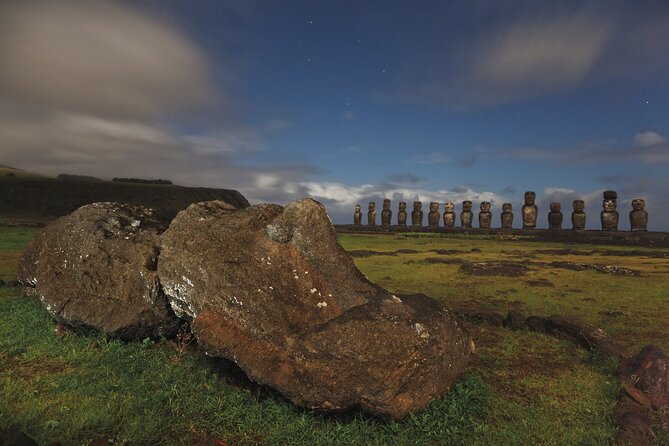
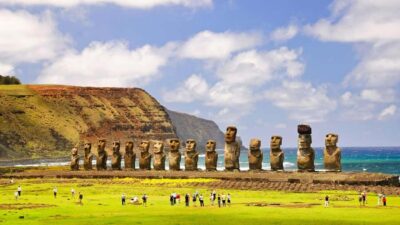
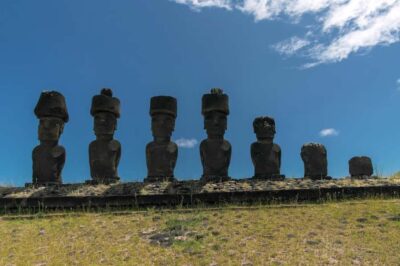
You’re looking at the largest ahu in Polynesia, with 15 upright moai. The key visual point is that their backs face the ocean. That positioning changes how the lineup feels, and it also supports the idea that these sites were made for power, ritual, and a specific relationship with land and sea.
This stop is about 2 hours, so it’s not rushed. You should expect time to walk around the platform, take photos from multiple angles, and get the guide story behind why Tongariki is such an iconic reference point.
Admission is included here, so your budget headache is smaller at this stop than at some others.
Te Pito Kura: the magnetic stone and the longest moai
Te Pito Kura is short but memorable, about 1 hour.
This is where you see the magnetic stone reference and the longest moai. Even if you’re not a science person, the combination works as a lesson. It connects legend and reputation with the physical presence of stone and the way people used stories to explain what they valued.
This is also one of those stops where guide explanations can change your visit. If your guide spends time connecting meaning to location and function, the hour feels full. If the explanation stays brief, you might feel like you’re just looking at a strong silhouette.
Admission ticket is included at this stop, which helps keep the visit simple.
Ahu Nau Nau near Anakena: 7 moai about 150 meters inland
After the big platforms, the day shifts to a quieter, more intimate stop.
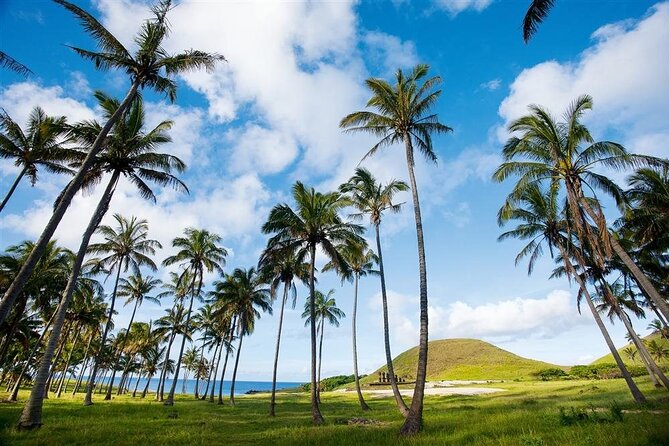
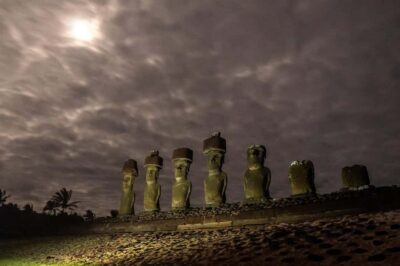
Ahu Nau Nau is a beautiful platform with 7 moai, located about 150 meters inland from Anakena beach. This “inland from the beach” placement gives you a different perspective on how people organized space, linking coastal access with a ceremonial structure set back from the water.
The stop is about 30 minutes. It’s enough time to appreciate the setting and get your photos before you move to the beach.
Admission ticket is not included here, so again, keep an eye on what’s covered versus what you still need to pay.
Anakena Beach (Hanga Rau o Te Ariki): Hotu Matu’a and a calmer finish
The last stop is Anakena Beach, also tied to its real name: Hanga Rau o Te Ariki.
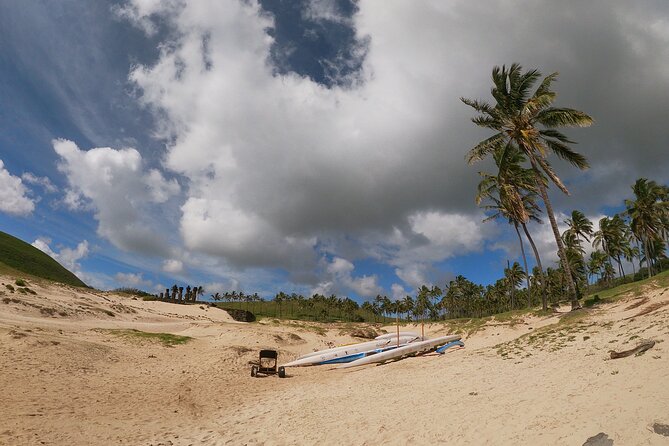
This is where the story of the arrival of King Hotu Matu’a is told. That connection matters because it gives the beach more weight than just sand and palm views. You’re ending with a narrative space, and that makes the day feel like it has an ending, not just a final photo stop.
The stop runs about 30 minutes, and admission is listed as free for this segment.
I also suggest you treat the beach time as your chance to reset. If you’ve been standing on rock and platforms all day, a short walk and a breather helps you enjoy the day instead of just surviving it.
Price and value: what $120 really covers
The tour price is $120 per person, and it’s the kind of package that can be either a steal or a stretch, depending on what you’re already paying for.
Here’s the math you should keep in your head:
- The tour includes admission tickets for some stops (Ahu Vaihu, Rano Raraku, Tongariki, Te Pito Kura).
- It does not include admission tickets for other stops (Ahu Akahanga and Ahu Nau Nau).
- You also must purchase the National Park entrance ticket before your first day of the excursion.
- For foreigners, the National Park entrance ticket value is listed as $80 per person.
- Lunch is not included.
So a realistic all-in expectation for most visitors is: $120 for the tour plus $80 for the National Park entrance ticket, then budget for lunch separately.
Why that can still be good value: you’re getting a full circuit that includes the island’s best-known moai sites, plus the moai factory, plus the beach tied to arrival mythology. If you’re short on time, one guided day like this can replace multiple half-day logistics and give you context you’d otherwise struggle to piece together.
Why it might feel expensive: if you end up paying the park entrance ticket and then also feel limited by the day’s timing, you’ll want the tour to deliver all listed stops at the pace advertised. On holiday days or special operational situations, the schedule can feel tighter.
Guide impact: the difference between seeing and understanding
This tour’s payoff is tightly linked to the guide you get.
In the feedback, guides like Esteban come up again and again for being clear, patient, and genuinely engaged, including during festival timing on the island. Other names that show up include Christian, Joaquin, Andre, and guides referred to as Chris and Stefani. In many of these accounts, what people remember is how the guide connects the moai to Rapa Nui culture and modern island life, not just the names of platforms.
There’s also a pattern worth noticing: the stops that feel most complete tend to be the ones where the guide uses the extra time at Rano Raraku and Tongariki to add explanation, not just let you wander.
So when you show up, be active. Ask questions. If your guide offers photo help, take it. And if you want more beach time at Anakena, ask how the schedule will be handled so you can plan your priorities.
Timing, crowds, and comfort on Easter Island
Easter Island is popular, but it is not a megacity. Still, sites can feel crowded when tour buses stack up.
This is where the operator’s route approach can help. One of the strongest compliments tied to the experience is that the day can be run in reverse order, which often means fewer choke points at certain platforms.
Transport is by van, and the day is designed to move between sites efficiently. A couple practical comfort items have come up in feedback, like an air-conditioning issue on one day. That matters because Rapa Nui can feel hot during transit, especially if you’re waiting between stops.
Pacing is another variable. The standard structure is a full-day visit, but holidays and site closing times can change the feel. You should be mentally ready for the day to be “archaeology focused,” not a leisurely stroll tour.
Lunch, tickets, and the two things to budget for
Lunch is not included, and it’s often the detail that decides whether your day feels smooth or stressful.
Some feedback suggests lunch time can be late, sometimes around the last stop near Anakena. If you want to eat earlier, plan ahead with snacks and water. Bring something small in your day bag so you are not waiting for the first opportunity to buy food.
Also, do not treat the National Park entrance ticket as a casual extra. You are required to have your ticket before starting the first day of the excursion. It can be purchased in person at Ma’u Henua offices or via the rapanuinationalpark.com purchase page listed in your tour info.
If you forget, you can lose time, and on a day like this, lost time is lost context.
Should you book this DREAM tour?
Book it if you want one guided day that covers the moai highlights in a logical story arc: village platforms, the moai factory, Tongariki, Te Pito Kura, then Anakena with the arrival narrative.
I’d especially recommend it if:
- you have limited time on Easter Island,
- you like explanations that connect stone to people,
- you want the major sites without negotiating logistics.
Consider another option or go in with flexibility if:
- you are very sensitive to holiday schedule changes,
- you expect guaranteed beach time and a late lunch at a specific hour,
- you prefer totally private pacing, because even with a max of 15, timing still depends on site conditions.
If you do book, the smart move is simple: buy the National Park entrance ticket early, pack water and a snack, wear good walking shoes, and come ready to ask questions. Do that, and this day tour tends to feel like a real understanding day, not just a sightseeing checklist.
FAQ
Do I need the National Park entrance ticket for this tour?
Yes. You must have your National Park ticket before starting the first day of the excursion. You can purchase it in person at Ma’u Henua offices or online at rapanuinationalpark.com.
What’s included in the tour price, and what is not?
The tour price includes information sent the day before by WhatsApp, and admission tickets are included for some stops. Lunch is not included, and the National Park entrance ticket is not included (foreigners are listed at $80 per person).
How long is the full-day DREAM tour?
It runs about 8 to 9 hours, starting at 9:30 am and ending back at the meeting point.
Where does the tour start?
The meeting point is Iglesia Católica Tu’u Koihu, Hanga Roa, Isla de Pascua, Valparaíso, Chile.
How big is the group?
This activity has a maximum of 15 travelers.
Do I need a certain fitness level?
You should have a moderate physical fitness level, since you will be moving around multiple archaeological sites during the day.
Chilean Days Out, Start To Finish
The Rest Of Our Chile Tours

Everything Else We Have Reviewed In Chile

Not quite it? Here is the rest of what we have reviewed around Chile

More in Full-Day.
 ★ 4.7Piedras Rojas, Altiplanics Lagoons & Salar Full-Day TourFrom $85592 reviews
 ★ 5.0Scenic Full Day Tour of AntiguaFrom $142472 reviews
 ★ 4.6Torres del Paine Full Day TourFrom $229434 reviews
 ★ 4.9Full-Day Whales, Penguins, and Glaciers TourFrom $365325 reviews
 ★ 4.5Full day Vina del Mar and Valparaiso experienceFrom $37255 reviews
 ★ 4.8Full Day Torres del Paine + Milodon CaveFrom $83250 reviews
 ★ 4.6Torres del Paine Full Day TourFrom $90196 reviews
 ★ 4.5Easter Island Sightseeing Full Day TourFrom $70189 reviews