
Review · NIGHT SKIES
Stargazing Hiking Valle de Elqui
A sky full of stars starts with one quiet viewpoint. In Chile’s Elqui Valley, this Stargazing Hiking session blends a short evening walk with a cultural sky lesson, then finishes with Andean constellations through big binoculars. You also get astronomical photography help, so the night is not just something you see, it’s something you keep.
I especially like two parts. First, the sunset viewpoint, where the mountains turn into a color show before the dark takes over. Second, the hands-on astronomy, with Celestron 20×80 binoculars on a tripod plus guidance for what to look for as the sky changes.
One thing to plan for: this is active and timing matters. You need moderate physical fitness, proper hiking shoes, and you have to be on time, because the stars do not wait for late arrivals. Also, it is not for kids under 14.
In This Review
- Key things that make this experience work
- Why the Elqui Valley night sky feels different
- Arrival, pickup, and the evening timing that drives it
- From Casa Pumagui to the safety check: small stuff that saves the night
- The sunset viewpoint: your first real “wow” moment
- Meditation with sound bowls: why the quiet part matters
- Indigenous worldview and ancestral links to the sky
- The binocular moment: Celestron 20×80 and what to expect
- Astronomical photography: making the night last
- Food and comfort breaks that keep the pace enjoyable
- Getting there without stress: transportation and meeting point reality
- Price and value: what you get for $100 per person
- Who should book this Elqui stargazing hike
- A note on weather: the sky depends on it
- Should you book Stargazing Hiking in Valle de Elqui?
- FAQ
- What does the tour include?
- How long is the experience?
- Where does it start and end?
- What time does the tour run?
- Do I need hiking shoes?
- Is this suitable for children?
- Is the tour active or difficult?
- What if the weather is bad?
- Can I cancel and get a full refund?
- Is there a requirement about alcohol or punctuality?
Key things that make this experience work
- Sunset first, then the sky program so you experience the change from golden mountains to night stars.
- Sound-bowl meditation that sets a calm tone before you look up.
- Indigenous worldview + astronomy for context, not just names of constellations.
- Celestron 20×80 binoculars on a tripod for a clearer, more “real” view than handheld.
- Astronomical photography included so you can capture the moment, not just admire it.
- Tea, snacks, and a portable chair help you stay comfortable during waiting time.
Still weighing up the options? These are the other Chile tours we have written up.
- Baltinache Hidden Lagoons
★ 4.4 · 64 reviews - Tour to Huilo Huilo from Pucón, Villarrica
★ 5.0 · 51 reviews - Stargazing Hiking Valle de Elqui
★ 5.0 · 46 reviews - Paragliding Adventure in Maitencillo
★ 5.0 · 42 reviews
Why the Elqui Valley night sky feels different
The Elqui Valley is famous for stargazing for a reason: the skies are often clearer than what you get in many cities. And here, that matters because you are actually going to use the darkness, not just stand under it for a photo. The program is paced so you see the transition, from sunset hues to the first sharp stars.
What makes this tour feel “worth it” is how it pairs the practical with the meaningful. You get a guided look at the Andean constellations, not just random star dots. Then you also get a cultural lens through an indigenous worldview. That combination helps the sky feel less like trivia and more like a story you can follow with your eyes.
Arrival, pickup, and the evening timing that drives it
This starts in and around Vicuña, with the activity beginning at Navarino, Peralillo, Vicuña, Coquimbo, Chile, and ending back at the meeting point. The run time is about 4 hours 30 minutes, and you will be outside most of that evening.
Timing varies a little by month:
- January 2026 runs from 8:00 PM to 9:00 PM
- February 2026 runs from 7:30 PM to 9:00 PM
- March 2026 runs from 7:00 PM to 9:00 PM
That schedule matters for two reasons. One, the sunset colors and the early dark are part of the experience. Two, astronomy is weather-dependent and light-dependent. If you arrive late, you miss the best window for both the mountain glow and the stars getting sharp.
Private tour also means your group sets the pace. It is not a crowded, hurry-up-and-go-through-the-ritual situation. It is just your party, guided start to finish.
From Casa Pumagui to the safety check: small stuff that saves the night
The evening begins at Casa Pumagui with safety recommendations. I like that this is not skipped. A stargazing hike sounds simple, but it is still walking on uneven ground at night, plus time spent standing or sitting while you wait for darkness to settle.
Before you go, you are told what to wear and how to handle the pace. You must wear hiking shoes, and you should have a moderate physical fitness level. Trekking poles are included, and that is a big deal because it reduces strain and helps with footing, especially when you are distracted by the sky.
Also, the tour has an admission rule if someone is under the influence of alcohol. That is not there to be strict for fun. It’s there so you can actually focus on safety, the hike, and the astronomy.

The sunset viewpoint: your first real “wow” moment
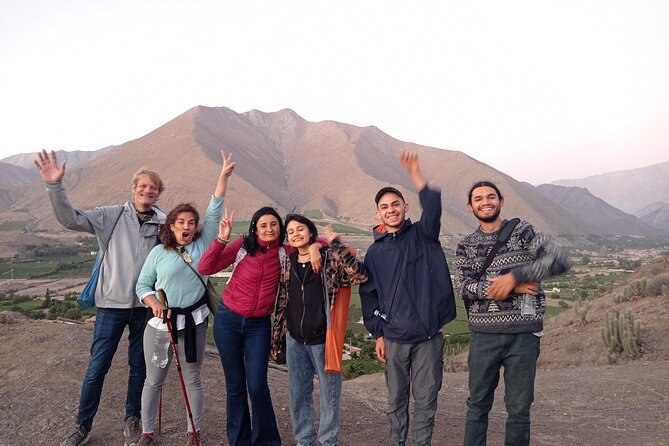
Before the sky lesson, you head toward a majestic viewpoint to watch the sunset over the mountains. This is not an optional warm-up. It’s the emotional setup for everything after.
During sunset, the world is moving from bright and warm to cool and dark. You get those changing colors over the peaks, then you feel the temperature drop and the night starts to gather. That timing helps you appreciate the stars once they arrive. You are not going from daylight to staring at darkness in a single leap.
Practical tip: dress like you expect cooler temperatures as the sun drops. Even if the valley feels fine earlier, you will be outside waiting for the best viewing moment.
Meditation with sound bowls: why the quiet part matters
Next comes the astronomy program, and it starts with meditation and sound therapy using bowls. That detail might sound like “just another extra,” but it actually makes sense for stargazing.
Sound bowls can help you slow down and settle. When your mind calms, your attention sharpens. And stargazing needs attention. You will spend time looking through astronomical binoculars and following a guide’s direction. If you are already keyed up, it’s harder to notice faint stars or subtle differences in what you see as the sky darkens.
You also get time to connect with the environment, not just look at it. I find that this kind of grounding makes the astronomy feel more personal. You are not treating the night like a backdrop.
Indigenous worldview and ancestral links to the sky
One of the more meaningful parts of the night is the indigenous worldview component, where you explore ancestral links between cultures and astronomy. This is where the experience shifts from entertainment to interpretation.
Even if you only know a little about constellations, a cultural context gives you a framework. Names of stars matter, but so does the reason people watched them, mapped them, and built knowledge around them. The goal is not to memorize a list. It’s to see that the sky has always been a reference point.
And because the program includes both meditation and worldview, it’s not just a lecture. It’s a story told while you are still in the landscape, moving from sunset to night.
The binocular moment: Celestron 20×80 and what to expect
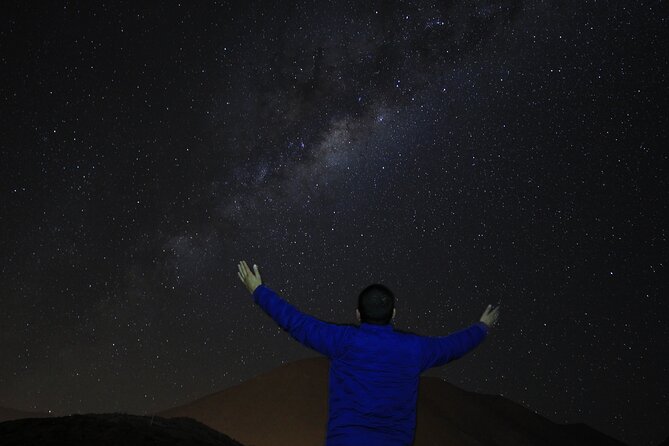
Then comes the hands-on astronomy. Your guide directs your gaze toward Andean constellations. The big tool here is the Celestron 20×80 astronomical binocular on a tripod.
This is one of those “you will feel the difference” inclusions. Tripod-mounted binoculars are steadier than handheld. That steadiness helps your eyes lock onto stars and details. It also makes it easier to compare what you are seeing with the guide’s directions.
What you should do during this part:
- Listen closely when your guide points out what to look for, and don’t assume you can guess the constellation from memory.
- Take your time. Astronomy is not a one-second snapshot.
- If your eyes start watering or feeling tired, pause, breathe, and let your vision adjust.
Portable chairs and waiting time can be part of this section, and that’s why the tour includes a portable chair plus snacks and coffee or herbal tea. You will be outside long enough to appreciate small comfort.
Astronomical photography: making the night last
The tour includes astronomical photography. That means you are not just handed a camera-less experience and told to take your own pictures. The intent is to help you create a memory from the sky, not only admire it live.
You also bring your patience here. Even with good guidance, astrophotography requires stable framing, and it takes a moment for the right conditions to show up in your camera settings or phone mode. Plan to be flexible.
If you want a great photo:
- Keep your gear ready before it gets too dark.
- Follow the guide’s instructions for how to hold, aim, or adjust.
- Accept that the best shots often come after a couple of attempts.
Food and comfort breaks that keep the pace enjoyable
You get snacks and coffee and/or herbal tea, plus a portable chair. That might sound minor, but it changes the vibe of the hike.
Stargazing tours can run long, and the cold can hit harder when you are standing still. Warm drinks and snacks give you a reason to relax while you wait for the next constellation or photo moment.
It also helps you avoid the low-energy feeling that can ruin a late-night outing. This is especially helpful on longer evenings when you are using your attention for astronomy rather than talking the whole time.
Getting there without stress: transportation and meeting point reality
The tour includes private transportation transfer from the city of Vicuña to Villaseca, place of activity. That’s important because driving yourself at night in a rural area is not everyone’s idea of fun.
What is not included is an air-conditioned vehicle, and transfers from other places are not included unless they are mentioned in the inclusion list. So if you are staying outside Vicuña, you may need to arrange your own ride to the meeting area.
One more practical point: it says it is near public transportation. That can be useful if you are not driving and want backup options.
Price and value: what you get for $100 per person
At $100.00 per person for about 4 hours 30 minutes, the price feels fair when you look at what’s included. You are paying for:
- trekking poles
- astronomical binoculars on tripod (Celestron 20×80)
- astronomy guidance for Andean constellations
- astronomical photography support
- portable chair
- snacks plus coffee or herbal tea
- private transfer from Vicuña to Villaseca
The value is not just the gear. It’s the structure: sunset viewing, then meditation and sound therapy, then constellation guidance, then photo time, all in one organized evening. That reduces the work you would otherwise do on your own to find the right viewing spot, learn where to look, and figure out timing.
Also, the tour has strong social proof: a 5 rating with 46 reviews and 100% recommended. I still advise you to read details and match the activity to your comfort level, but that high recommendation rate supports that people usually leave happy.
Who should book this Elqui stargazing hike
You’ll love this if you want a stargazing experience with more than a telescope moment. This is a good fit for people who enjoy:
- the outdoors, especially evening walks
- astronomy with real guidance
- cultural interpretation, not just facts
- taking photos and wanting help getting them
It is not a fit for kids under 14, and it expects moderate fitness. If you prefer a totally flat, easy walk with minimal cold exposure, this may feel like more effort than you want.
It also works best if you can arrive on time. The tour requires you to be there 15 minutes before departure, and delays of more than 10 minutes can mean exclusion. If you are the type who plans to show up “around” the start time, this is one you should rethink.
A note on weather: the sky depends on it
This experience requires good weather. If it gets canceled due to poor weather, you will be offered a different date or a full refund. That’s exactly what you want in stargazing, because even a small amount of cloud can ruin visibility.
So how should you plan your trip? Keep a little flexibility in your schedule. If you lock in other long daytime tours back-to-back every night, you might feel stuck if the sky doesn’t cooperate.
Should you book Stargazing Hiking in Valle de Elqui?
Yes, if you want your night sky experience to include three things at once: a beautiful sunset, guided constellations, and a cultural context that makes the astronomy feel human. The combination of meditation with sound bowls, indigenous worldview, and Celestron 20×80 binocular viewing gives this tour more depth than a standard stargazing session.
Don’t book if you want an easy, casual stroll with no timing pressure. You need to be punctual, wear hiking shoes, and be comfortable with an evening outside plus a moderate fitness level.
If you are ready to work with the night, not just watch it pass, this is a smart $100 use of your time in Chile’s Elqui Valley. And with Loreto guiding the experience, you can expect a warm, respectful approach to both nature and the sky.
FAQ
What does the tour include?
It includes trekking poles, astronomical photography, a portable chair, astronomical binoculars, coffee and/or herbal tea, snacks, and private transportation transfer from Vicuña to Villaseca.
How long is the experience?
The duration is approximately 4 hours 30 minutes.
Where does it start and end?
It starts at Navarino, Peralillo, Vicuña, Coquimbo, Chile, and ends back at the same meeting point.
What time does the tour run?
In January 2026 it runs 8:00 PM to 9:00 PM, in February 2026 it runs 7:30 PM to 9:00 PM, and in March 2026 it runs 7:00 PM to 9:00 PM.
Do I need hiking shoes?
Yes. Participants must wear hiking shoes.
Is this suitable for children?
No. Participation is not suitable for children under 14.
Is the tour active or difficult?
You should have a moderate physical fitness level. Trekking poles are included, and it includes a hiking component.
What if the weather is bad?
The experience requires good weather. If it is canceled due to poor weather, you will be offered a different date or a full refund.
Can I cancel and get a full refund?
Yes. Free cancellation is available. You can cancel up to 24 hours in advance of the experience for a full refund.
Is there a requirement about alcohol or punctuality?
Yes. Participation is prohibited for anyone under the influence of alcohol. You must arrive 15 minutes before departure, and delays of more than 10 minutes can result in exclusion.
Everything Else We Have Reviewed In Chile
Not quite it? Here is the rest of what we have reviewed around Chile
More in Stargazing & Observatory Tours.
 ★ 4.8Etno-Stargazing Tour with TransferFrom $41629 reviews
 ★ 4.7Stargazing ExperienceFrom $35489 reviews
 ★ 4.3Sky Costanera Observatory Admission TicketFrom $45208 reviews
 ★ 4.5Astronomical Tour with Guide and Pick Up San Pedro de AtacamaFrom $38145 reviews
 ★ 4.5“Astronomical Adventure in San Pedro de Atacama”From $3596 reviews
 ★ 3.9Guided Atacama Desert Stargazing TourFrom $4993 reviews
 ★ 4.5Rapa Nui StargazingFrom $14062 reviews
 ★ 4.6Pisco Elqui: Mountaintop Stargazing and Night PortraitFrom $5420 reviews
Browse the lists this tour appears in