
Review · RAPA NUI
Birdman Cult and Caves
Moai are only the start here. This 6-hour Birdman Cult and Caves route connects native guides with hospitality, walking you through the island’s sacred sites, carvings, and moai-making clues. One possible drawback: the quality of the guiding can be hit or miss, so if you prefer lots of clear explanation, be ready to ask questions early.
You’ll move across major stops around Rano Kau, from Ahu Akivi to Orongo, with a focus on how culture and geography link together. I like that it’s not only about the famous statues, it’s about the systems behind them, like how people oriented ceremonies and what certain stone sources were used for.
In This Review
- Key points to look forward to
- Why the Birdman Cult and Caves route feels different
- Price and time value: $90 for 6 hours with real access
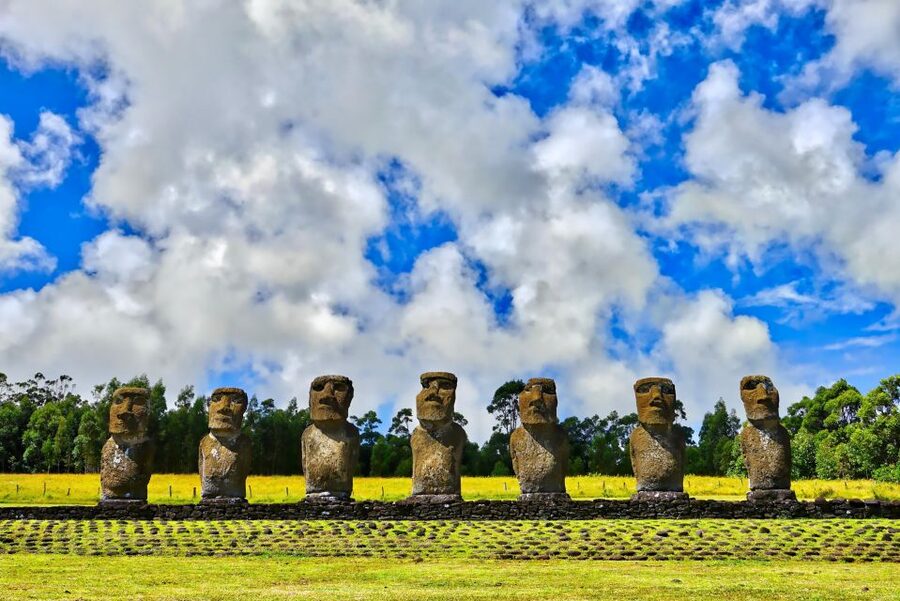
- Ahu Akivi: seven moais and the idea of sky-based orientation
- Ana Te Pahu: ceremonial cave art on the slopes of Rano Kau
- Puna Pau quarry: where red scoria topknots were sourced
- Vinapu’s megalithic architecture: precision that feels familiar in the Andes
- Rano Kau: volcanic crater views plus the island’s natural logic
- Orongo: the birdman cult at the rim of Rano Kau
- Guide quality: how to make the most of native-language explanation
- What’s included, what to plan for, and what it means for your day
- Best for who, and who might want a different kind of day
- Should you book Birdman Cult and Caves?
- FAQ
- How long is the Birdman Cult and Caves tour?
- How much does it cost?
- What sites will we visit on this tour?
- What is included in the price?
- Is the National Park ticket included?
- What languages are the guides?
Key points to look forward to
- Ahu Akivi starts the story with seven moais and talk about celestial orientation
- Ana Te Pahu brings cave art to life with petroglyphs and painted scenes
- Puna Pau quarry explains the origin of the red scoria topknots used on many moai
- Vinapu’s megalithic stonework is described through precise building and parallels to the Andes
- Rano Kau and Orongo end with volcano views and the birdman cult’s ceremonial setting
Deeper into Rapa Nui: the other island tours
- Birdman Cult and Caves
★ 4.0 · 5 reviews - Easter Island: Full Day Ancestral Caves and Orongo Village
★ 5.0 · 3 reviews
Why the Birdman Cult and Caves route feels different
If you think Easter Island is all about moai in tidy rows, this tour redirects your attention fast. You’re still seeing big stone monuments, but the main payoff is learning how people organized belief, labor, and ritual around specific places.
Orongo and the birdman cult are the emotional closer on this route. You’re on the rim of Rano Kau, looking out over the Pacific while you take in ceremonial village remains and petroglyphs tied to the birdman tradition. Even if you already know the basics, the setting changes how the story lands.
Another strong reason to choose this tour is the variety of evidence types. You’re not just looking at statues. You’re seeing quarry material for the famous red elements, plus cave art and rock carvings that point to belief systems and communication through symbols.
Price and time value: $90 for 6 hours with real access
At $90 per person for a 6-hour experience, you’re paying for guided access plus transportation. That matters on Easter Island, where a lot of the most meaningful sites are spread around volcanic terrain. Your time is also protected, since you’re not trying to stitch together routes on your own while dealing with pickup and drop-off logistics.
What you do not get is the National Park ticket, and the tour doesn’t sell it. So budget for that separately. If you want the smoothest day, plan to handle the ticket in advance so you can focus on the sites instead of paperwork.
You’ll have a live guide in English and Spanish, and the tour is wheelchair accessible. That last part can be a deciding factor for people who want a guided day without sacrificing mobility needs.
Ahu Akivi: seven moais and the idea of sky-based orientation
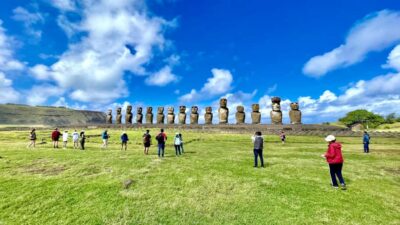
The tour starts at Ahu Akivi, a platform with seven moais. This is a smart opener because it gives you a clear visual anchor, seven figures you can reference while you learn the meaning of their placement.
The guide theme here is celestial orientation. Even without memorizing any dates, the point is to train your eye on what the moai are doing for people, not just what they look like. Ask yourself: why place them here, facing the way they do, in a landscape shaped by wind and sea?
Practical tip: give yourself a moment before you launch into questions. Stand back, take in the full platform, then come back to the moais one by one. That makes the orientation discussion easier to follow.
Ana Te Pahu: ceremonial cave art on the slopes of Rano Kau
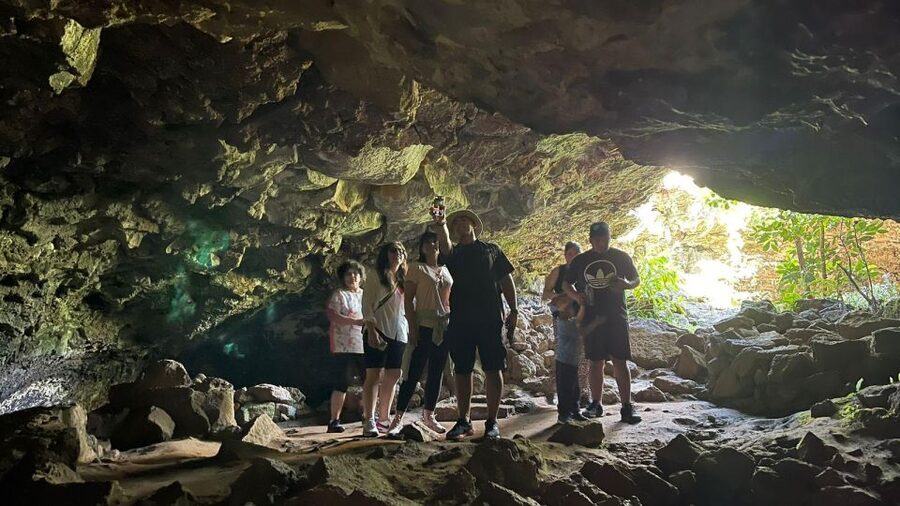
Next up is Ana Te Pahu, described as a ceremonial cave on the slopes of Rano Kau. This is where the tour shifts from monumental stone to human marks, petroglyphs and paintings that show scenes from island life and tradition.
Cave sites are special because they tend to feel quieter and more private than open-air platforms. You’re closer to the idea of a ritual space, a place made for symbols to be seen and interpreted by the right people.
Because the tour emphasizes both petroglyphs and paintings, you’ll want to slow down and actually look, not just point and walk. If you’re the kind of person who takes photos quickly, try a different approach: look first, then capture. The guide explanation helps, but your own close reading of the images is what makes it stick.
One consideration: cave settings can mean uneven ground and light changes. Wear shoes you trust, and expect that your pace might be slower here than at the open platforms.
Puna Pau quarry: where red scoria topknots were sourced
Puna Pau is the place for the moai’s red tops, the scoria topknots that many moai display. The tour’s focus is on the quarry itself, where that distinctive stone was supplied.
This is more than a cool stop for geology fans. It’s also a reality check on how the island’s people solved practical problems. The moai are iconic, but the red element reminds you this wasn’t only art, it was materials, extraction, transport, and skilled working of specific stone.
When your guide explains what the quarry supplied, you get a clearer sense of scale and labor. It’s easy to admire the finished figure. It’s harder, but more meaningful, to understand where the raw ingredients came from.
If you like hands-on clarity, ask where the topknots fit into the larger moai-making process. Even if you don’t get a perfect step-by-step story, you’ll start seeing the island’s craft economy instead of treating the artifacts as isolated objects.
Vinapu’s megalithic architecture: precision that feels familiar in the Andes
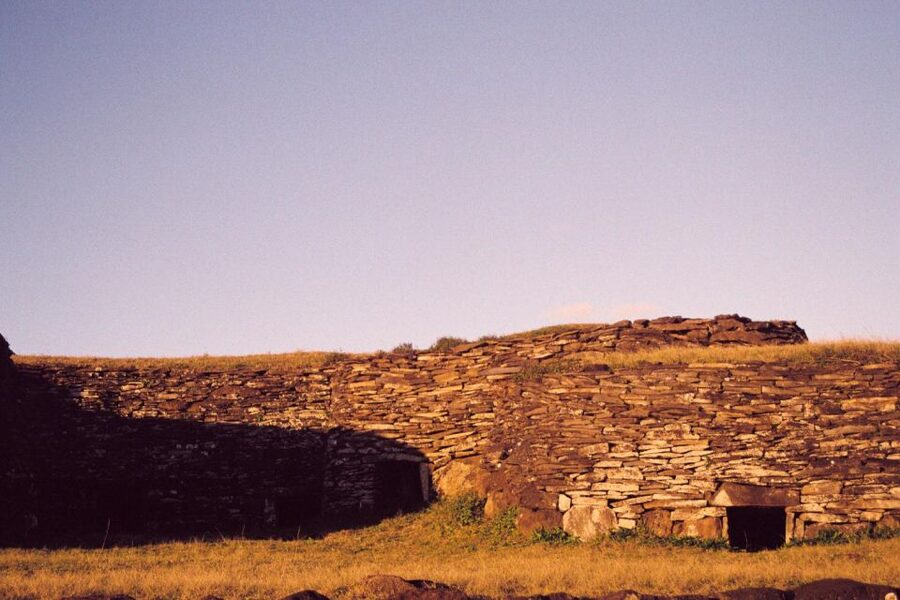
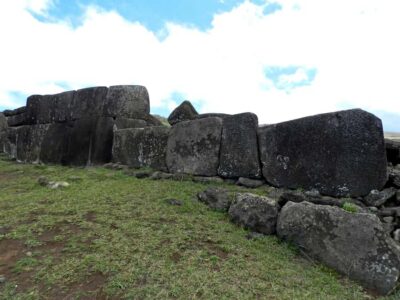
The Vinapu sector is where you get stonework described as precise and artistic, megalithic architecture that the tour connects to broader South American building traditions. The specific comparison mentioned is Cuzco, which gives you a helpful mental bridge if you’ve seen Inca stonework before.
This stop can be a favorite for people who love the engineering side of archaeology. Moai attract attention because of form and expression. Vinapu attracts attention because of fit and finish, the way large stones meet and hold position.
What I like about this kind of comparison is that it pushes you to ask better questions. Are these “similarities” proof of contact, or are they parallel solutions to similar challenges? The tour doesn’t require you to land on one answer. It just gives you enough detail to notice patterns.
If you’re prone to rushing through stone walls, resist. Slow down and look for the exact points where stones align. That is where you’ll feel the guide’s emphasis on precision.
Rano Kau: volcanic crater views plus the island’s natural logic
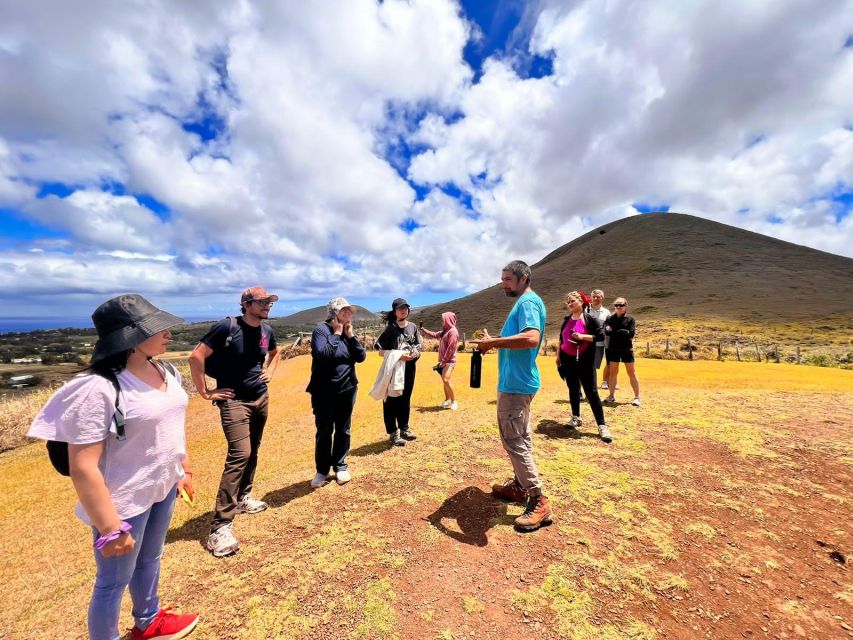
Then you reach Rano Kau, the volcanic crater with panoramic views and unique ecosystems. This is your “breathe and reset” segment in the day.
The tour frames Rano Kau as both a viewpoint and a place with geological history. That combination helps you understand why Easter Island sites are so tightly linked to terrain. People didn’t choose sacred spots in a vacuum, they used the island’s natural features like a guide.
I also like that the day ends with more ritual and carving. That works because Rano Kau is a strong bridge between nature and belief. You’ve already learned about sky orientation, quarry stone, and ceremonial art, so when you look out from the crater rim, you’re better prepared to connect the dots.
Practical tip: if it’s windy, you’ll notice it most near viewpoints and exposed areas. Bring something light for wind, and keep your water handy.
Orongo: the birdman cult at the rim of Rano Kau
The tour concludes at Orongo, perched on the rim of Rano Kau. This is where the birdman cult takes center stage.
You’ll visit a ceremonial village and see petroglyphs tied to the birdman tradition. The emphasis is on the connection between culture and landscape, meaning the ritual is not separate from where it happens. The setting becomes part of the meaning.
Even if you don’t memorize every symbol, Orongo tends to create a certain mental clarity. You can see how a cliff-edge location supports ceremonial focus, how visibility and wind and sea shape daily life, and how those factors feed into ritual thinking. The petroglyphs add the human layer, marks left by people trying to communicate through stone.
This is also a good moment to test your memory. Think back to Ahu Akivi’s celestial orientation and the quarry at Puna Pau. Then look at Orongo and ask yourself what themes connect them. Even when you don’t have a perfect answer, you’ll notice the tour’s overall structure: symbols, materials, and place all reinforce each other.
Guide quality: how to make the most of native-language explanation
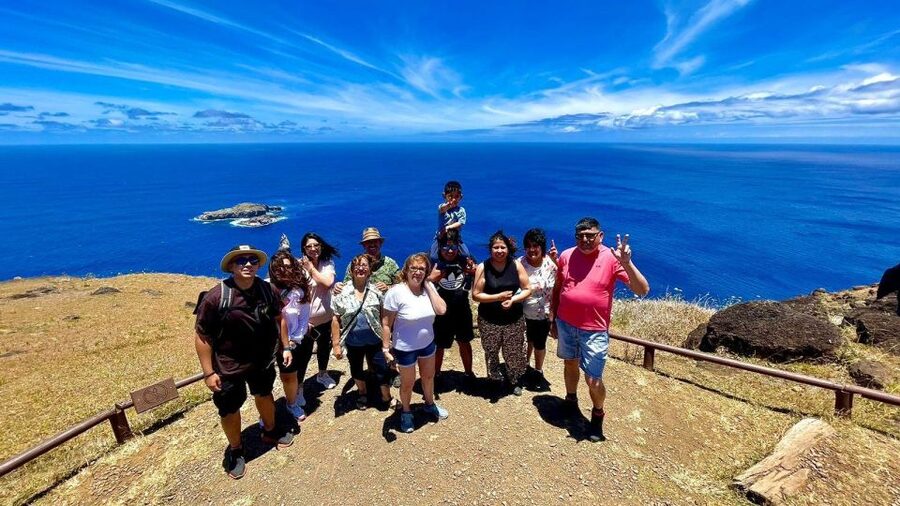
This tour’s highlights put native guides at the center, along with hospitality. That’s a big deal on Easter Island, because local context often makes the difference between seeing signs and understanding what those signs were meant to do.
At the same time, there’s a real-world travel truth: guiding style can vary. If you find the explanations too fast, too general, or not matching your interests, it helps to speak up early. Simple questions work well here, like asking what the petroglyph scenes represent in plain terms, or how the red scoria connects to moai symbolism.
If you’re someone who learns best through back-and-forth, ask for a quick recap at the next stop. You’ll stay engaged, and you’ll also get more out of the scenes and stonework.
What’s included, what to plan for, and what it means for your day
Here’s the practical setup based on what’s offered: transportation is included, with pickup and drop-off, plus a local guide. The tour lasts about 6 hours, with starting times based on availability.
What you need to plan for: the National Park ticket is not included, and the operator does not sell it. So treat that as a separate step.
Language support is English and Spanish, and wheelchair accessibility is listed. That means the experience should be usable if mobility support is part of your planning. Still, you should expect uneven volcanic terrain at multiple sites, so bring appropriate footwear and go at a comfortable pace.
Value check: for $90, you’re not just buying entry. You’re buying guided interpretation plus transport time, which helps you focus on the stops rather than navigating them.
Best for who, and who might want a different kind of day
This tour suits you if you like archaeology with meaning. If you enjoy learning how people used orientation, symbols, and materials tied to specific places, you’ll probably feel satisfied by the sequence from Ahu Akivi to Orongo.
It also works well if you’re the type of traveler who cares about culture and daily ritual clues, not only the headline monuments. Ana Te Pahu’s petroglyphs and cave paintings, plus Orongo’s ceremonial village feel like direct lines to belief.
Who might consider another option: if you only want short stops focused purely on the most famous moai views, you may wish you had a lighter day. This route spends time on caves, quarries, and stonework sectors, which is great for meaning, but not ideal for everyone’s pace.
Should you book Birdman Cult and Caves?
I’d book this tour if you want a guided Easter Island experience that connects stonework to ritual, and nature to meaning. The route makes a strong narrative, seven moais at Ahu Akivi, cave art at Ana Te Pahu, quarry clues at Puna Pau, megalithic precision at Vinapu, crater context at Rano Kau, and the birdman cult at Orongo.
The main reason not to book is simple: you need to be comfortable paying attention on a day that is more interpretive than photo-only. Also factor in that guide quality can be a make-or-break element, so bring your curiosity and ask questions early.
If you do that, you’ll leave with more than views. You’ll leave with a map of ideas.
FAQ
How long is the Birdman Cult and Caves tour?
The tour duration is 6 hours.
How much does it cost?
The price is $90 per person.
What sites will we visit on this tour?
You’ll start at Ahu Akivi and then visit Ana Te Pahu, Puna Pau, the Vinapu sector, Rano Kau, and finish at Orongo.
What is included in the price?
The tour includes transportation, a local guide, pickup, and drop-off.
Is the National Park ticket included?
No. The National Park ticket is not included, and the tour does not sell it.
What languages are the guides?
The live tour guide is available in English and Spanish.
Everything Else We Have Reviewed In Chile
Rapa Nui, Three More Ways
Not quite it? Here is the rest of what we have reviewed around Chile
More in Easter Island & the Moai.
 ★ 4.6Rapa Nui Culture Sightseeing TourFrom $80307 reviews
 ★ 4.3Easter Island Highlights 2-Day TourFrom $170205 reviews
 ★ 4.5Easter Island Sightseeing Full Day TourFrom $70189 reviews
 ★ 4.3Journey from Orongo to Ana Te PahuFrom $7075 reviews
 ★ 4.5Rapa Nui StargazingFrom $14062 reviews
 ★ 4.8Two days of Full Day Tour of Rapa Nui + Sunrise in TongarikiFrom $25055 reviews
 ★ 5.0Half Day Tour in Rapa NuiFrom $1,50048 reviews
 ★ 4.4Easter island: Snorqueling tour on coral reefsFrom $11047 reviews
Browse the lists this tour appears in