
Review · SANTIAGO
Private Santiago City Half Day Tour
Four hours, and Santiago makes sense fast. This private half-day tour strings together the city’s key downtown landmarks, then adds hill views and ends at Mercado Central, a top food market spot. You’ll get a guided storyline of how Santiago works, not just a list of photos.
I especially like that the pace is adjustable, since it’s your group in the car. I also like the way the route mixes power sites like La Moneda with everyday life at the market, so the city feels real. One thing to consider: comfort can be inconsistent on very hot days, so if you travel in summer, bring water and plan for potentially sweaty walking downtown.
In This Review
- Quick Highlights to Know
- How This Half-Day Private Tour Helps You Read Santiago
- Plaza de Armas, Paseo Ahumada, and the Catedral Metropolitana
- La Moneda and the Civic Core, Plus a Little Post-Office History
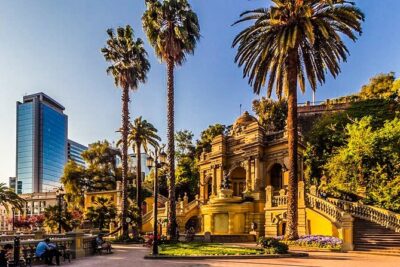
- Santa Lucia and San Cristóbal Hill Viewpoints, With Included Admission (If Selected)
- Santa Lucía Hill: Volcano Past and Founding Stories
- Cerro San Cristóbal: The Best City Orientation Angle
- Palacio de La Moneda Cultural Area, the Civic Square, and Old Colonial Corners
- The Traditional Craft Shop and What to Do With That Free Time
- Mercado Central: Why the Final Stop Feels Like the Point
- City Views Beyond the Hills: Bellavista, Bohemian Streets, and Skyline Edges
- Price and Guide Fit: Getting Value From a Private Day
- Who This Tour Suits Best (And Who Might Want Something Else)
- Should You Book This Private Santiago City Tour?
- FAQ
- How long is the private Santiago city half-day tour?
- What’s included in the tour price?
- Is food included at Mercado Central?
- What hill options are offered?
- Where does hotel pickup happen?
- Can I cancel for free?
Quick Highlights to Know
- Private hotel pickup and door-to-door convenience so you lose less time figuring out transit.
- Plaza de Armas to Catedral Metropolitana for Santiago’s oldest civic core in one tight stretch.
- La Moneda and the surrounding government district so you understand who runs Chile and how the city is organized.
- Hill viewpoint choice (Santa Lucia or San Cristóbal) for panoramic orientation, plus included admission when that option is selected.
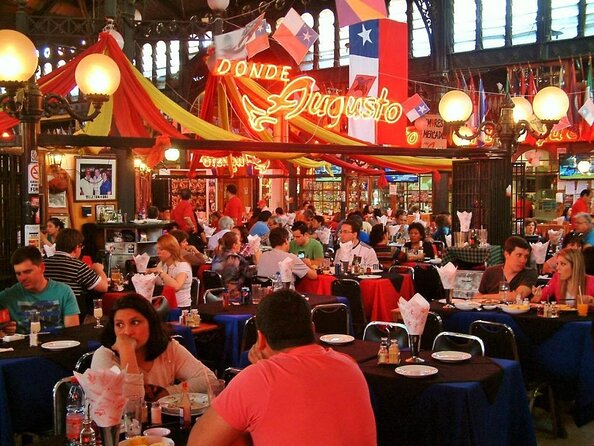
- Mercado Central stop with lunch at your own pace at a market often cited among the world’s best for food and local bustle.
Other ways to walk the capital, reviewed
- Private Santiago City Half Day Tour
★ 4.0 · 414 reviews - Museo Chileno de Arte Precolombino Admission Ticket
★ 4.5 · 118 reviews - Half-Day Small-Group Panoramic Santiago Tour
★ 4.0 · 89 reviews - 2-Hour Walking Tour of Yungay The Coolest Neighborhood in Chile
★ 5.0 · 85 reviews
How This Half-Day Private Tour Helps You Read Santiago
Santiago is a city where neighborhoods can feel like different countries. That’s exactly why a half-day tour works so well here. You ride through older, wealthier areas, then swing into the civic center, then go up for views. By the time you reach the market, you’re not just hungry, you’re oriented.
The private format matters. You’re not squeezed into a rigid group rhythm. You can linger at a façade, step back for photos, or keep things moving when the sun is doing its job too well. And since the guide provides live commentary during the drive, you’ll get the “why this place matters” layer without needing to build an itinerary of your own.
The value for the price is strongest when you want a guided overview and you also want to avoid multiple taxis or navigating downtown streets. At about $76.90 per person for roughly four hours, you’re paying for guide time plus the convenience of hotel pickup and return.
Plaza de Armas, Paseo Ahumada, and the Catedral Metropolitana
The tour’s downtown spine starts in the area around Plaza de Armas. This is Santiago’s traditional starting point, and it’s still busy with transit, street life, and everyday shopping. You’ll also pass Paseo Ahumada, a long downtown pedestrian street known for its retail corridor running between major metro areas. It’s a good reminder that Santiago’s center is not just monuments, it’s commerce.
Next comes the Metropolitan Cathedral (Catedral Metropolitana). This is the seat of the Archbishop of Santiago, and it’s also an architectural lesson in layers. Construction began in 1753 and finished in 1799, and the architect was Italian Gioacchino Toesca. Later alterations refined the look into what you see today. Even if you’re not a church-nerd, the scale and the neoclassical feel make it a real anchor point for the city.
What I like here for your experience: this stop gives you a sense of Santiago’s long timeline. You can stand in the middle of the present city and see how much of the center was built around religious and civic authority.
Time note: the stop is brief, around 10 minutes. That’s enough for exterior photos and a quick orientation, but don’t expect a deep inside visit unless you’re able to spend extra time on your own.
La Moneda and the Civic Core, Plus a Little Post-Office History
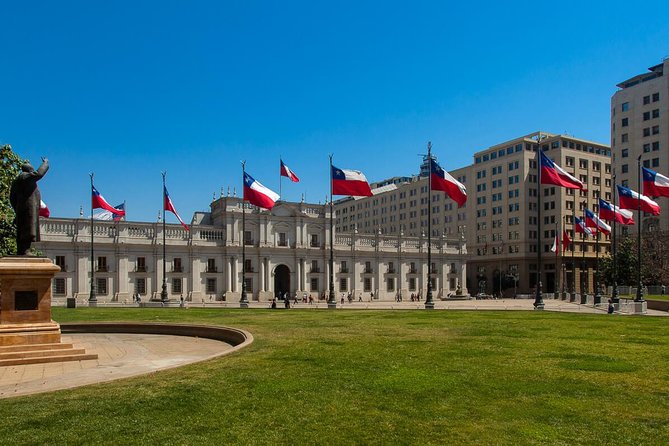
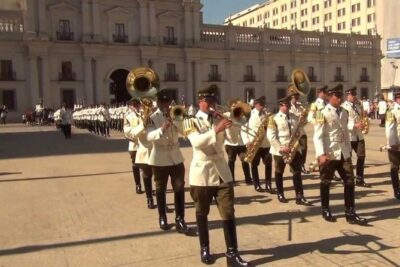
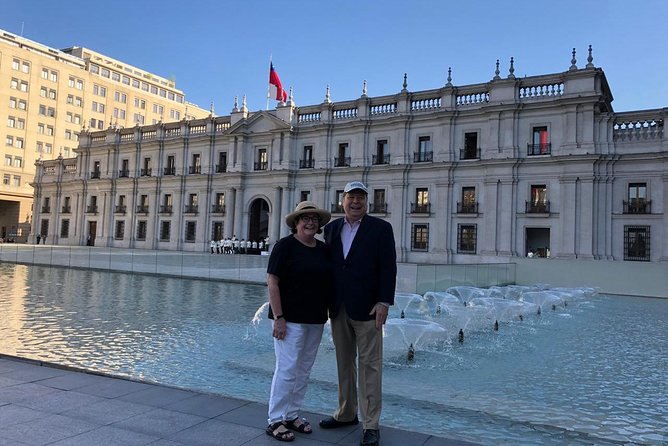
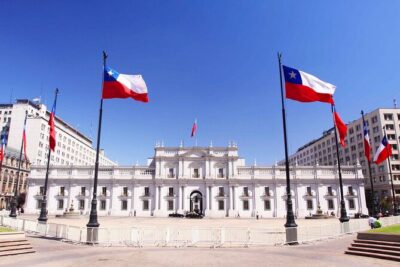
Then the tour moves to La Moneda, the seat of Chile’s President and also home to several cabinet-level offices. La Moneda occupies a full block in downtown Santiago, so it has that unmistakable “government headquarters” presence. The stop time is short, about 10 minutes, but it’s a useful photo moment and a quick reality check on where political power sits in the city.
Near it is the Central Post Office, a historic building on the northern edge of Plaza de Armas. It’s adjacent to the Palacio de la Real Audiencia de Santiago, and it sits on land originally associated with Pedro de Valdivia, the Spanish founder. That might sound like random trivia until you realize: in Santiago, a lot of the city’s institutions grew from the same foundational lots and blocks.
One of the more memorable segments comes from the tour’s stop at the former Chilean Congress building. This structure carries heavy 20th-century history. Congress met there until the 1973 coup, after which the legislature shifted to new premises in Valparaíso. The building became a national monument in 1976 and later housed the foreign ministry between 1990 and 2006. The Senate moved its offices back in Santiago in December 2000. In a short tour window, this is the place that gives you emotional context, not just architecture.
Reality check: La Moneda entry is not included, and the Central Post Office stop also isn’t positioned as an all-access museum visit. Still, the exterior viewpoints help you understand how the civic district is laid out.
More Chilean cities, half a day at a time
Santa Lucia and San Cristóbal Hill Viewpoints, With Included Admission (If Selected)
Here’s where the tour becomes more than a downtown walk. You get a hill stop, and the hill changes how you understand Santiago.
Your booking choice determines whether you go up Santa Lucía Hill or Cerro San Cristóbal.
Santa Lucía Hill: Volcano Past and Founding Stories
Santa Lucía is famous for its dramatic park layout, and it has a lot of origin story packed into one climb. It’s the remnant of a 15 million-year-old volcano. Conquistadors used it as a lookout. And in 1541, Pedro de Valdivia declared the founding of Santiago from the hilltop.
Later, in 1872, governor Benjamín Vicuña Mackenna transformed it into a commemorative park. Today you’ll see the park’s bronze gates, metal stairways, fountains, and statues spread across the 65,300 square meters.
There’s also Castillo Hidalgo, a building from 1816 on top of the hill. It was built during the Reconquest by order of Casimiro Marco del Pont, and it’s one of the important historic structures in Santiago’s story.
For photo lovers, this is a strong choice because the hill’s design gives you multiple angles without needing a long detour.
Cerro San Cristóbal: The Best City Orientation Angle
Cerro San Cristóbal is the bigger panoramic viewpoint. The goal is simple: get oriented. From up there, you can connect Santiago’s layout to its surroundings, including the Andes Mountains and the Cordillera de la Costa. The tour description notes that the viewpoint is one of the best panoramas available.
Stop timing is around 30 minutes when this option is selected, and admission is included. That matters because it reduces friction. You arrive, you access the viewpoint area, and you actually get the time needed for photos instead of waiting around for tickets.
A practical tip: if it’s sunny, wear a hat and use sunscreen. These hills are open and the light can be intense. Bring water too, especially if your group plans to walk around the viewpoints.
Palacio de La Moneda Cultural Area, the Civic Square, and Old Colonial Corners
Not every stop is about big “wow” sights. Some are about understanding Santiago’s texture.
You’ll pass through or around Plaza de La Constitución, a large square block in the civic district in front of La Moneda’s northern facade. The plaza is surrounded by ministry buildings and institutions like the Ministry of Finance and Banco Central de Chile. Even if you don’t go inside, the layout tells you how the city clusters authority.
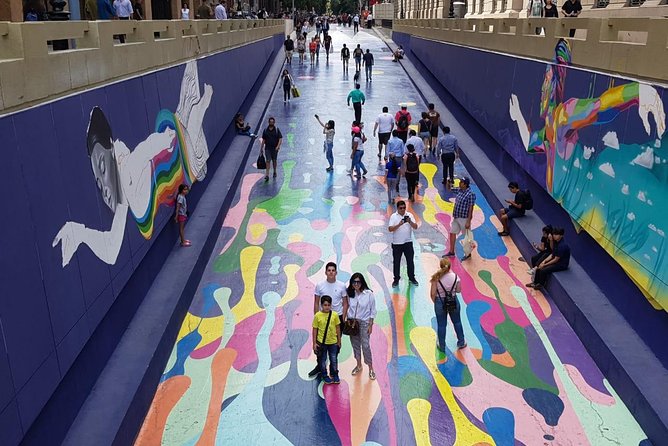
The tour also includes Centro Cultural Palacio de La Moneda, located beneath Plaza de la Ciudadanía. It’s known for a glass-slab roof that brings natural light into a vault-like space, plus ramps that descend through an atrium area. You may spot the Cineteca Nacional, a state-run art-house movie theater, and the center’s temporary exhibition spaces.
Another small but interesting stop is an old colonial church and adjacent convent. The church was consecrated in 1622. In a short tour, that’s a great way to remember Santiago isn’t just modern plazas and government blocks. It also has colonial structures that still shape the streets.
If you care about culture but don’t want a long museum day, this segment gives you a taste.
The Traditional Craft Shop and What to Do With That Free Time
Between major monuments and the final market stop, the tour includes a traditional craft shop. This is a sensible rhythm. You’re already out in downtown. You get a quick chance to browse local crafts without adding extra transit time.
What you should do: treat it like a stop, not an event. If you like shopping, look for small, portable Chilean crafts and food items you can pack. If you don’t, it’s an easy moment to step outside, grab a drink, and reset before the market.
This stop’s value is less about any one item and more about giving your guide a natural break point so your market time stays comfortable.
Mercado Central: Why the Final Stop Feels Like the Point
The tour ends at Mercado Central (Central Market), and this is the part I’d plan my appetite around. Mercado Central has been named among National Geographic’s top ten food markets worldwide in a book called Journeys of a Lifetime. That title can feel like marketing until you realize the market is designed for browsing and eating, not for photo ops only.
You’ll have time to look around and have lunch if you wish, at your own expense. In a half-day itinerary, that’s the right move. You can choose something quick or linger depending on your energy level and the weather.
Why this stop works for your “first day in Santiago” goal:
- You see how locals shop and snack.
- You taste the city’s food culture without booking a separate restaurant experience.
- You get a lively contrast to the formal civic district you visited earlier.
One more practical angle: because it’s the last stop, you’re not rushed by a looming departure time right as you’re hungry. That makes it easier to actually enjoy the market instead of just passing through it.
City Views Beyond the Hills: Bellavista, Bohemian Streets, and Skyline Edges
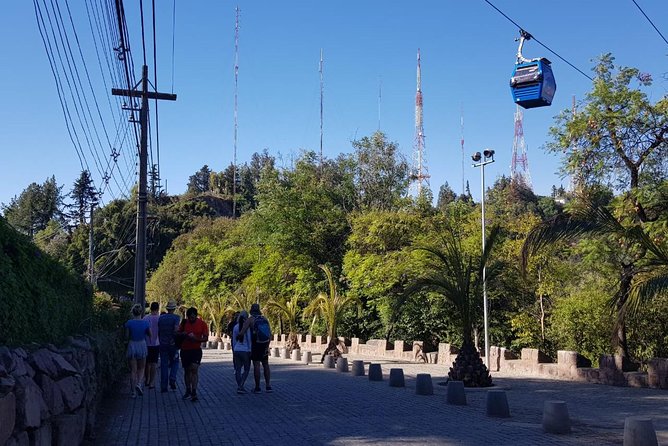
Even with a half-day schedule, the route gives you glimpses of Santiago’s different vibes. Depending on your exact option and route timing, you may pass through or near areas like Bellavista, described as Santiago’s bohemian quarter between the Mapocho River and San Cristóbal Hill. This is the part of the city associated with restaurants, boutiques, galleries, bars, and clubs. You also get a mention of Pablo Neruda’s house, La Chascona, which anchors the literary side of Bellavista.
You might also see the Parque Forestal area, a long narrow park along the Mapocho River. It’s close to major cultural spots like the Chilean National Museum of Fine Arts and other central attractions. If you’re the kind of person who likes walking but doesn’t want to commit to a full museum day, Parque Forestal is a good “window” into Santiago’s cultural geography.
There’s also a chance to pass the Torre Costanera, designed by César Pelli and noted as the tallest building in Latin America at 300 meters. Again, it’s a fast visual stop, but it helps you connect old Santiago to the modern financial and commercial core often described as “Sanhattan.”
If you’re thinking, this seems like a lot for four hours, you’re right. The trick is that many of these elements are photo stops and drive-by orientation, not deep exploration. That’s actually the point: you come away with a map in your head.
Price and Guide Fit: Getting Value From a Private Day
At $76.90 per person for around four hours, this tour is priced like a true private format, not like a group bus tour. You’re paying for a bilingual guide, hotel pickup and drop-off, and the convenience of a private vehicle so you can cover distant sights without managing transit.
The quality of the day hinges on two things:
- Your guide’s presentation style.
- Weather and comfort during driving and short walks.
From the broader feedback patterns on this experience, the best days are the ones where guides were friendly, organized, and willing to adjust pacing. Names that repeatedly come up in positive contexts include Giovanni, Jaime, and Luis. Some guides are noted for strong improvisation, meaning they can add a smart detour when a route needs adjustment.
On the flip side, there are occasional complaints about things like the day feeling too light on structure, or a lack of air conditioning on hot afternoons. That doesn’t mean every departure has that issue, but it does mean you should prepare for heat.
My practical recommendation: if you’re sensitive to temperature, pick a morning slot when possible, wear breathable clothes, and bring water. If you care a lot about a structured narrative, choose the option time and hill choice that best matches your interests so you can follow along easily.
Who This Tour Suits Best (And Who Might Want Something Else)
This private half-day tour is a great fit if:
- You want a first-pass orientation to Santiago rather than a single-theme deep day.
- You like history mixed with practical sightseeing.
- You prefer the ease of hotel pickup and a guide shaping the experience for you.
- You want to see both civic landmarks and a real local market without planning.
It may be less ideal if:
- You hate being in a car for long stretches. This is a drive-and-stop style tour.
- You want a long, ticketed museum day. Many stops are quick exterior or orientation visits, and some entrances are not included.
- You’re traveling when heat is brutal and your comfort needs are high, since short walking can become uncomfortable.
Should You Book This Private Santiago City Tour?
I think it’s a good book for most first-timers because it gives you the core landmarks, the hill viewpoint option, and the market finale in a tight half-day. The value comes from the private guide plus pickup, and from the way the route mixes official Santiago with everyday Santiago.
Book it if you want a guided overview that helps you understand where neighborhoods sit and what Santiago feels like beyond your hotel. Skip it or reconsider if you know you’ll only be satisfied with a slow, museum-heavy day, or if you’re extremely heat-sensitive and you’re traveling in peak summer without good vehicle comfort.
If you do book, choose the hill option that matches your mood, pack for sun and hydration, and treat Mercado Central like your main event. That’s the stop where the whole day pays off.
FAQ
How long is the private Santiago city half-day tour?
It runs for about 4 hours (approx.).
What’s included in the tour price?
The tour includes a professional bilingual guide, live commentary, and hotel or address pickup and drop-off. It’s also a private tour, meaning only your group participates.
Is food included at Mercado Central?
No. Food and drinks are not included unless specifically noted, so lunch at Mercado Central is at your own expense.
What hill options are offered?
You can choose either Santa Lucia Hill or San Cristobal Hill as the hilltop photo stop, depending on the option selected when booking. Admission tickets are included for these hill stops when selected.
Where does hotel pickup happen?
Pickup is available from accommodations in Providencia, Las Condes, Vitacura, and Santiago Centro. If your hotel is outside the pickup area, an additional recharge may apply.
Can I cancel for free?
Yes, you can cancel for a full refund up to 24 hours in advance of the experience start time.
The Rest Of Our Chile Tours



Everything Else We Have Reviewed In Chile


Santiago, A Few More Ways

Not quite it? Here is the rest of what we have reviewed around Chile



More in Santiago City Tours.
 ★ 4.5Tourist bus around Santiago for a dayFrom $501,857 reviews
 ★ 4.8Guided Walking Tour of the Historical Old TownFrom $25459 reviews
 ★ 4.31-Day Hop-On Hop-Off Bus and Cable Car TicketFrom $60332 reviews
 ★ 4.3Sky Costanera Observatory Admission TicketFrom $45208 reviews
 ★ 4.32-Day Hop-On Hop-Off Bus Ticket and Cable CarFrom $69162 reviews
 ★ 4.7Santiago Half-Day Walking Tour with Hotel Pick up & BrunchFrom $48148 reviews
 ★ 4.3Hop-on Hop-off Bus Day Ticket with Audio GuideFrom $50137 reviews
 ★ 4.5Museo Chileno de Arte Precolombino Admission TicketFrom $17118 reviews
Browse the lists this tour appears in