

Review · SANTIAGO
Tourist bus around Santiago for a day
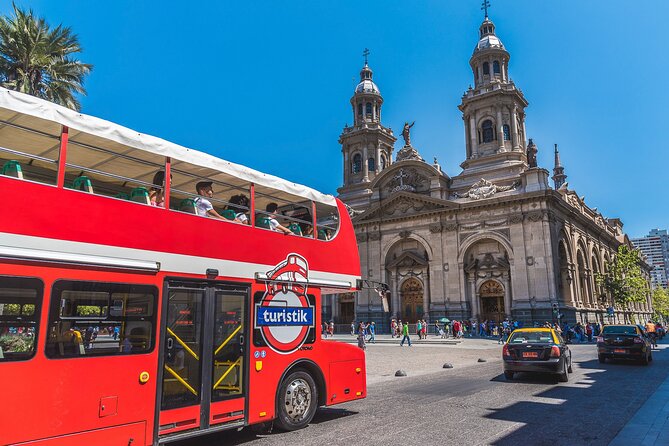
A red double-decker makes Santiago click fast. This hop-on, hop-off day bus glides past the city’s big sights with audio commentary and a smart loop route. You can get on and off as you like between 9:30am and 6pm, which is perfect when your day has a bunch of competing priorities.
What I really like is the freedom. The loop runs for about 2 hours, and buses leave each stop about every 30 minutes, so you can linger where you want and skip what you do not.
One caution: the experience depends on actually finding the stops quickly and keeping a little buffer in your schedule. A few people flagged trouble with signage, headphone/audio quirks, and occasional timing problems, so plan to be flexible.
In This Review
- Key things to know before you ride
- The 2 Hour Loop That Lets You Build Your Own Santiago Day
- Getting Oriented Fast: The Arauco Park Start and Bicentennial Park Reset
- San Cristobal Hill Views Without Guesswork: Cable Car and Funicular Stops
- Plaza de Armas and La Moneda: Where the City’s Story Starts
- Cerro Santa Lucía, Lastarria, and a Classic Postcard View
- Providencia and Plaza la Aviación: River Walk Energy Without Overthinking
- Costanera Center and Sky Views: Modern Santiago in One Handy Stop
- El Golf to Las Condes Interactive Museum: A Good Family Pause
- Audio Commentary, Headsets, and the Air-Conditioned Advantage
- Finding the Stops Quickly When Signage Is Spotty
- Staff Help, Helpful Names, and Handling Timing Glitches
- Price and Value: Is $50 a Smart Use of Your Santiago Time?
- Who This Hop On Hop Off Day Bus Is For
- Should You Book This Red Bus Around Santiago?
- FAQ
- How long is the bus tour loop in Santiago?
- How often do buses depart at each stop?
- What time does the hop on, hop off ticket cover?
- Is the ticket hop on, hop off for the whole day?
- Does the tour include the San Cristobal Hill cable car ticket?
- What is not included in the ticket price?
- Is the bus air-conditioned?
- Is there audio commentary during the ride?
- Can I cancel for a full refund?
Key things to know before you ride
- 12 stops across Santiago, including plazas, parks, and the Costanera Center area
- Air-conditioned lower deck plus audio commentary to help you connect the dots
- San Cristobal Hill access included via the Santiago Cable Car ticket at Stop 3
- Buses every 30 minutes with an around-town loop that takes about 2 hours
- Stop-finding can be the trick, since some pickup spots are not clearly marked
Other ways to walk the capital, reviewed
- Private Santiago City Half Day Tour
★ 4.0 · 414 reviews - Museo Chileno de Arte Precolombino Admission Ticket
★ 4.5 · 118 reviews - Half-Day Small-Group Panoramic Santiago Tour
★ 4.0 · 89 reviews - 2-Hour Walking Tour of Yungay The Coolest Neighborhood in Chile
★ 5.0 · 85 reviews
The 2 Hour Loop That Lets You Build Your Own Santiago Day

This is not one fixed itinerary. It is a day ticket that lets you ride the same route loop, hopping on and off at 12 different stops scattered around town. Buses run between 9:30am and 6pm, and the full loop is about 2 hours, which is long enough to spot the main neighborhoods and short enough to still have a real afternoon plan.
The schedule works best if you treat it like a moving map. I like to start by staying on board for the first circuit, just to get the geography. Then I pick 2 or 3 stops where I want to spend more time, using the next buses to come back around.
Because departures are about every 30 minutes, you have options even if a stop takes longer than expected. That said, I recommend a small buffer for your most important “must do” moments, especially late in the day.
Getting Oriented Fast: The Arauco Park Start and Bicentennial Park Reset
You begin at the Mall Parque Arauco area (Stop 1). This is one of the easiest stops to use as your launch point because it is practical: you can grab water, use restrooms, and then move on without feeling rushed. If you want a quick walk, this is also a good place to do it before you head into more historic parts of Santiago.
Next is Bicentennial Park (Stop 2). This is a big, green “lungs of the city” style break, with lagoons and wildlife like swans, flamingos, and herons. If Santiago feels like a lot of concrete at first, this stop gives you a calmer pace, and it is excellent for panoramic photos from the park’s open areas.
Here is how I’d use this segment: do Stop 1 for logistics, then get off at Stop 2 to reset your legs and mood. It makes the rest of the day feel less like a checklist.
San Cristobal Hill Views Without Guesswork: Cable Car and Funicular Stops
Stop 3 is the Santiago Cable Car area. From here, you are roughly a short walk away from climbing San Cristobal Hill for big, city-level views at 360 degrees. The ticket to climb San Cristobal Hill is noted as included, which is a strong value add if you want viewpoints but do not want to hunt for separate tickets.
Stop 4 leads you to the Funicular Santiago at Pío Nono. The funicular connects Bellavista to the top of San Cristobal Hill, and it is described as a Historical Monument with a Gothic entrance and a classic ride experience. If you love old-school transport as much as the view itself, this is where that energy shows up.
Two practical tips for this pair of stops:
- If you care most about the view, prioritize your time so you can actually reach the top and look around.
- If the weather turns, keep an eye on the sky first, then decide how much “up hill” time you want.
This is one of the clearest reasons to book this bus tour: you can reach the viewpoint spine of Santiago with less planning effort.



Plaza de Armas and La Moneda: Where the City’s Story Starts
Stop 5 is Plaza de Armas, the historic core of Santiago. This is the sort of place where you walk a few steps and feel the layers of the city right away, with colonial-era buildings around you, including the Metropolitan Cathedral and the Central Mail. It is also a natural meeting point for your own wandering, since the center makes it easy to pivot to nearby streets on foot.
Stop 6 is Palacio de la Moneda, the Government of Chile headquarters. If you want Santiago beyond neighborhoods and shopping, this is the stop that reminds you the city runs on institutions as much as it runs on culture. Even when you do not go inside, being in the square area helps you connect what you saw on the bus to what exists in real space.
I like using these two stops together: Plaza de Armas gives you the old heart, and La Moneda shows the modern political center. Together, they help you understand Santiago’s “what matters where” map.
Cerro Santa Lucía, Lastarria, and a Classic Postcard View

Stop 7 is Cerro Santa Lucía. This is an urban park with history tied to Santiago’s founding, plus terraces, fountains, and viewpoints. It is a postcard-style stop because the park rises in a way that makes it easy to see why people keep returning with cameras.
Right nearby is Barrio Lastarria, described as a lively zone with cafes, restaurants, and cultural life. That matters because it gives you a simple next move after the climb. You can get off, walk the viewpoints, then reward yourself with a slow coffee without changing neighborhoods too drastically.
If you are trying to keep your day simple, I recommend this sequence:
- Get off at Cerro Santa Lucía.
- Walk viewpoints.
- Take the energy into Lastarria for a relaxed break.
Providencia and Plaza la Aviación: River Walk Energy Without Overthinking
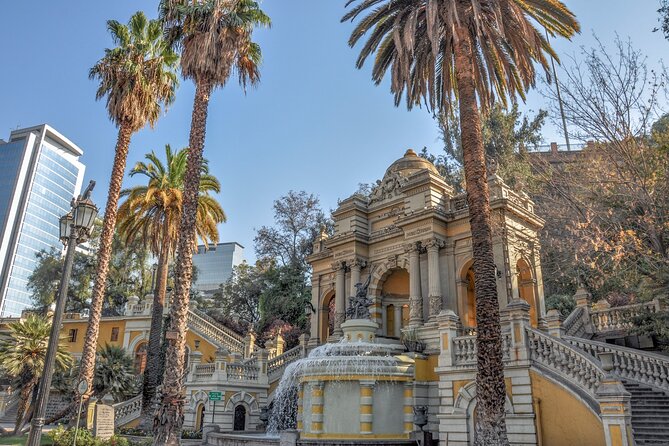
Stop 8 is Plaza la Aviación in the Providencia area. It is known for a monumental fountain and green areas around the Mapocho River, which makes it a good place to stretch your legs. If you like “walk and people-watch” over “stand in a line,” this stop fits.
What I like about this part of the loop is the mood shift. After the historic core and viewpoints, this feels more like a normal neighborhood day. You also have cafes and bars nearby, so it is easy to turn a quick stop into a real break.
Costanera Center and Sky Views: Modern Santiago in One Handy Stop
Stop 9 brings you to Mall Costanera Center. This is a major anchor in the area, and it pairs shopping and practical stops with access to towering city views. The tour description connects it to Sky Costanera, with 360-degree panoramas of Santiago.
Stop 12 is also listed as Costanera Center, so if you are planning your day carefully, treat the Costanera Center zone as your “modern Santiago” base. In other words, you can plan to spend your later afternoon there if you want a final hit of skyline views and an easy place to reset.
If you do only one “new city” experience that feels distinctly Santiago, this is the stop that usually delivers.
El Golf to Las Condes Interactive Museum: A Good Family Pause
Stop 11 is Las Condes Interactive Museum at Isidora Goyenechea 3365. It sits in the elegant El Golf neighborhood and includes audiovisual and interactive experiences, which is specifically called out as great for families.
Stop 10 is the Golf stop, which keeps you in the same area and helps with the logic of pairing modern neighborhoods with a stop that breaks up your day. If you are traveling with kids, or you simply want a change of pace from plazas and hills, this is the part of the route you can use to control energy levels.
Audio Commentary, Headsets, and the Air-Conditioned Advantage
The lower deck is air-conditioned, which matters on hot Santiago afternoons. You also get audio commentary with narration and a great vantage point while you cruise past major landmarks.
Now for reality: some riders noted headphone jack issues and static or audio problems. My advice is simple. If the sound is messy, try a different headphone jack immediately, and flag it to the staff on board. Do not wait, because the narration is the whole point of riding without getting lost in your own head.
Also, keep your phone volume off or low if you are using your own device audio. You want one audio system doing the talking.
Finding the Stops Quickly When Signage Is Spotty
A theme that keeps showing up is that some pickup spots are hard to spot because signage is limited. This is not just annoying, it can cost you a lot of time in a city where sidewalks and streets can be busy.
Here is how I’d handle it:
- Use the stop number and walk with intent, not wandering.
- If the bus tracking app exists for your operator, use it to line up your arrival window.
- Give yourself time to reach the correct side of the street, because some stops can feel like they are “around the corner” compared to where you expect.
If you do not speak Spanish well, having a plan is even more important. I would carry a screenshot of the stop and its number, then ask staff or nearby security for the closest match rather than trying to interpret addresses from memory.
Staff Help, Helpful Names, and Handling Timing Glitches
The good news is that the staff is often described as friendly and helpful. One review highlighted Miguel and the drivers and assistants as supportive, and another praised Helen for being very knowledgeable. Even if you do not need their help, it is nice to know the team is there and not just hiding behind a schedule.
Still, no hop-on bus is immune to hiccups. Some people reported service running late, buses turning off the route earlier than the end time, or confusion around QR codes and tickets during boarding. I treat this as a “plan like a local” situation:
- Keep a little buffer before your next appointment.
- If you are on a tight timeline, use the bus for orientation, then confirm critical plans with a backup option like a taxi or rideshare.
- If something goes wrong at boarding, ask for help right away, not after you miss your window.
Yes, it should be smoother. But with a small buffer, you can still end the day feeling like you got your money’s worth.
Price and Value: Is $50 a Smart Use of Your Santiago Time?
At $50 per person, you are paying for convenience, not for a guided private experience. The win is that you cover a lot of ground with minimal stress, while also getting audio narration and frequent enough service to support a self-paced day.
Where the value really shows is if you plan to:
- Use the bus to get oriented early.
- Get off at several highlights rather than just one.
- Take advantage of the included cable car ticket at Stop 3 for San Cristobal Hill.
If you are the kind of traveler who wants to do one or two things and then disappear into a neighborhood, you might find it’s still useful, because it helps you locate what you actually want next. If your plan is museum-only and you hate schedules, you may decide to spend that money on individual tickets and local transport instead.
For a first-time Santiago visit, I see this ticket as a practical foundation. It is a fast way to learn how the city’s main zones connect.
Who This Hop On Hop Off Day Bus Is For
This is a strong fit for:
- First-time visitors who want major sights without planning every transfer
- Couples who want flexibility and an easy rhythm
- Solo travelers who like a low-pressure way to see a lot
- Families who might appreciate an interactive indoor stop like Las Condes Interactive Museum
If you get motion sick easily or hate waiting at curbside stops, you might find the hop-on hop-off style less appealing. But if you can handle short waits and you are comfortable figuring out street corners, it is a very workable format.
Should You Book This Red Bus Around Santiago?
Yes, if you want a practical day that helps you understand Santiago fast. I’d book it when your schedule is packed, you want options, and you plan to get off at viewpoints, the historic core, and at least one modern stop.
I would think twice if you need guaranteed, clock-perfect timing for one tight appointment, or if you are very sensitive to audio or stop-finding hassles. In that case, you might still ride, but you should plan to use it as a flexible helper, not as your single point of failure.
FAQ
How long is the bus tour loop in Santiago?
The city loop lasts about 2 hours.
How often do buses depart at each stop?
Buses depart from each stop every 30 minutes.
What time does the hop on, hop off ticket cover?
The ticket is valid for a period between 9:30am and 6pm.
Is the ticket hop on, hop off for the whole day?
Yes. It includes an unlimited hop on, hop off ticket for one day.
Does the tour include the San Cristobal Hill cable car ticket?
At the Santiago Cable Car stop (Stop 3), the description says the climb ticket to San Cristobal Hill and 360-degree views is included.
What is not included in the ticket price?
Other tickets are not included.
Is the bus air-conditioned?
Yes. The lower deck is air-conditioned.
Is there audio commentary during the ride?
Yes. The bus includes audio commentary.
Can I cancel for a full refund?
Yes. You can cancel up to 24 hours in advance of the experience start time for a full refund.
Everything Else We Have Reviewed In Chile






Santiago, A Few More Ways





Not quite it? Here is the rest of what we have reviewed around Chile




More in Santiago City Tours.
 ★ 4.8Guided Walking Tour of the Historical Old TownFrom $25459 reviews
 ★ 4.0Private Santiago City Half Day TourFrom $76414 reviews
 ★ 4.31-Day Hop-On Hop-Off Bus and Cable Car TicketFrom $60332 reviews
 ★ 4.3Sky Costanera Observatory Admission TicketFrom $45208 reviews
 ★ 4.32-Day Hop-On Hop-Off Bus Ticket and Cable CarFrom $69162 reviews
 ★ 4.7Santiago Half-Day Walking Tour with Hotel Pick up & BrunchFrom $48148 reviews
 ★ 4.3Hop-on Hop-off Bus Day Ticket with Audio GuideFrom $50137 reviews
 ★ 4.5Museo Chileno de Arte Precolombino Admission TicketFrom $17118 reviews
Browse the lists this tour appears in