
Review · SANTIAGO
Santiago: Electric Scooter City Tour with Lunch
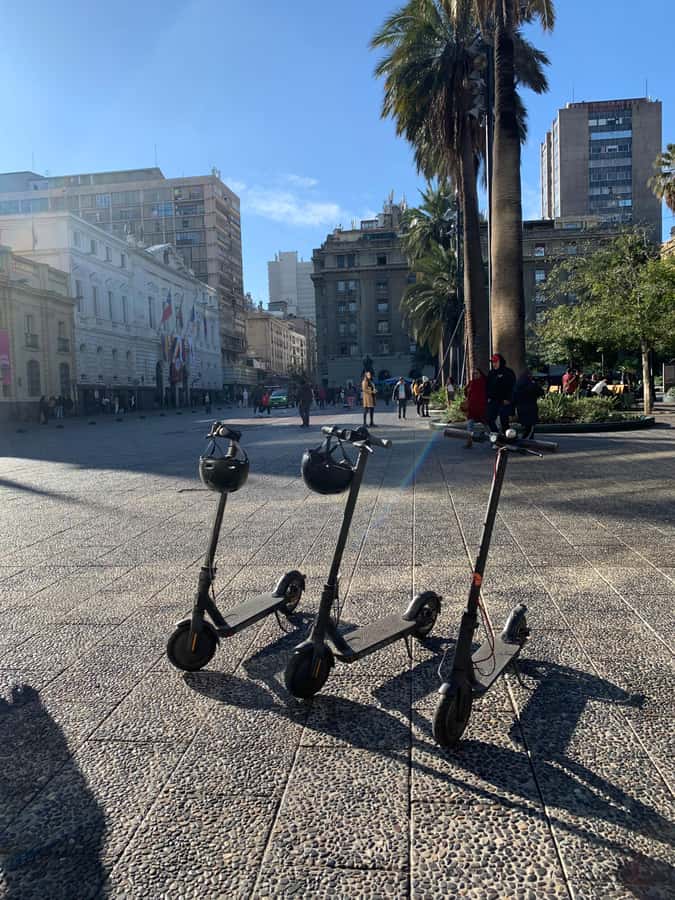
Santiago rolls by fast on a scooter, with brains and food included. This 150-minute electric scooter city tour is a smart first-day move: you cover major sights like La Moneda and Plaza de Armas while your guide connects landmarks to Chilean politics, culture, and daily life. I also like that lunch is not an afterthought, you get typical Chilean empanadas at a local bakery.
The one catch is simple: it is still a scooter ride. You’ll want comfortable shoes and you should feel okay riding for short stretches in city traffic conditions, plus it is not suitable for wheelchair users or people with mobility impairments.
In This Review
- Key things you’ll like (and why they matter)
- Why an electric scooter is a smart way to see Santiago
- Meeting point and what “small group” looks like
- Safety and gear: the practical side is handled for you
- The Alameda to La Moneda: start with the power center
- Plaza de Armas and the Santiago Cathedral: civic Santiago on foot and wheels
- Market stop energy: food stops that feel local, not touristy
- San Camilo, Bandera, and the in-between streets
- Former National Congress and Courts of Justice: politics you can see
- La Bolsa and the financial heritage district
- Bulnes stroll and finishing with lunch vibes intact
- Price and value: what $95 buys you here
- Who should book this scooter and lunch tour
- A few practical tips before you go
- Should you book this tour?
- FAQ
- How long is the Santiago electric scooter city tour with lunch?
- What does the price include?
- Are museum or attraction entrance fees included?
- Where do I meet the tour?
- Do I get hotel pickup or drop-off?
- What languages is the guide available in?
- What should I bring?
- Is the tour suitable for wheelchair users or mobility impairments?
- What age is the minimum for participants?
Key things you’ll like (and why they matter)
- Small group of up to 8 means easier pacing and more chance to ask questions, even if you’re new to scooters.
- Helmet and safety equipment included keeps the vibe practical and confidence-building.
- La Moneda and Plaza de Armas in one loop helps you orient fast without spending the whole day in transit.
- Lunch with freshly made empanadas gives you a real taste of local comfort food, not a packaged stop.
- Political and institutional context makes the civic landmarks more than just photo spots.
- Multilingual guide (Spanish, English, Portuguese) keeps the explanations clear across the group.
Other ways to walk the capital, reviewed
- Santiago: Guided Walking Tour of the Historical Old Town
★ 4.8 · 459 reviews - Santiago: 1-Day Hop-On Hop-Off Bus and Cable Car Ticket
★ 4.3 · 332 reviews - Santiago: Sky Costanera Observatory Admission Ticket
★ 4.3 · 208 reviews - Santiago: 2-Day Hop-On Hop-Off Bus Ticket and Cable Car
★ 4.3 · 162 reviews
Why an electric scooter is a smart way to see Santiago
If your first day in Santiago feels like a blur of traffic, hills, and street signs, this tour is built to fix that. You get a guided ride that moves along key corridors and landmarks quickly enough to feel like you “got it” early. At the same time, you’re not just zipping past. The tour pairs what you see with what it means, including Chile’s political and institutional story around the civic center.
The format also helps you avoid the common Santiago trap: spending hours trying to plan a route, then arriving at the places you care about tired and hungry. Here, the timing is tight and the stops are chosen for orientation. You’ll likely leave with a better sense of where the main districts sit, what streets connect them, and what kind of city Santiago is beyond the skyline views.
And yes, you’ll ride an electric scooter. That changes the energy of the day. You feel connected to the streets rather than stuck inside a car. Just remember the practical part: you will need to be comfortable enough to ride for the full 150 minutes, even if the actual motion is broken into shorter segments.
Meeting point and what “small group” looks like
You meet at Av. Ejército Libertador 6 in Santiago Centro. The tour provider lists the corner of Av. Ejército Libertador and Av. Alameda Libertador Bernardo O’Higgins, so aim for that intersection area rather than a random building on the block. The point is also near the Alameda corridor, which makes sense because the first “real” ride segment is along the city’s main avenue.
Small group matters more than people think. Limited to 8 participants, it makes the guide’s job easier when giving safety checks, managing turns, and keeping the whole group together. It also helps if you are a first-time scooter rider. One of the reviews highlighted that even people who had never ridden before, plus a mixed age group, felt well looked after. That’s a good sign for you if you’re nervous about control, balance, or keeping pace.
Safety and gear: the practical side is handled for you
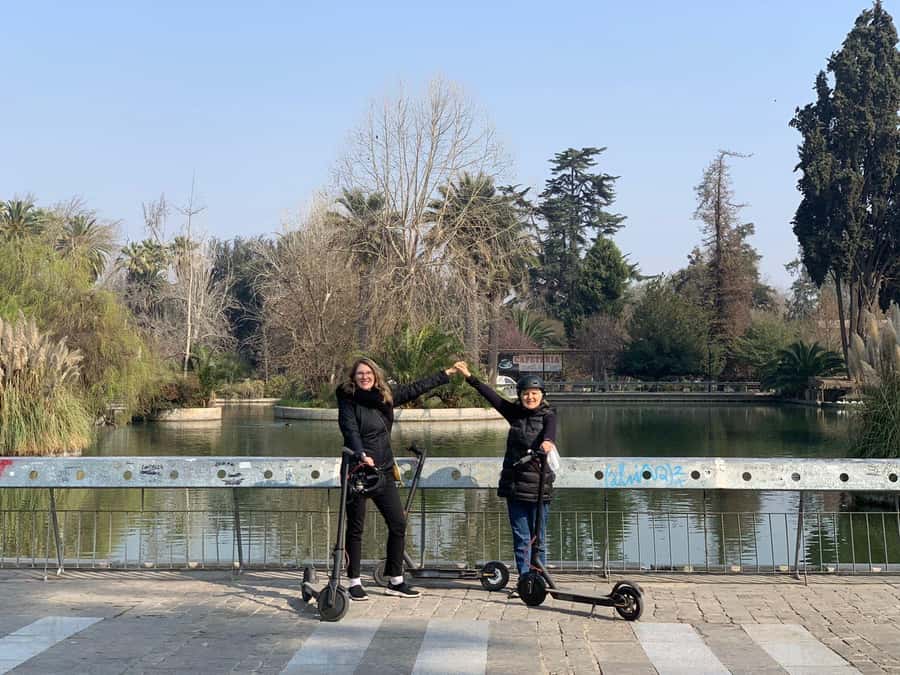
You get a helmet and safety equipment included. That means you’re not hunting for gear on arrival or worrying about whether you’ll be allowed to ride. Bring what the tour asks for: comfortable shoes, water, sunscreen, and a hat. Santiago’s sun can hit hard, and scooters make it easy to forget you’re getting exposed while you’re busy watching buildings and street life go by.
Also pay attention to the rules: smoking and alcohol or drugs are not allowed during the tour, and you’re advised not to eat or drink during the ride. It’s not meant to be strict for fun, it’s meant to keep the ride safe and focused.
More Chilean cities, half a day at a time






The Alameda to La Moneda: start with the power center
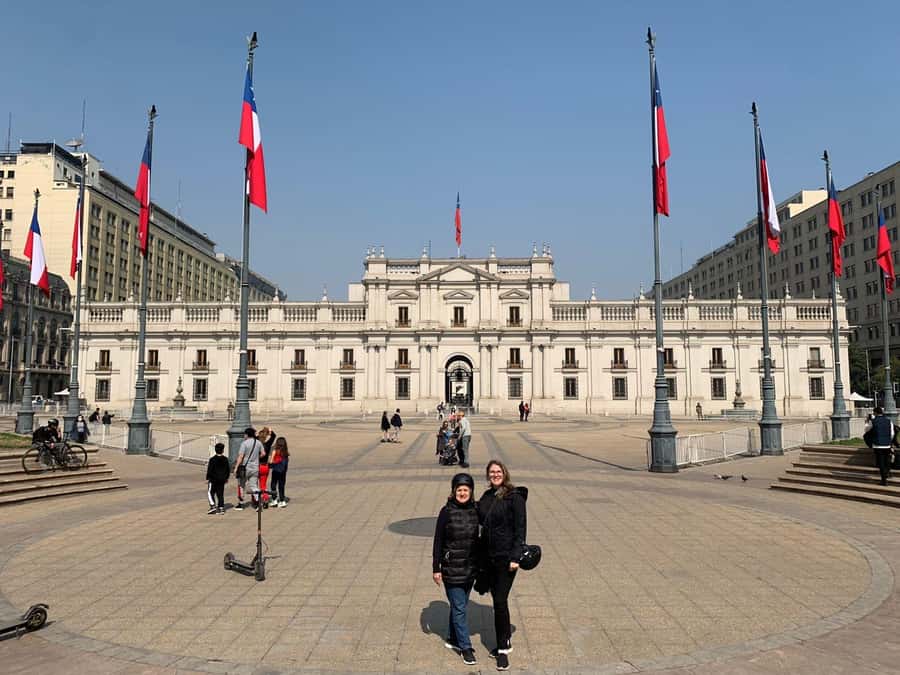
After a short scooter ride to get moving, you reach Palacio de La Moneda, the seat of the President of the Republic of Chile. This is a perfect early stop because it sets the tone for the tour. You’re not only looking at a landmark, you’re seeing the kind of place that anchors political life in the country.
What makes this segment valuable for you is the way the guide frames the visuals. You’re moving along Alameda, then suddenly the story becomes less abstract. Instead of “a big government building,” it turns into “here is where institutions and decisions live.” The tour’s stated goal is to cover history and politics as you sightsee, and La Moneda is one of the clearest starting points.
Timing-wise, the itinerary lists a short ride to get there, then brief movement segments between major points. That keeps momentum without turning the day into one long, exhausting scooter session.
Plaza de Armas and the Santiago Cathedral: civic Santiago on foot and wheels
Next comes Plaza de Armas, Santiago, and you continue through the historic civic district. The name alone tells you it’s important, but the tour helps you understand why it’s central to the city’s identity. This is where official life, public gatherings, and heritage overlap.
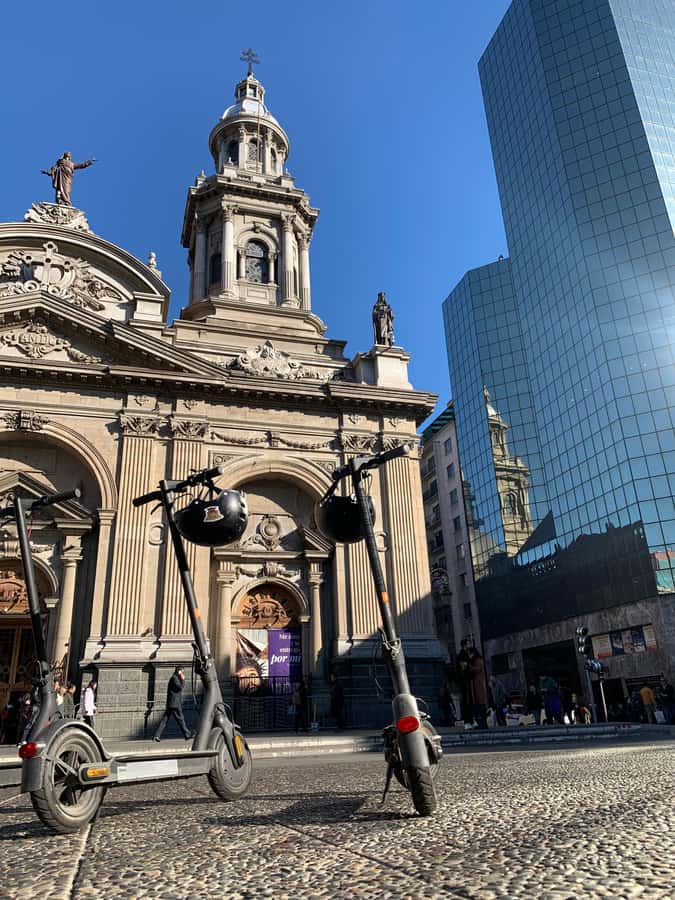
You also pass by Santiago Metropolitan Cathedral, listed in the route right after the plaza area. Even if you don’t go inside, seeing it from the plaza gives you a clean mental map. The cathedral is one of the visual anchors of the civic core, so it’s a key stop for orientation.
A small drawback to keep in mind: plazas can be busy in real life. Even with a guide and a coordinated route, you’ll still be riding in a city where pedestrians and street activity exist. If you’re a cautious rider, lean into the guide’s pace. The tour includes safety equipment and a guided rhythm, so you should not feel like you’re on your own.
Market stop energy: food stops that feel local, not touristy
Later in the route, you hit Santiago Central Market. This is one of the places where a scooter tour helps you. By the time you arrive, you’ve already covered the civic sights, so a food-focused stop doesn’t feel random. It feels like the city’s everyday life right after its official face.
One review specifically mentioned going into the fish market and trying fresh ceviche as an optional addition, while empanadas were included. That lines up with what you want from a market stop: you get a chance to taste something local if you want, without forcing it.
For you, the practical value is this: if you’re deciding what to eat in Santiago, the tour removes the guesswork. Even if you don’t order ceviche, you’ll get a sense of what Chilean market food looks like and how busy stalls and counters can be.
San Camilo, Bandera, and the in-between streets
The itinerary includes rides past San Camilo and Bandera. These aren’t just filler stops. They represent the texture of central Santiago: commercial blocks, daily foot traffic, and neighborhoods that don’t fit neatly into “monuments” and “museums.”
Here’s why you’ll probably appreciate this part of the tour: it helps you connect the dots between the civic center and the city’s more lived-in areas. You’re not only learning what leaders and institutions do. You’re also seeing the streets where normal shopping and movement happen.
If you like walking but want structure, this section strikes a good balance. You get brief riding segments that keep you moving, then you can look at storefronts and street life in a way you might miss if you only stick to major attractions.
Former National Congress and Courts of Justice: politics you can see
Then the tour moves into one of its strongest themes: institutions and governance. You pass the Former National Congress and ride by the Palace of the Courts of Justice. The tour notes that these stops give insight into Chile’s political and institutional history.
What this means for you is that it turns sightseeing into understanding. You might recognize the names as part of Chile’s civic system, but you’ll leave with a clearer sense of how these buildings relate to power, law, and the country’s evolution. Even if you only remember a few key points, it’s still a payoff. Santiago isn’t only about what’s pretty. It’s also about how the city’s spaces reflect its history.
One caution: these are not “hands-on” stops. You won’t be touring documents or sitting in chambers as part of this scooter loop. Entrance fees to museums or attractions are not included, so if your interest is very deep and you want interiors, you may still plan a separate visit later. The tour is designed to set context, not replace all museum time.
La Bolsa and the financial heritage district
Next is La Bolsa, described as an elegant neighborhood known for historic buildings and financial heritage. This stop changes the mood a bit. You move from the heavy civic realm into a district that reflects commerce and finance, which helps complete the picture of Santiago as a working city, not just a government capital.
The value here is variety. A lot of short tours in capitals overload you with either monuments or food. This one intentionally spreads out the “why this city matters” story across different functions: politics, religion and civic space, food life, then finance.
If you’re an architecture or urban layout person, you’ll likely enjoy how the guide’s explanations give you a framework for what you’re seeing. If you’re more interested in food and street energy, La Bolsa still works as a visual palate cleanser between the heavier institutional areas.
Bulnes stroll and finishing with lunch vibes intact
The route ends at Paseo Bulnes. Before returning, you pass along the Bulnes stroll, which serves as a final “city rhythm” moment before the meal.
Lunch is included and is described as a typical Chilean lunch of empanadas at a local restaurant or bakery in the meeting area area. The itinerary frames it as the perfect way to end the experience. That part matters because scooter tours can leave you hungry quickly. Finishing with food keeps the day from feeling like a hard sprint ending in an empty stomach.
A note from the reviews you should take seriously: this tour can take a bit longer than first-timers expect, especially if people are new to scooters and need extra help getting comfortable. That’s not automatically a bad thing. It often means the guide is taking safety and confidence seriously. Just build in flexibility for your afternoon plans.
Price and value: what $95 buys you here
At $95 per person for about 150 minutes, the value comes from three bundled pieces that are usually separate in Santiago.
First, you get the guided scooter ride of main attractions, not just a casual “follow me” loop. Second, the lunch is included, specifically with freshly made empanadas at a local spot. Third, the safety gear is included, which reduces hassle and makes the tour feel ready-to-go.
Entrance fees are not included, and hotel pickup or drop-off is not included. So if your plan is to add lots of museums or paid attractions during the same window, you’ll need to plan those separately. But if what you want is an organized, safety-minded way to get oriented and eat well, this price feels fair for what you receive.
Who should book this scooter and lunch tour
This is a strong fit if you:
- Want a first-day orientation to central Santiago
- Like a mix of landmark sightseeing and real food
- Prefer small groups and a guide who can explain more than just dates and names
- Are comfortable riding a scooter for short segments, even if you are a first-timer
It’s not a good fit if you:
- Have mobility impairments or use a wheelchair
- Want a tour that is mostly walking
- Are traveling with children under the listed minimum, since participants must be at least 9 years old
A few practical tips before you go
Bring the basics the tour asks for. Comfortable shoes matter, because your feet will be doing more than you might expect while mounting and stopping. Water, sunscreen, and a hat are worth it because you’ll be exposed during the ride.
Also think about how you’ll manage time afterward. The tour is listed at 150 minutes, but the real-world pace can be influenced by scooter comfort for the group. If you have a reservation with a tight window, keep it flexible.
Finally, come ready to listen. The big value is the guide’s explanations about politics, culture, and institutions alongside the sites. If you treat it as only a ride and photos, you’ll miss half the point.
Should you book this tour?
I’d book it if you want a fast, organized way to understand Santiago’s center and end with a real Chilean lunch. The combination of a guided scooter loop, meaningful stops like La Moneda and Plaza de Armas, and included empanada lunch hits the sweet spot of value and local flavor.
Skip it if you dislike riding, need full wheelchair accessibility, or only care about indoor museum time. This isn’t a museum pass. It’s an orientation plus context tour, with food at the end and safety taken seriously.
If you want to see central Santiago in one efficient plan and feel more confident navigating the city afterward, this is the kind of tour that makes your next day easier.
FAQ
How long is the Santiago electric scooter city tour with lunch?
The tour duration is 150 minutes.
What does the price include?
It includes the guided electric scooter tour, lunch with empanadas at a typical local market or bakery, and helmet and safety equipment.
Are museum or attraction entrance fees included?
No. Entrance fees to any museums or attractions visited are not included.
Where do I meet the tour?
The meeting point is at Av. Ejército Libertador 6, Santiago Centro, at the corner of Av. Ejército Libertador and Av. Alameda Libertador Bernardo O’Higgins.
Do I get hotel pickup or drop-off?
No hotel pickup and drop-off is included.
What languages is the guide available in?
The live guide is available in Spanish, English, and Portuguese.
What should I bring?
Bring comfortable shoes, a hat, sunscreen, and water.
Is the tour suitable for wheelchair users or mobility impairments?
No. It is not suitable for people with mobility impairments or wheelchair users.
What age is the minimum for participants?
Participants must be at least 9 years old.
The Rest Of Our Chile Tours





Everything Else We Have Reviewed In Chile

Santiago, A Few More Ways






Not quite it? Here is the rest of what we have reviewed around Chile





More in Santiago City Tours.
 ★ 4.5Tourist bus around Santiago for a dayFrom $501,857 reviews
 ★ 4.8Guided Walking Tour of the Historical Old TownFrom $25459 reviews
 ★ 4.0Private Santiago City Half Day TourFrom $76414 reviews
 ★ 4.31-Day Hop-On Hop-Off Bus and Cable Car TicketFrom $60332 reviews
 ★ 4.3Sky Costanera Observatory Admission TicketFrom $45208 reviews
 ★ 4.32-Day Hop-On Hop-Off Bus Ticket and Cable CarFrom $69162 reviews
 ★ 4.7Santiago Half-Day Walking Tour with Hotel Pick up & BrunchFrom $48148 reviews
 ★ 4.3Hop-on Hop-off Bus Day Ticket with Audio GuideFrom $50137 reviews
Browse the lists this tour appears in