
Review · SANTIAGO
Walk Antigua Like a Local
Antigua clicks into place fast on foot. This guided half-day walk strings together the most iconic corners of Antigua, with food tastings and practical local stories along the way.
I love the tight, well-paced route, you hit major sights like La Merced and the Santa Catalina Arch without burning your whole day. I also love the add-ons that feel local, the cacao education and tasting at the Chocolate Museum, plus the jade stop that turns a souvenir stone into something with meaning.
One possible drawback: you will walk a lot, so bring good shoes for Antigua’s cobblestones, and remember lunch is not included, plus one church admission is listed as not included.
In This Review
- Quick hits before you go
- Your morning plan, starting at Casa de la Mandarina
- Value and what is actually included in the $32 price
- Plaza Central Park: where Antigua starts feeling like a real town
- San Francisco El Grande: the tomb that connects faith and local identity
- Casa Santo Domingo: how a convent became a museum stop
- La Iglesia de la Merced: Baroque style built for earthquakes
- Santa Catalina Arch: a shortcut nuns used, and your best photo moment
- Chocolate Museum: cacao history, then you taste the proof
- Jade stop: the souvenir explanation you probably wanted
- The pacing and the walking reality: shoes matter
- Beer tasting and practical tips that save you time later
- Who this tour fits best, and who should consider alternatives
- Should you book Walk Antigua Like a Local?
- FAQ
- How long is the Walk Antigua Like a Local tour?
- How much does it cost?
- What is the meeting point?
- What time does the tour start?
- Where does the tour end?
- How many people are in the group?
- What is included in the price?
- Is lunch included?
- Do I need good weather?
- Is admission included for every stop?
Quick hits before you go
- Small group, big attention with a maximum of 15 travelers
- 3 to 4 hours to see a lot of Antigua without rushing
- Beer, water, and tastings included so you are not doing math mid-walk
- Earthquake-aware architecture at churches like La Merced and San Francisco El Grande
- Cacao and jade stops that teach you what you are looking at, not just where to stand
- Clear-day photo potential with Volcán de Agua as a backdrop near the Santa Catalina Arch
Other Chilean towns worth doing on foot
- Walk Antigua Like a Local
★ 5.0 · 53 reviews - Private Walking tour of Antigua Guatemala
★ 4.5 · 40 reviews
Your morning plan, starting at Casa de la Mandarina
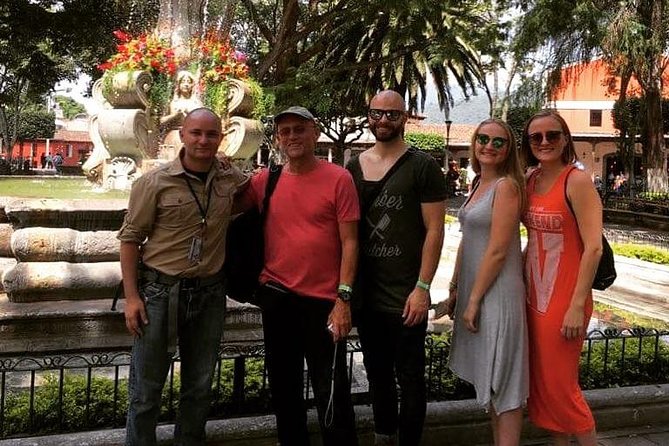
The tour starts at 9:00 am at Casa de la Mandarina on 2a Calle Poniente 2 in Antigua Guatemala. It ends back at the same meeting point, so you do not have to think about transportation at the finish line. The whole experience usually runs 3 to 4 hours, which is perfect if you are doing Antigua as part of a larger Guatemala itinerary.
A small group matters here. With a maximum of 15 travelers, your guide can adjust the pace and spend a little more time on what interests you. Past groups have had guides like Roberto, Tony, Felix, Estevan, and Carlos, and the common thread is that they stay friendly, organized, and willing to answer questions.
Weather also matters in Antigua. This experience requires good weather, and if it is canceled due to poor conditions, you are offered a different date or a full refund. So if you are planning more than one outdoor activity that day, keep a backup plan.
Value and what is actually included in the $32 price
At $32 per person, you are paying for more than sightseeing points on a map. You are getting a guided walk through multiple key landmarks, bottled water, and an artisanal beer tasting (including the associated taxes). You also get access to parts of the cultural stops where entry is listed as free in the plan.
You still need to budget for what is not included. Lunch is not included, and at the San Francisco El Grande stop, admission is explicitly listed as not included. That means your final spending can be slightly higher depending on which paid entry fees apply that day.
In practice, this price makes sense if you want structure. If you tried to do all these stops on your own, you would spend time figuring out routes, context, and what to prioritize. Here, the guide does that work for you, and you are free to focus on the streets, churches, and the stories behind them.
Plaza Central Park: where Antigua starts feeling like a real town
Most first-time Antigua experiences rush from photo spot to photo spot. This one starts in the right place: the Plaza Central Park, the town square that functions as Antigua’s social center. You get a feel for how people actually move through the city, with vendors, visitors, and local life around you day and night.
The square matters historically too. During Spanish colonial times, it became a main meeting point and reference point, and you can still feel that “center of gravity” today. If you like people-watching, this is a good early stop because the atmosphere gives you context for everything you see later.
On weekends, the square livens up even more. If your tour day lines up with that, you might find more activity around the edges, with extra foot traffic and a more festive feel. Either way, it is a good place to grab a coffee or juice and let your bearings settle in before you start walking.



San Francisco El Grande: the tomb that connects faith and local identity
Next up is Iglesia de San Francisco El Grande, one of Antigua’s major church attractions. The building tells a survival story: it was abandoned and damaged by major earthquakes in 1874 and 1917, then rebuilt in the second half of the twentieth century when regular orders were allowed to hold property again.
Your visit here has a specific focus: the tomb of Pedro de San José de Betancur, who is noted as the only Saint of Guatemala. He was a Franciscan monk who founded a hospital for the poor in Antigua. That detail changes how you look at the church, because you are not just admiring architecture, you are meeting a person tied to real local history.
Plan for the admission detail. This stop lists the admission ticket as not included, so if you are working with a tight budget, this is the one point to watch. It is still worth it if you care about how Antigua’s religious sites connect to humanitarian work and community memory.
Casa Santo Domingo: how a convent became a museum stop
After the church stop, you move to Casa Santo Domingo, listed as a museum stop tied to the former Convent of Santo Domingo. In the seventeenth century, the convent was one of the largest in America, and then it was heavily destroyed by the Santa Marta earthquake in 1773.
What I like about this stop is that it shows continuity through change. Where the convent once stood as a massive religious complex, you now find a place where history and modern use coexist. The experience description frames it as Hotel Museo Spa Casa Santo Domingo, essentially turning the past into a living place where you can see layers of Antigua’s story.
The plan lists admission as free here, which is a nice bonus. Also, because this is not just a “walk up, take a picture, move on” stop, the guide time helps you understand why certain spaces feel the way they do, even if you only have a short window in Antigua.
La Iglesia de la Merced: Baroque style built for earthquakes
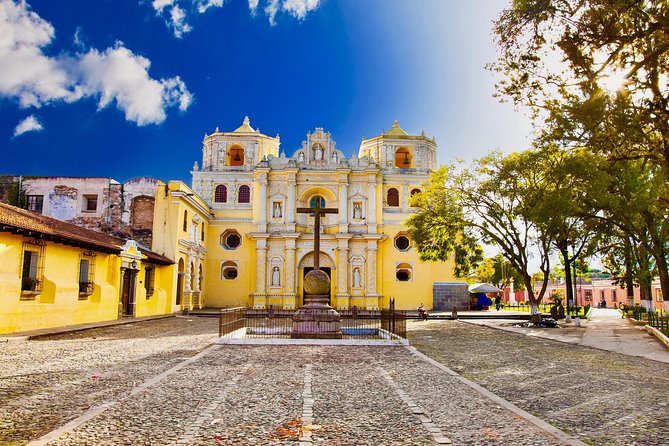
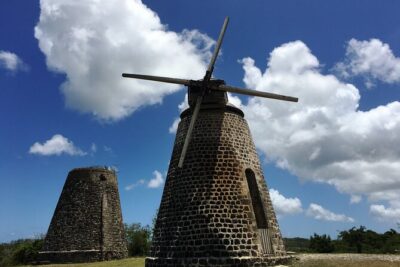
Now you get to La Iglesia de la Merced, known for stunning Baroque architecture. The big detail to notice is the unusually low height of its two bell towers. This is not a design mistake, it is an intentional approach to survive the region’s frequent earthquakes.
This is where your guide makes a difference. Without context, you might just think, that is a strange bell tower shape. With the explanation, it becomes a clever piece of engineering history. You see the visual style, but you also understand why the building looks the way it does in a place that keeps shaking.
If you enjoy architecture, this stop is one of the strongest in the day. You are basically learning how design choices respond to climate, geology, and repeated rebuilding. That theme shows up across Antigua, and this church gives you a clean example early enough that you start spotting it everywhere else.
Santa Catalina Arch: a shortcut nuns used, and your best photo moment
The Santa Catalina Arch is one of Antigua Guatemala’s most iconic landmarks, and it earns that fame. Built in the seventeenth century, the arch connected the Santa Catalina Convent to a school, allowing cloistered nuns to move between buildings without going outside.
So when you pose under it, you are not only capturing a yellow arch. You are stepping into a function-driven design, where movement was controlled and daily life was shaped by the rules of cloister. That makes the arch feel more meaningful than it looks at first glance.
There is also a best-case photo scenario. On clear days, Volcán de Agua creates a stunning backdrop. You cannot control the clouds, but if you want to maximize your odds, this is the moment to look up when the light is good and ask your guide for the best angle.
Chocolate Museum: cacao history, then you taste the proof
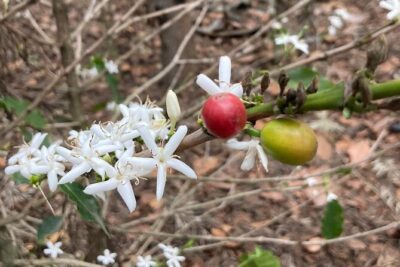
Next comes the Chocolate Museum stop, and it is not just a candy break. You learn about the history of cacao, the cacao tree, and how cacao matters in Guatemala. The value here is that you start to connect the ingredient to the culture, then you get to taste it.
The stop also includes an artisanal chocolate factory that produces chocolate from organic Guatemalan cacao beans. Then you sample multiple chocolates, including pure dark chocolate and options infused with local flavors like cardamom, cinnamon, and coffee.
If you care about food, this is a strong mid-tour anchor. It gives your legs a pause while you learn something you can actually use later when you taste chocolate at home. And since water is included, you can pace your tasting without feeling rushed.
Jade stop: the souvenir explanation you probably wanted
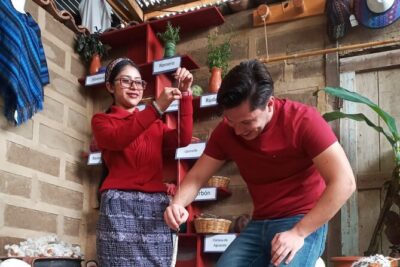
Then the tour shifts into the world of jade. Jade has been used for over 5,000 years in both China and Mesoamerica to create objects ranging from ornaments and utensils to weapons and tolos. It is known for hardness and resistance, which is part of why it lasted as a material in so many cultures.
What makes this stop more than a shop visit is the cultural symbolism. Jade is described as a good luck charm and recognized as the stone of eternal life, abundance, and hope. If you have ever bought jade and wondered why it is treated like more than décor, this is where the meaning gets explained in a direct way.
The tour also notes Guatemala as one of only four countries in the world with deposits of jadeite jade. That detail helps you understand why the region is associated with jade in the way it is.
The pacing and the walking reality: shoes matter
This is a walking tour through multiple major landmarks in about half a day. Review history from past visitors strongly points to the same practical advice: wear good shoes because you will be on your feet for a while. Antigua’s streets are not flat, and cobblestones make traction and comfort important.
The good news is the route is structured. You are not wandering aimlessly, and you are not stuck in a long line at one place. Instead, you rotate between open public spaces, churches, and museum-style stops. That keeps your brain engaged and stops your legs from feeling like one long chore.
Also, because the group is limited to 15 people, the tour tends to feel more like guided strolling than a big bus-style hop. Your guide can also adjust to your interests, which makes a short tour feel more personal.
Beer tasting and practical tips that save you time later
One of the inclusions that people often appreciate is the artisanal beer tasting. Even if you do not drink much, it is a low-stakes way to try something local without adding a separate activity.
Past guided experiences also mention that guides share practical tips, like where to find ATMs and places to eat. That kind of information is gold when you only have a few days in town and you do not want to gamble on the wrong recommendation.
So after the tour, you are not just leaving with photos. You are leaving with a better sense of where things are and how to spend your remaining hours in Antigua.
Who this tour fits best, and who should consider alternatives
This experience is a great match if you:
- Want a first-time overview of Antigua with context for major landmarks
- Like architecture and want to understand why churches look the way they do
- Enjoy food and culture learning, cacao tasting, and a jade symbolism lesson
- Have only a half day and want to see a lot without stress
You might want to think twice if you:
- Have limited mobility or struggle with long walks on uneven streets
- Need lunch included, since lunch is not part of the plan
- Get overwhelmed by tickets, since San Francisco El Grande lists admission as not included
Should you book Walk Antigua Like a Local?
Yes, if you want Antigua explained in a short time and you like learning while you walk. The strongest reasons to book are the guided context at multiple anchor landmarks, plus the two culture stops where you taste and learn, not just look.
I would book it especially if you are the type who likes details. The churches here are not random stops. La Merced’s low bell towers tie directly to earthquake survival. San Francisco El Grande connects to Pedro de San José de Betancur, the only Saint of Guatemala. And the Santa Catalina Arch is a functional piece of history, not just a photo frame.
If you are traveling with a tight schedule, comfortable with walking, and open to tastings, this is a smart value at $32. Add good shoes, plan on skipping lunch for now, and you will leave with a clearer map of Antigua and a better sense of what you are seeing.
FAQ
How long is the Walk Antigua Like a Local tour?
It runs about 3 to 4 hours.
How much does it cost?
The price is $32.00 per person.
What is the meeting point?
The start is Casa de la Mandarina, 2a Calle Poniente 2, Antigua Guatemala 03001, Guatemala.
What time does the tour start?
It starts at 9:00 am.
Where does the tour end?
The activity ends back at the meeting point.
How many people are in the group?
The tour has a maximum of 15 travelers.
What is included in the price?
Included are all fees and taxes, bottled water, and alcoholic beverages for an artisanal beer tasting (with taxes).
Is lunch included?
No, lunch is not included.
Do I need good weather?
Yes, the experience requires good weather. If it is canceled due to poor weather, you are offered a different date or a full refund.
Is admission included for every stop?
Not every stop is listed as included. For example, the San Francisco El Grande admission ticket is not included, while some other listed stops are free.
Chile On Foot, Continued
Everything Else We Have Reviewed In Chile

Not quite it? Here is the rest of what we have reviewed around Chile




More in Walking Tours.
 ★ 4.6Walk with Penguins on Magdalena & Marta IslandFrom $150611 reviews
 ★ 4.8Guided Walking Tour of the Historical Old TownFrom $25459 reviews
 ★ 4.7Santiago Half-Day Walking Tour with Hotel Pick up & BrunchFrom $48148 reviews
 ★ 4.5Walk alongside Penguins on Magdalene Island and navigate Marta IslandFrom $140116 reviews
 ★ 4.4Private Custom Walking tour with A GuideFrom $3688 reviews
 ★ 5.02-Hour Walking Tour of Yungay The Coolest Neighborhood in ChileFrom $3585 reviews
 ★ 5.0Valpo in 1 day: Authentic + Famous! Semi-private walking tour & public transportFrom $8084 reviews
 ★ 5.0Famous Valparaíso! Premium Walking Tour with a Native GuideFrom $4080 reviews
Browse the lists this tour appears in