
Review · SANTIAGO
An Architect’s Tour of Downtown Santiago
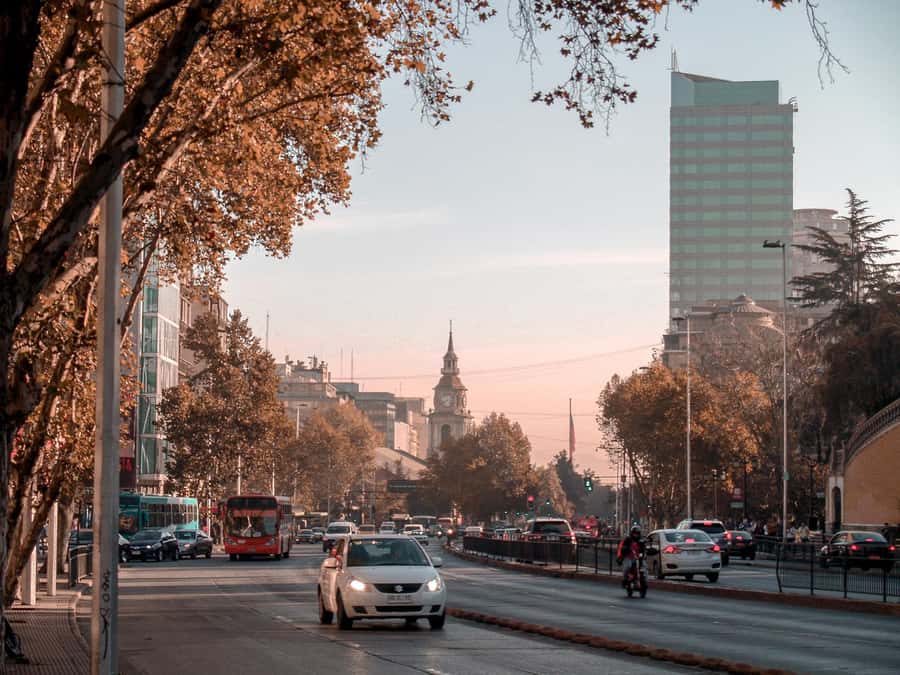
Santiago reads like a built timeline. An Architect’s Tour of Downtown Santiago uses that idea in a smart way, with architect Diego Inzunza guiding a small group walk through the city center’s most meaningful buildings. You’ll love how the tour keeps architecture practical, not textbook, and how you can ask questions as you go.
I also like the pacing: a 3-hour walk with room for photos, plus coffee and restroom stops when you need them. The tour runs in English and Spanish, so you can follow the details without guessing at what you are looking at.
One consideration: this is a walking tour, so wear comfortable shoes and plan for a full morning-style effort. It is also not set up for kids under 10, and it ends at La Moneda, so you will want your onward transport plan ready.
In This Review
- Key things to know before you go
- Why an Architect Guide Makes Santiago Legible
- Meet at Plaza Baquedano, Then Walk the City Core
- Barrio Lastarria and Universidad Católica de Chile: Campus Energy Meets City Design
- Cerro Santa Lucía and Iglesia San Francisco: How Stone Tells Stories
- Barrio Paris-Londres and the Neighborhood Details You Might Miss
- Coffee Breaks, Restroom Stops, and a Route That Respects Real Life
- La Moneda Finish at Chile’s Civic Center and Presidential Palace
- Price and Value for a $59, Small-Group Walk
- Who This Tour Fits Best in Your Santiago Plans
- Should You Book This Tour?
- FAQ
- How long is An Architect’s Tour of Downtown Santiago?
- Where does the tour start and where does it end?
- What languages are offered?
- What is the group size?
- Do I need any architecture knowledge or special equipment?
- Is the tour wheelchair accessible and is it suitable for children?
Key things to know before you go
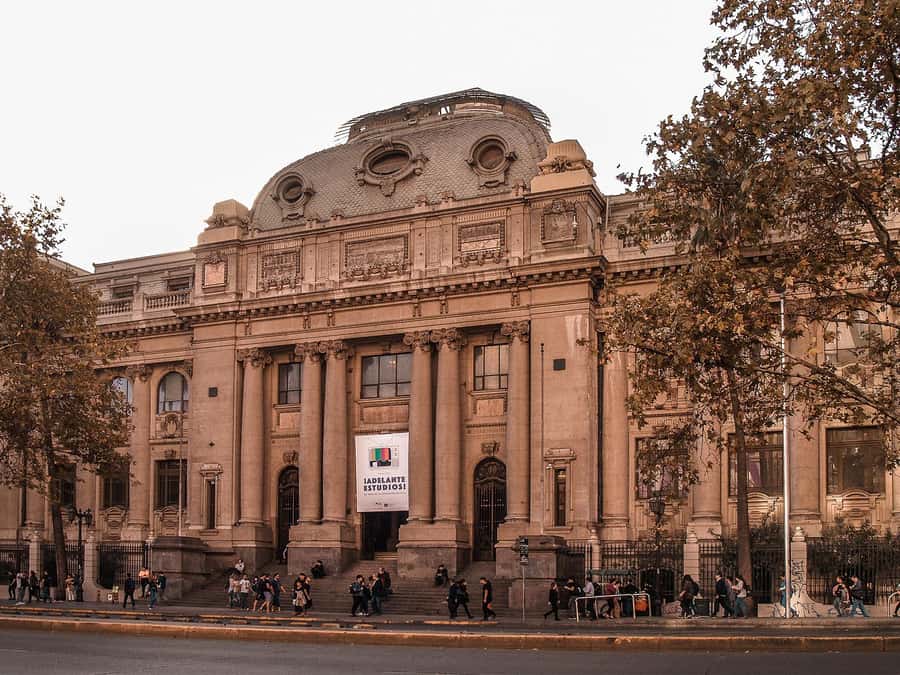
- Architect-led explanations: Diego Inzunza connects building design to Chile’s historical and political changes.
- Small group size: limited to 8 participants, which helps you get answers during stops.
- Starts at Plaza Baquedano: the walk begins by Teatro Universidad de Chile and starts moving right away.
- Ends at La Moneda: the last stop is Chile’s civic center and presidential palace area.
- Breaks are part of the plan: you get coffee and restroom time, and sometimes extra stops like banking or money exchange.
- Bring comfort, not jewelry: comfortable shoes are expected, and jewelry is not allowed.
Other ways to walk the capital, reviewed
- Santiago: Guided Walking Tour of the Historical Old Town
★ 4.8 · 459 reviews - Santiago: 1-Day Hop-On Hop-Off Bus and Cable Car Ticket
★ 4.3 · 332 reviews - Santiago: Sky Costanera Observatory Admission Ticket
★ 4.3 · 208 reviews - Santiago: 2-Day Hop-On Hop-Off Bus Ticket and Cable Car
★ 4.3 · 162 reviews
Why an Architect Guide Makes Santiago Legible
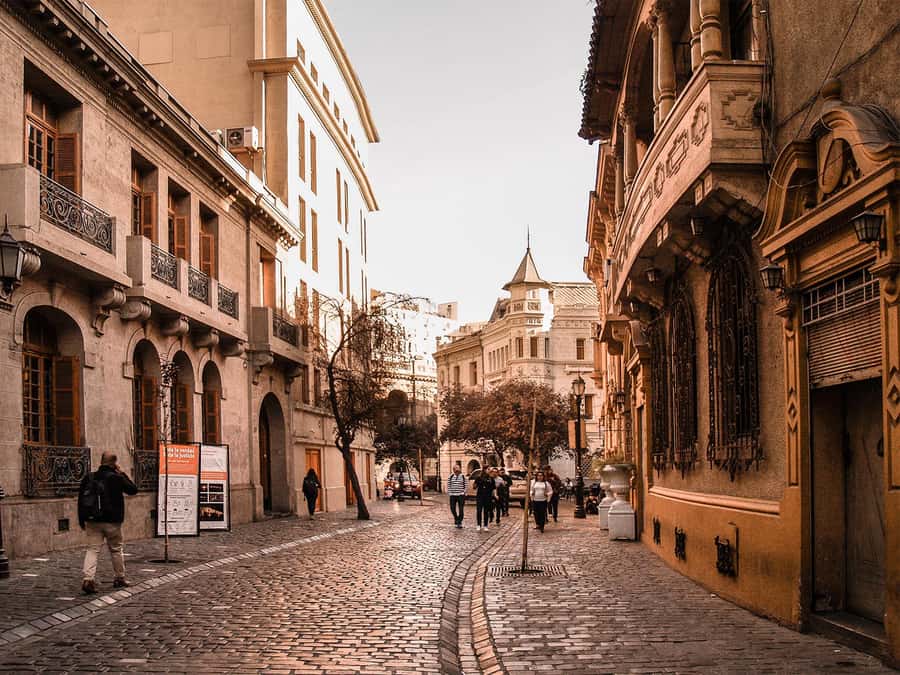
What makes this tour different is the guide’s job title. Diego Inzunza is a working architect and tour host, with a degree in Architecture and experience guiding for years. That matters because he is not just pointing at pretty facades. He is translating design choices into real-world stories.
You will notice the tour’s tone is conversational but structured. The walk is set up as a guided discussion about architectural styles and the events that shaped Santiago over time. And you do not need a background in architecture, or special gear, to follow along.
I like that the tour encourages questions at every stage. If you want to slow down for a photo, or ask why a certain building looks a certain way, you can. That flexibility turns a simple walk into a guided visit where you control what you pay attention to.
Meet at Plaza Baquedano, Then Walk the City Core
You start where Santiago’s center starts feeling real: Plaza Baquedano, next to Teatro Universidad de Chile. The vibe there is energetic and open, which is useful for a tour like this, because it gives you quick orientation before the details begin.
The tour route is designed to keep you moving between key neighborhoods and landmarks, so the city’s layout starts to make sense fast. You’ll be walking through areas that represent different chapters of Santiago’s growth, not just a string of tourist stops.
The meeting point is clearly defined, and the tour has a listed starting address in the Providencia area as Av. Providencia 43. In practice, you will want to show up at Plaza Baquedano by Teatro Universidad de Chile so you are in the right place for the group.
Barrio Lastarria and Universidad Católica de Chile: Campus Energy Meets City Design
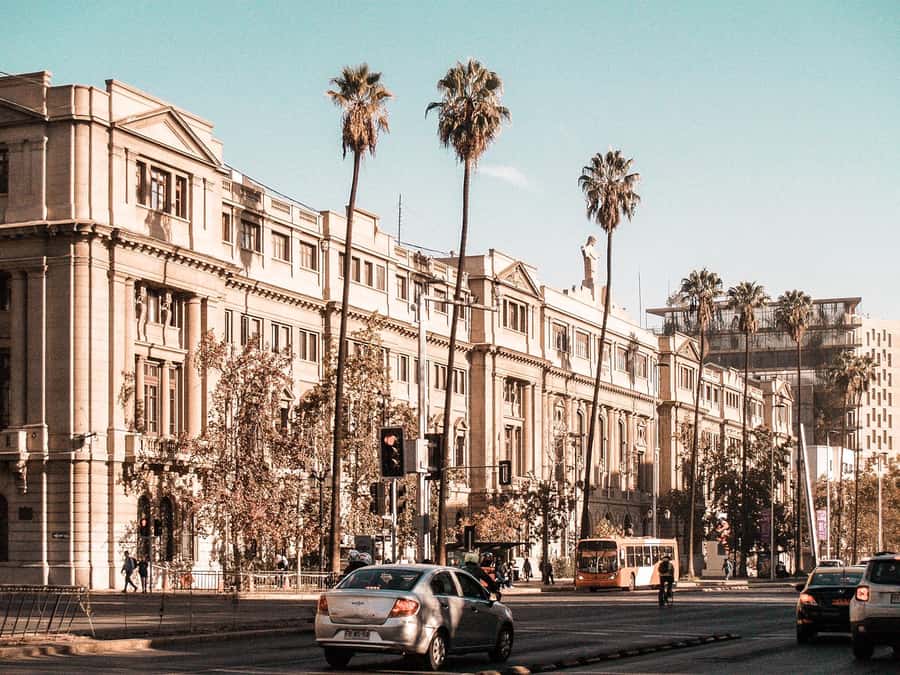
One of the first neighborhood stops is Barrio Lastarria, a district that often comes up when people talk about Santiago’s cultural side. In this tour, you are not just passing through. You focus on how the built environment supports daily life, identity, and the way public spaces are used.
Next up is Universidad Católica de Chile. A university is more than a school, it is a city within the city, with architecture that shapes how people move and gather. Expect your guide to use the campus as a way to explain why buildings look the way they do and how education institutions can influence a city’s development over time.
This is where the architect-led approach shows. You get both visual cues and explanations, like what to notice in materials, proportions, and the relationship between civic space and architecture. It is the kind of stop where you can go from I see a building to I understand what the design is doing.




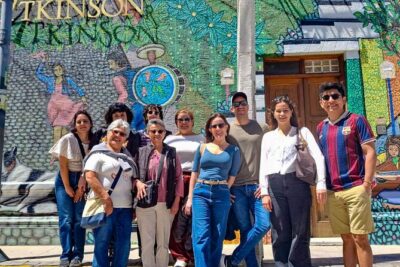

Cerro Santa Lucía and Iglesia San Francisco: How Stone Tells Stories
The tour includes Cerro Santa Lucía, which makes a great anchor point because hills and elevation naturally change what you can see and how you read the city. Even if you are not chasing views for the sake of views, your guide can use the geography to connect architecture to the city’s expansion and planning.
From there, you head to Iglesia San Francisco. Churches tend to carry more than religious function in a historic city. On this tour, the church stop is used to explain how architecture interacts with power, community, and major historical moments.
One practical thing I appreciate: stops like this are not just check-the-box monuments. They give you a chance to compare what you learn across the route. You start seeing patterns in style and intention, and you also start understanding why some areas feel more formal or ceremonial than others.
If you like architecture that has a social role, this is a strong section of the walk.
Barrio Paris-Londres and the Neighborhood Details You Might Miss
Another standout neighborhood stop is Barrio Paris-Londres. This is the type of area where street-level details often do the heavy lifting. On an architect-led tour, you learn to look past the obvious, and notice how buildings and streets create character block by block.
The best part here is that the discussion stays tied to the city’s bigger story. Your guide uses architecture as evidence, helping you connect the layout and design choices to the historical and social forces shaping Santiago.
This is also a good stretch if you enjoy taking photos. You will have multiple moments to pause, ask questions, and capture angles that reflect what your guide is pointing out. If you want to spend a little extra time on a facade or a corner view, the format allows it.
Coffee Breaks, Restroom Stops, and a Route That Respects Real Life
A walking tour can go wrong when it forgets humans. This one builds in rhythm so you do not feel rushed every second.
Along the way, you stop for coffee and restroom breaks as needed. The route has been planned for more than five years, which shows in small decisions like pacing and where breaks are placed.
The tour may also include extra necessities such as a bank or money exchange stop. That is a nice touch if you are trying to manage logistics without adding extra trips to your day.
Timing is simple: 3 hours total. The tour host keeps the information moving without turning it into a lecture. Based on how Diego’s style is described, he also adapts smoothly to the pace of the group, so you are not stuck listening while everyone else is lost.
La Moneda Finish at Chile’s Civic Center and Presidential Palace
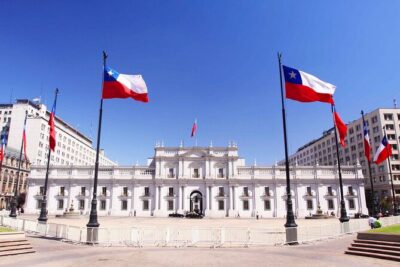
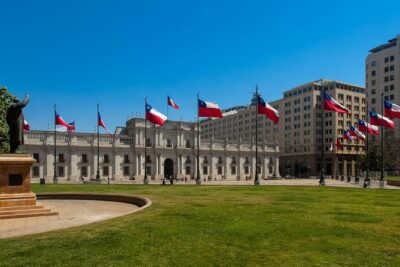
The tour ends at Chile’s Civic Center in La Moneda, the presidential palace area. This is a smart finish because it is one of Santiago’s most politically loaded spaces. Architecture here is not only about beauty, it is about authority and public symbolism.
If you want a clearer line between politics and design, the ending helps. Earlier stops prepare you to read the city, and the final site gives that reading a big, visible conclusion.
After the tour ends, you are not returned to your starting point. The good news is that transportation options are close by, public and private. Plan how you will continue your day from La Moneda, especially if you have another reservation or museum visit.
Price and Value for a $59, Small-Group Walk
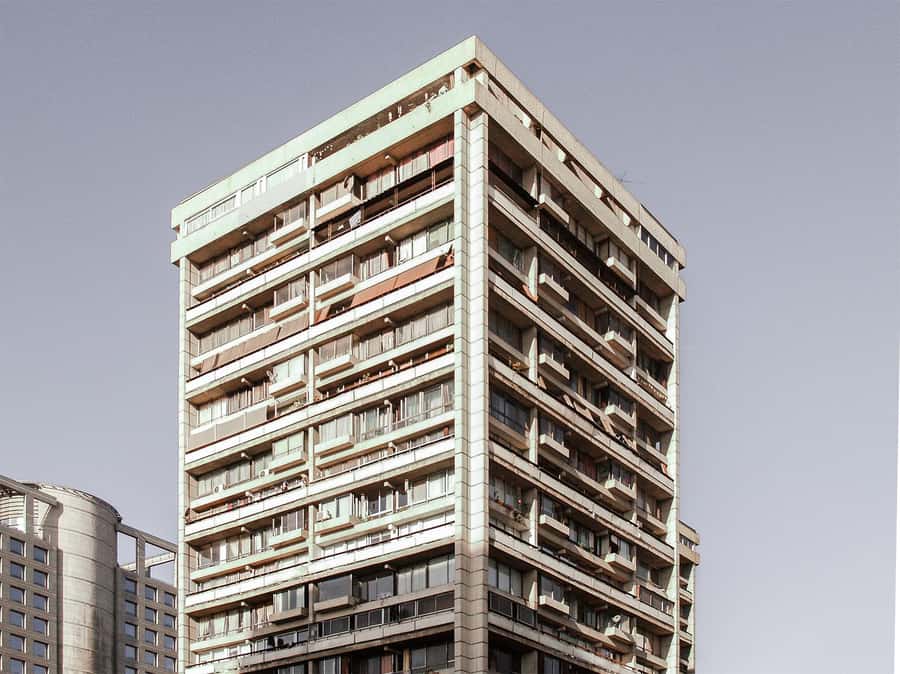
At $59 per person for 3 hours, the value comes from more than just the walking route. You are paying for a guided discussion centered on architecture, plus time to ask questions and pause for photos.
The small group limit, up to 8 participants, is a big part of that value. In a larger crowd, the experience often becomes a one-way narration. Here, the format supports back-and-forth, which is exactly what you want when you are learning how to look at buildings with better context.
You also get a guide with real design training. Diego graduated in 2016 with a degree in Architecture and has worked as both an architect and guide for over 6 years. Add bilingual hosting in English and Spanish, and it becomes easier to follow the details without the friction of language gaps.
Overall, if you are the type of person who likes to understand why a place looks the way it does, $59 feels reasonable for what you get.
Who This Tour Fits Best in Your Santiago Plans
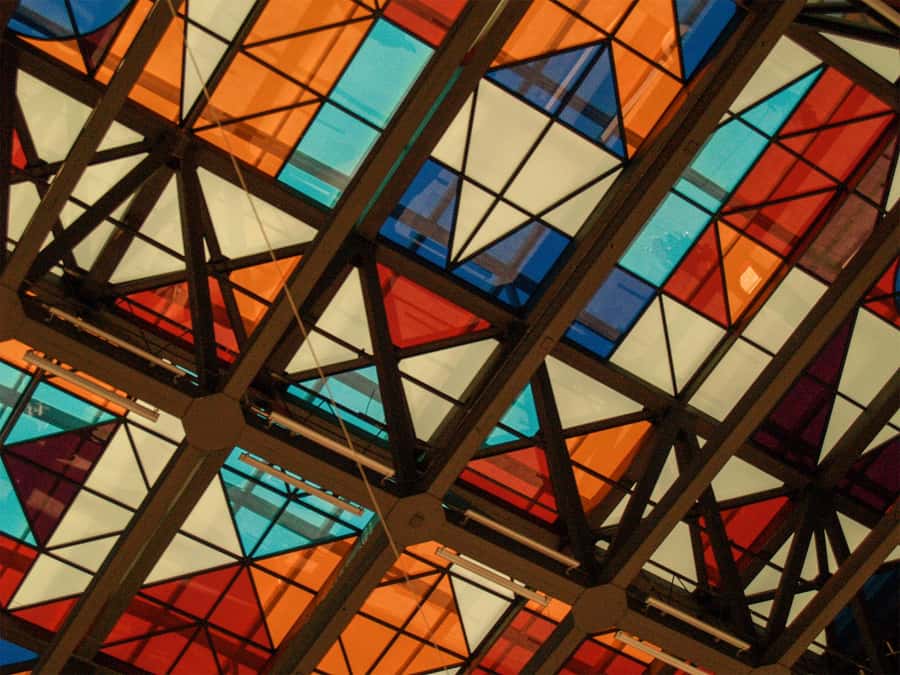
This is a great match if you like architecture, history, and politics mixed into one walk. Even if you are not an architecture nerd, the tour is built to be approachable, because it does not assume prior knowledge.
It is also a good pick for visitors who want to see parts of downtown that connect more logically than a typical sightseeing checklist. The route focuses on iconic, historically relevant buildings and neighborhoods, and it teaches you how to interpret them as you go.
You should bring comfortable shoes, because you are walking. And remember jewelry is not allowed, so keep what you wear simple and practical for moving around in the city.
Wheelchair accessibility is listed, but since the tour is still a walking experience, it is smart to consider your comfort with street-level walking and pacing.
If you are traveling with kids, note the tour is not suitable for children under 10. For families, you might want to look for a shorter, less structured option.
Should You Book This Tour?
Book it if you want a downtown Santiago overview that makes buildings feel meaningful, not random. The biggest strength is the architect-guided approach by Diego Inzunza, especially his ability to explain design choices in a way that connects to Chile’s social and political changes.
Pass if you prefer a laid-back sightseeing walk with minimal structure. This tour is built around interpretation and guided conversation, and it expects you to be comfortable walking for the full 3 hours.
If you want the kind of experience where you leave with a clearer mental map of how Santiago grew and why, this one is a strong use of your time.
FAQ
How long is An Architect’s Tour of Downtown Santiago?
The tour lasts 3 hours.
Where does the tour start and where does it end?
It starts at Plaza Baquedano next to Teatro Universidad de Chile and ends at Chile’s Civic Center in La Moneda, the presidential palace area.
What languages are offered?
The tour is offered in English and Spanish.
What is the group size?
It is a small group limited to 8 participants.
Do I need any architecture knowledge or special equipment?
No previous architecture knowledge is required, and you do not need any equipment besides your desire to discover.
Is the tour wheelchair accessible and is it suitable for children?
Yes, the tour is listed as wheelchair accessible. It is not suitable for children under 10 years.
The Rest Of Our Chile Tours





Everything Else We Have Reviewed In Chile

Santiago, A Few More Ways






Not quite it? Here is the rest of what we have reviewed around Chile





More in Santiago City Tours.
 ★ 4.5Tourist bus around Santiago for a dayFrom $501,857 reviews
 ★ 4.8Guided Walking Tour of the Historical Old TownFrom $25459 reviews
 ★ 4.0Private Santiago City Half Day TourFrom $76414 reviews
 ★ 4.31-Day Hop-On Hop-Off Bus and Cable Car TicketFrom $60332 reviews
 ★ 4.3Sky Costanera Observatory Admission TicketFrom $45208 reviews
 ★ 4.32-Day Hop-On Hop-Off Bus Ticket and Cable CarFrom $69162 reviews
 ★ 4.7Santiago Half-Day Walking Tour with Hotel Pick up & BrunchFrom $48148 reviews
 ★ 4.3Hop-on Hop-off Bus Day Ticket with Audio GuideFrom $50137 reviews
Browse the lists this tour appears in