

Review · VALPARAÍSO
The Tour of Valparaiso in French on foot and in a small group
Valparaíso in French is a smart way to slow down. You start with the port and national stories, then wind your way through the hills where street art, dictatorship history, and everyday culture all sit side by side. I love the small-group pace, and I love how the Chilean-French speaking guides connect what you see to what shaped modern Chile.
One thing to consider is that it is a walking tour of the hills, so you will want solid shoes and a comfortable pace for several scenic stretches. Also, if you hate stairs or steep uneven sidewalks, you might find parts of the route challenging, even with the funicular stop included.
Key points to know before you go
- Small group, up to 18 people, so you get time for questions and real conversation
- French language tour, led by Chilean and French-speaking guides active in Valparaíso since 2016
- UNESCO-linked hill architecture, with viewpoints over the bay and the working port
- Street art focus, with stops that frame murals and graffiti as cultural history
- One funicular ride included (Ascensor El Peral), built in 1902 and steam-powered until the 1970s
- Food and place recommendations at the end, so you can keep exploring after the tour
In This Review
- A Valparaíso walking tour in French that goes past the murals
- Time, meeting spot, and how to prep for 3 hours 30
- Plaza Sotomayor: starting with the Chilean Navy and the port mood
- Muelle Prat and the working port side of Valparaíso
- Ascensor El Peral: a funicular built in 1902, steam to now
- UNESCO-linked hills and Palacio Baburizza on the Alegre and Concepción axis
- Cerro Alegre: where street art feels like living conversation
- Cerro Concepción: 19th century life and the heavier chapters of Chile
- Paseo Gervasoni: the bay view, plus your best follow-up route
- Paseo Atkinson and La Santa Cruz: murals and a Lutheran church viewpoint
- Paseo Dimalow: ending with food ideas for the rest of your trip
- Price and value: what $17.49 buys you in Valparaíso
- Who this tour suits best
- Should you book the French walking tour of Valparaíso?
- FAQ
- What language is the tour in?
- How long is the tour?
- How much does the tour cost?
- Where does the tour start and where does it end?
- Is the group size small?
- Is the Ascensor El Peral included?
- Do I get a mobile ticket?
- What is the cancellation timeframe?
A Valparaíso walking tour in French that goes past the murals

If you only chase photos, Valparaíso can feel like a collection of pretty facades. This tour nudges you to look deeper. You are not just standing in front of street art, you are learning why the city looks the way it does, how the port pulled in dreamers and traders, and how political events left marks on everyday life.
What I like most is the mix of topics. The walk links the port, the hills, art, and Chile’s modern history, including the Pinochet dictatorship and the history of the Mapuche people. That matters because it stops the street art from feeling random. It becomes part of a bigger story about identity, survival, and community memory.
The other big win is that you are guided by people who know this city well. The guides are Chilean and French-speaking, active in Valparaíso since 2016, and they bring practical tips, not just facts. Expect anecdotes and context that help you read the city like a local, not like a checklist.
More of the port, the hills and the coast road north
- From Santiago: Valparaiso and Viña del Mar Day Tour
★ 4.3 · 643 reviews - Valparaiso: Street Art, Funiculars and Port City Tour
★ 4.8 · 214 reviews - 2 Hour Walking Tour in Valparaiso
★ 5.0 · 109 reviews - Valpo in 1 day: Authentic + Famous! Semi-private walking tour & public transport
★ 5.0 · 84 reviews
Time, meeting spot, and how to prep for 3 hours 30
The tour starts at 3:00 pm, beginning at Plaza Sotomayor in Valparaíso. You end up finishing near the top of the Reina Victoria lift area, at the end of Paseo Dimalow. Plan your day so you are not sprinting across town right after.
Duration is about 3 hours 30 minutes, and it is a foot tour. That means you should wear comfortable walking shoes and expect hills and uneven streets typical of the city. The funicular ride is included, which helps with one key stretch, but you still spend meaningful time on foot.
Price is $17.49 per person, and you get a mobile ticket. You are also not stuck in a huge crowd: the group size is capped at 18 travelers, which feels like the sweet spot for a neighborhood walk.
Plaza Sotomayor: starting with the Chilean Navy and the port mood
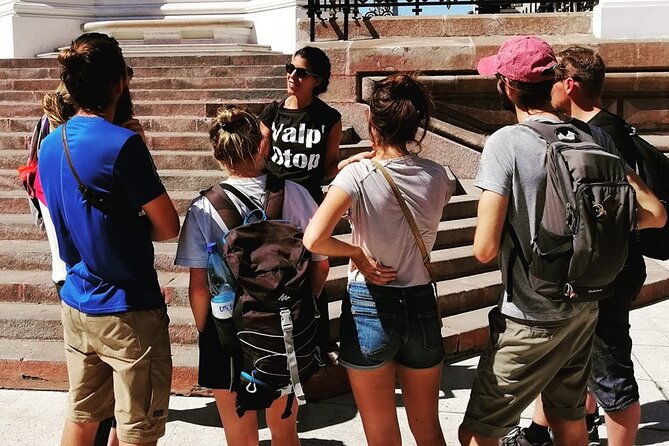
You begin at Plaza Sotomayor, a large square tied to the Armada de Chile, the Chilean National Navy. This opening works because it gives you a port-centered frame. Valparaíso is a city shaped by sea routes, shipping, and the people who came because of the water.
The guide gives a quick orientation for the rest of the afternoon. You learn how the route will connect the port, the hills, and the later art and history stops. If you have never been to Valparaíso before, this first stop helps you orient fast.
One practical plus: the stop is free for entry, so it is a no-pressure starting point. You can arrive, settle your bearings, and start walking without wasting time.
Muelle Prat and the working port side of Valparaíso
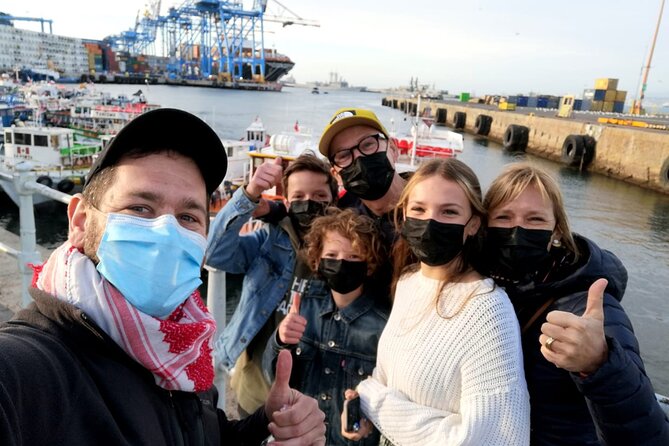
Next you head to Muelle Prat, a section where you can see part of the port. This stop keeps the tour grounded. It is easy to romanticize Valparaíso as only street art and viewpoints, but the port is still a major part of the city’s identity.
You get a brief history that explains why the city became such a magnet for merchants, travelers, and ambitious newcomers. The value here is that you understand what you are looking at before the walk climbs into the more artistic hills.
This stop is also free of admission, so you are spending your money on the experience, not on tickets stacked on tickets.

Ascensor El Peral: a funicular built in 1902, steam to now
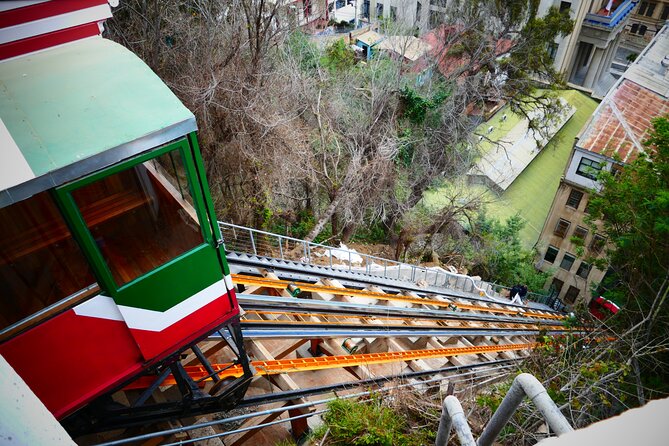
One of the most fun moments is taking Ascensor El Peral, a funicular dating from 1902. Here is what makes it meaningful in the story: it was steam powered until the 1970s, and it is one of the funiculars built during Valparaíso’s golden age.
This ride is not just a shortcut. It becomes a moving viewpoint, and it physically explains how the city climbs. It also helps break up the walking rhythm, which is handy for a 3.5-hour tour.
Entry is included for this stop. For the price, getting one transport moment folded in is a solid value move, and it keeps the route feeling dynamic instead of purely street-level.
UNESCO-linked hills and Palacio Baburizza on the Alegre and Concepción axis
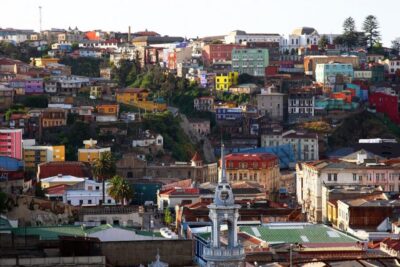
After the funicular, the walk shifts to Paseo Yugoeslavo (noted as the former Paseo Americano). From here you begin exploring the Cerros Alegre and Concepción hills. The architecture of these hills is classified by UNESCO, and the tour treats that designation like something you can actually see.
You also learn about Palacio Baburizza, which has become a fine arts museum. Even if you do not go inside that museum on this tour, the guide’s context helps you understand why the building belongs in the hill-and-art conversation.
This part is free for admission. The practical payoff is that you spend time on a scenic walk with a clear purpose: you are learning how urban form, wealth, migration, and art all tied together on the hills above the bay.
Cerro Alegre: where street art feels like living conversation
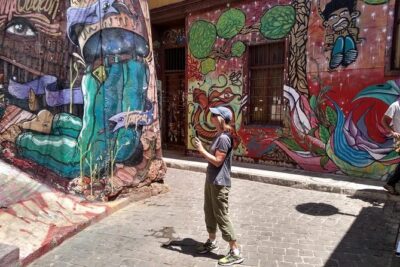
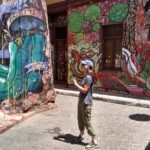
Cerro Alegre is a highlight, and for good reason. The tour moves through colorful alleys where street art and graffiti stop being background and start being the main language.
What I like about this section is that the guide does not treat art like decoration. You get introduced to urban artists from Valparaíso who have later become known internationally. That connection matters because it shows how a city’s local creativity can travel, even when the creators start out in small spaces and tight neighborhoods.
Expect to slow down here. You will likely want a moment for looking, then a moment for listening. This is the kind of stop where your understanding improves as you circle a mural, notice details, and hear the explanation that turns it from paint into meaning.
This segment is free for admission, so you can focus your energy on walking, watching, and chatting.
Cerro Concepción: 19th century life and the heavier chapters of Chile
On Cerro Concepción, the tour keeps the street art thread but adds more weight. The guide talks about the atmosphere of Valparaíso at the end of the 19th century, when adventurers, traders, whalers, and gold diggers shared the same port reality.
Then the conversation shifts to more recent history, including the dictatorship period that violently marked Chile and its inhabitants. This is where the tour becomes more than “pretty views.” You start seeing how political trauma can shape public space, storytelling, and the way people express themselves.
The practical value: you leave this hill with a clearer understanding of how art, protest, and memory can overlap in the same street. If you only see the art without the historical framing, you might miss why certain themes feel so urgent.
Paseo Gervasoni: the bay view, plus your best follow-up route
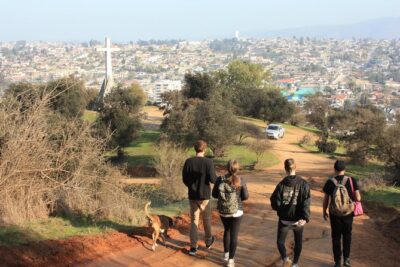
A scenic walk on Paseo Gervasoni gives you a bigger picture. From here, you can admire the whole bay of Valparaíso, and the guide uses that viewpoint to share plans for what to do next.
This is one of those “do not skip the listening” moments. The recommendations are practical and specific to the area, including the artisanal fishing port (Caleta Portales), the nearby city of Viña del Mar, and the village of Concón. If you only have a short time after the tour, these suggestions can save you from guessing.
This stop is also free for admission, and it fits the rhythm of the afternoon nicely. You get a view break, then you continue toward more art and more viewpoints.
Paseo Atkinson and La Santa Cruz: murals and a Lutheran church viewpoint
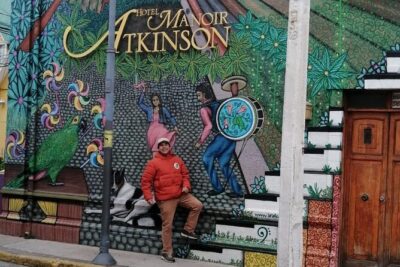
Next up is Paseo Atkinson, where you get to observe two of the largest murals in Chile. That alone is a reason to pay attention, but the guide also ties the murals back into Valparaíso’s bigger cultural pattern.
After that comes Iglesia Luterana de La Santa Cruz de Valparaiso, a church with a small square that doubles as a strong viewpoint. From here, you can look across other hills and, importantly, you also get context about the house of Pablo Neruda.
The guide also covers the history of the church and the German presence in the city. That background helps you see Valparaíso as a place built by multiple waves of people, not just one single cultural story.
This is a quick stop, but it is an efficient one. You get viewpoint time, art context, and a clue about where to connect Valparaíso to literature.
Paseo Dimalow: ending with food ideas for the rest of your trip
The tour wraps with Paseo Dimalow, ending near the top of the Reina Victoria lift. This final walk matters because you get restaurant and dish recommendations to continue your Chile trip.
The tour does not pretend that you only need history and views. You also get guidance on what to eat, with options that lean a bit more gourmet and others that are more popular. I like tours that do this, because the last thing you want is to wander hungry, hoping you stumble into something good.
This stop is free for admission and works like a launchpad for your evening plans.
Price and value: what $17.49 buys you in Valparaíso
At $17.49, this is priced like a budget-friendly way to get structure in a city that can otherwise feel chaotic. The value comes from three things.
First, you get a 3.5-hour guide-led experience with a small group limit of 18 travelers. That means more time for explanations and fewer awkward moments of trying to hear over a crowd.
Second, you get meaningful coverage of more than one theme. The tour touches the port, street art, UNESCO-linked hill architecture, and modern political history, including Pinochet and Mapuche history. It is not one-note, and that matters because Valparaíso rewards understanding. When you learn the “why,” the city becomes more than visuals.
Third, Ascensor El Peral is included. Getting one transport experience folded into the price is a practical plus. You are paying for time, expertise, and a real “Valparaíso only” element.
The only drawback is the one you should always plan for with hill cities: you are walking. If your mobility is limited, you may need to think carefully about comfort and stamina.
Who this tour suits best
This tour is a great fit if you want street art plus context. If you come to Valparaíso for photos, you will still get plenty of views, but you will leave with a better mental map of how art, history, and the port connect.
It also suits you if you enjoy history but do not want a lecture. The guide style, based on the tour’s focus and tone, is built for walking conversation, with anecdotes and practical ideas.
If you are traveling as a couple, solo, or with friends, the small group helps it feel social without feeling crowded. If you want French, you also avoid the common problem of piece-by-piece translating in your head.
Should you book the French walking tour of Valparaíso?
I would book it if you want a guided path that makes Valparaíso make sense. The combination of street art, UNESCO-linked hills, and history that includes the dictatorship period gives you more than a standard sightseeing circuit.
I would think twice if you dislike walking uphill for long stretches, or if you prefer only casual, low-effort stops. This is a full afternoon on foot. Even with the funicular included, comfort matters.
If you are on the fence, here is the simple test: do you want your Valparaíso experience to feel like a story you understand, not just a place you visited? If yes, this is a very sensible way to spend your 3:00 pm start in the city.
FAQ
What language is the tour in?
The tour is in French.
How long is the tour?
The tour lasts about 3 hours 30 minutes.
How much does the tour cost?
It costs $17.49 per person.
Where does the tour start and where does it end?
It starts in Plaza Sotomayor, Valparaíso, Chile, and ends at the top of the Reina Victoria lift area near the end of Paseo Dimalow.
Is the group size small?
Yes. The tour has a maximum of 18 travelers.
Is the Ascensor El Peral included?
Yes. Ascensor El Peral is part of the route and the admission is included.
Do I get a mobile ticket?
Yes. The tour uses a mobile ticket.
What is the cancellation timeframe?
You can cancel for a full refund if you cancel at least 24 hours before the experience’s start time.
The Rest Of Our Chile Tours





Everything Else We Have Reviewed In Chile
Along The Coast From Valparaiso
Not quite it? Here is the rest of what we have reviewed around Chile




More in Valparaíso & the Pacific Coast.
 ★ 4.2Vina Del Mar, Valparaiso, Casablanca & Reñaca TourFrom $392,838 reviews
 ★ 4.8Valparaiso, Viña del Mar, & Casablanca Valley TourFrom $721,491 reviews
 ★ 4.3Valparaiso and Viña del Mar Day TourFrom $45643 reviews
★ 4.4Viña Del Mar, Valparaiso, Casablanca & Reñaca TourFrom $37471 reviews
★ 4.3Valparaiso and Viña del Mar Day TourFrom $45643 reviews
★ 4.4Viña Del Mar, Valparaiso, Casablanca & Reñaca TourFrom $37471 reviews
 ★ 4.7Viña del Mar, Valparaiso, with Wine TastingFrom $60351 reviews
 ★ 4.3Highlights of Valparaiso and Viña del MarFrom $59316 reviews
 ★ 4.5Full day Vina del Mar and Valparaiso experienceFrom $37255 reviews
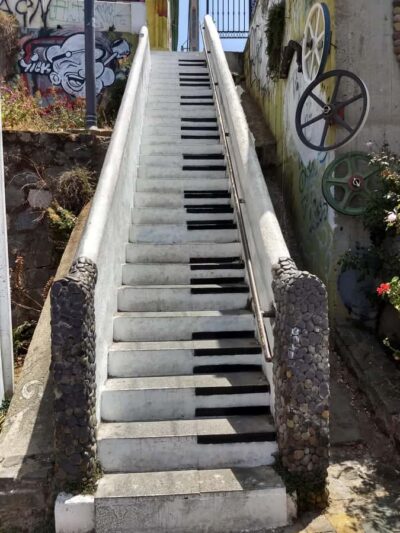 ★ 4.8Street Art, Funiculars and Port City TourFrom $41214 reviews
Browse the lists this tour appears in